Category: True Crime

  • Why Are People Obsessed with Wade Wilson?

    Why Are People Obsessed with Wade Wilson?

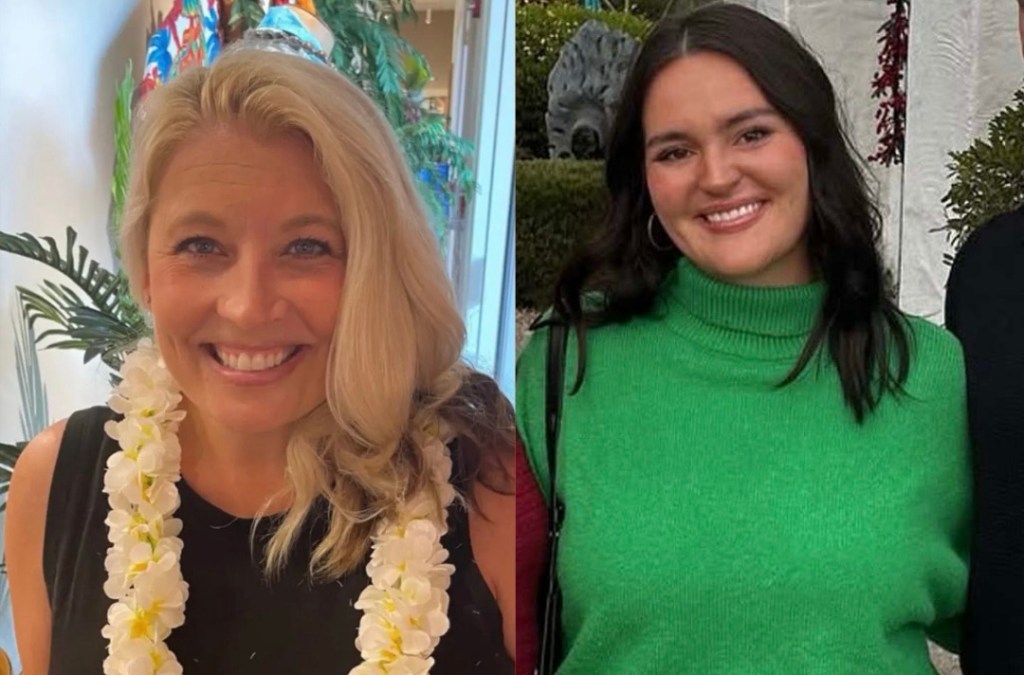
    Wade Wilson, 31, is sitting on death row in the state of Florida. He was sentenced to death on August 27, 2024 for murdering two women—Kristine Melton, 35, and Diane Ruiz, 43—in the span of five hours on October 6, 2019. He was allegedly high on methamphetamine at the time of the killings, but these crimes followed years of criminal activity, which included severe and intensifying physical and sexual violence against women, car theft, stolen property, illegal possession of firearms and drug charges.

    It’s plain to see: if Wade wasn’t in custody, he’d kill again. And if Wade didn’t kill when he did, he would’ve eventually.

    If you want to see manipulation at work, Wade is your guy. He is objectively good looking—or he was prior to incarceration: tall (6’4”) and big (215 lbs.) with dark features, a muscular build and a dimpled smile, and covered in tattoos. He’s also known to be very charming and adept at lovebombing, which he uses to disarm and then exploit anyone who shows a sliver of vulnerability or interest in him. He admitted in interrogation videos to using his looks and charm to entice women and that it’s “simple, always.” But Wade isn’t only a womanizer; he’s a violent criminal. He left behind a trail of domestic abuse, sexual abuse, emotional abuse and financial abuse that continue to haunt these women (and some men).

    Wade Wilson.

    It’s also true that drugs ruined Wade’s life. Wade was adopted into a hardworking family with morals, who supplied him with the foundation to succeed, and who truly loves him. However, he began using drugs at 13, and hard drugs like meth and crack were added to the mix early on. Sober Wade was described as kind, even timid and gentle. When under the influence of these drugs, specifically, he became a monster. Even after the murders, Wade was charged with leading a drug trafficking conspiracy in jail. He can’t stay away from the drugs that played a part in taking away his freedom and ending two lives and that, right there, is full-blown addiction at work.

    This case is cut and dry. There’s no question about culpability. Wade admitted to the murders time and again, and several ex-girlfriends have come forward to share personal accounts of abuse. At the time of posting, he has been incarcerated for six years. Yet somehow, thousands of people believe he’s innocent and raised money on his behalf. STRANGERS donated thousands. Wade has a son—yes, he’s also a deadbeat dad—whose funding platform, created to help his mother afford his basic needs, generated significantly less than Wade’s. And still others are so captivated by his looks and charm, that they pursue romantic and sexual relationships with Wade even after his incarceration.

    WTF. Why?

    Wade Wilson’s “popularity,” propelled by internet fame and viral TikTok videos, is interesting, and also not at all. He’s popular because he’s good looking, plain and simple, and somehow this distorts perceived guilt in the eyes of his fangirls and fanguys (dubbed “Wade’s Wives”) making it easy for him to manipulate these people for their time and resources. People like bad boys and lead with the “I can fix him” mindset. If he wasn’t attractive, would the response be the same? No, it wouldn’t.

    He’s also “popular” on social media because he shares the same name as Wade Wilson of Deadpool, a fictional mentally unstable anti-hero in the Marvel universe. As such, Wade has been dubbed the “Deadpool killer.” There’s obviously no relation between them.

    The psychology of it all is fascinating—and sad. Let’s get in to it.


    The Murders of Kristine Melton and Diane Ruiz

    Let’s take it back to 2019. The day is October 5, a Saturday night in Fort Meyers, Florida. Around 10 pm, it’s still in the mid-80s after a hot and dry day topping in the 90s. Wade Steven Wilson, 25, pregames with his girlfriend of six months, Melisa “Mila” Montanez, 36. Around 11 pm, Wade and Mila arrive at The Buddha LIVE bar in Mila’s 2015 gray Dodge Hellcat. Pregaming includes drinking shots of Patron and using cocaine. While at the bar, Mila and Wade run in to Mila’s friend, Amy Slobodzian. It’s the first time Amy meets Wade and she doesn’t have a good feeling about him.

    Buddha bar in Fort Meyers, Florida, now permanently closed.

    Wade and Mila are working on reestablishing trust in their relationship. A few months prior, Wade was arrested for battery against Mila on July 1, 2019 for punching her, tying her up and sexually assaulting her over a six-hour period. She had black eyes and bruises all over her chest. Not wanting to deal with the court system, Mila dropped the charges, though Wade spent a month in jail. Wade was released to another law enforcement agency in West Palm Beach and then another in Marathon for unrelated charges.

    Mila supported Wade financially while he was incarcerated, despite only dating at the time for two months. In fact, despite the couple being together for six months in October 2019, Wade was incarcerated for 3.5 of them. It’s clear that Wade and Mila are in a trauma-bonded relationship. Wade returns to Cape Coral on October 1, 2019. Mila allows Wade to stay overnight at her business, Mila Spa, in Fort Meyers. She wants to help him but is understandably cautious and concerned for her safety.

    Melisa “Mila” Montanez, Wade Wilson’s ex-girlfriend. Photo from Instagram.

    Now, back to the bar. Mila and Amy watch a band perform, while Wade socializes in the crowd. Mila is intoxicated and loses sight of Wade. Wade befriends Jayson Shepard, then 42, introducing himself as “Junior.” Shortly after, the men meet best friends Kristine Melton, 35, and Stephanie Johnson, 36. Wade introduces himself to them as “JR” and appears “charming,” “friendly” and with “no red flags” (according to what Stephanie later testifies in court). JR catches Kristine’s eye and the two are instantly attracted to each other.

    The conversation between Wade (aka JR) and Jayson turns to drugs with Jayson showing him photos on his phone of a powdery white substance. Jayson invites Wade back to his house to partake and continue partying. Wade repeatedly asks Mila to go with him to Jayson’s house but Mila refuses. She doesn’t feel comfortable doing so. As closing time approaches (2 am), Wade takes Mila’s $80,000 car without her consent and leaves with Jayson, Kristine and Stephanie, also giving the impression that he owns the car. Ironically, Jayson drives the car because Wade doesn’t know how to use stick shift.

    When Mila realizes what happened, it’s after 2 am. She is tired and intoxicated. Amy sees Mila before closing and invites her to spend the night on her couch, to which she agrees. Mila plans to handle the situation the next day.

    Wade believes Jayson gave him cocaine, though it’s suspected methamphetamine. Jayson, Kristine, Stephanie and Wade stay at Jayson’s from 2:30 am to 4:30 am, until he kicks them out. While at Jayson’s, Kristine and Wade have sex twice while Jayson and Stephanie smoke cigarettes on the porch.

    Kristine Melton. Photo from Facebook.

    When it’s time to leave, the group is delayed in leaving Jayson’s as Wade looks for his cell phone. A few days later, Jayson finds the phone in his house. Wade attempts to drive Kristine and Stephanie to Kristine’s home in Cape Coral, but doesn’t know how to operate the stick shift in Mila’s car. Somehow, the group make it to Kristine’s home. Stephanie has to work and take her child to school the next day, so she leaves 20 minutes after arriving, kissing her friend goodbye.

    Once alone, Wade and Kristine retreat to her bedroom, and at some point, the brutality begins. The media widely reported Kristine’s death as due to strangulation, but the strangling occurs as the final evil act, once Kristine is too weak to continue fighting. And fight back, she does. Her torso is covered in bruising. She has a swollen eye, severely busted lip and bruising around her neck characteristic of a strangling. She is tied up in her own clothing: a shirt, leggings and a bikini top. Her scalp has severe bruising, as does her arms. She suffers swelling to her brain and internal organs, including both lungs, her bladder, spleen and liver. A bloody curtain rod is also located next to her body, which Wade used to assist with the murder. Her death is torturous, excruciating and unimaginable, and it’s at the hands of this monstrous man disguised as a charming, gentle guy.

    Wade attempts to put Kristine’s body in the trunk of her own car, a black Nissan Versa. He has difficulty carrying her body, so he leaves her wrapped in a sheet on the floor halfway between her bedroom and kitchen. Wade then steals her car and leaves. When asked why he killed Kristine, Wade’s replies range from, “I don’t know” and “Because I wanted to,” blaming it on the drugs.

    The Rampage Continues: Oct. 6, 2019

    Mila wakes on Sunday, October 6, 2019 to dozens of back-to-back calls and messages from Wade. The calls are made from Wade’s phone up until a certain point, and then they are made from a blocked number. Mila speaks with Wade at 8:45 am and plans to meet with him at Mila Spa to get her car back. Mila takes precaution by bringing Amy, knowing that Wade is being aggressive, under the influence and has a history of violent behavior towards her. He behaves worse than expected.

    When Wade arrives, he tries convincing Mila to get into an unknown vehicle with him—the vehicle later identified as Kristine’s—and when she doesn’t, he grabs her dress so forcefully that it rips. He then tries pulling her into the car and exits the vehicle, tackling her to the ground. The car, still in drive, rolls forward and crashes into another vehicle in the parking lot, grazing his and Mila’s legs in the process. Wade drags Mila’s body in the parking lot, hitting her throughout. She breaks free and runs into the building and up the stairs, but Wade catches up with her. He pulls her by her hair and then holds her against the wall by her neck. Wade bites her right ear and punches her so forcefully in the face that blood splatters everywhere. Amy later testifies in court that Mila’s nose “exploded” and blood gushed everywhere. Amy is too afraid to intervene but calls 9-1-1 immediately.

    A crowd gathers to watch the assault. A woman working at a design studio in the same shopping mall, and whose car was hit with Kristine’s vehicle, opens the door and orders Wade to stop. He claims, “She hit me first”—“she,” meaning Mila. Mila breaks free, runs into the design studio and locks the door behind her. Noticing the crowd, Wade runs back to the vehicle and drives off.

    Diane Ruiz and her fiancee Scott Hannon. Photo from Facebook.

    Sometime around 9:30 am, Wade comes upon Diane Ruiz, a 43-year-old mother of two, who is walking to her bartending job at the Moose Lodge in Cape Coral. Wade pulls over to ask Diane directions to the local high school. He convinces Diane to enter Kristine’s vehicle and direct him there. Terribly, when Diane enters the vehicle, Wade already knows she won’t survive their encounter. He strangles Diane and discards her purse in front of Hector Cafferata Elementary School, which is later caught on camera. As Wade drives around looking for a place to dump her body, Diane regains consciousness three or four times, each time for about 15 seconds. He repeatedly suffocates her. Diane fights back with all her might, suffering a broken nose and defensive wounds to her arms and hands. After the final suffocation attempt, Wade sexually assaults her, pushes her out of the car and runs her over 10 to 20 times, breaking all but one of her ribs and causing life-ending injuries to her neck and spine. He later makes the horrific comment that he “made her look like spaghetti” and describes the condition of the body as a “smear.” Her body is found three days later in a field behind a Sam’s Club.

    Around 3 pm, Fort Myers Police Officer Timothy McCormick locates Wade in the parking lot of Joe’s Crab Shack in Cape Coral. The officer wants to question Wade about assaulting Mila. Wade is without a shirt or shoes, nervous, uncooperative and still driving Kristine’s vehicle. When Officer McCormick tries to detain Wade, he drives off. A misdemeanor battery charge does not warrant a police chase in Florida during busy lunchtime hours (possibly endangering the public), so Officer McCormick can’t chase him. Police are unaware of the murders at this time or whose vehicle he is driving.

    Now after stealing a car, killing two women and assaulting a third, and committing a series of other crimes, Wade goes to Matteo Graphics in Cape Coral, a store owned by acquaintance Joshua Lukistch, in Kristine’s vehicle. Joshua is a friend of a friend, but Wade shows up in sweatpants without shoes or a shirt, and bloody with missing teeth. Wade frantically asks Joshua to buy him a bus or plane ticket to leave town, because he did something terrible and “killed people.” Joshua agrees, but only to buy himself time to call 9-1-1. Suspecting Joshua called police, Wade leaves on foot.

    When police arrive, they observe blood inside Kristine’s vehicle and run the plates, identifying the car as Kristine’s. Police attempt to contact Kristine with no success and dispatch officers to her home. When no one answers the door, they make a forced entry and discover Kristine’s lifeless body. Upon their arrival, police determine Kristine’s car is not in her driveway.

    Wade breaks into a nearby home to hide out for a few hours. The owners miss him by hours, having just left for Ohio. While there, he helps himself to food and several White Claw alcoholic seltzers, and a change of clothes. He also calls his biological father, Steven Testasecca, to talk about the murders and ask for a ride. His father promises to send an Uber but contacts police and makes the incredibly difficult decision to turn in his son.

    Wade Wilson’s death sentencing mugshot at Union Correctional Institute at Raiford, Florida. Photo from the Union Correctional Institute.

    On August 27, 2024, Wade is sentenced to death. His list of crimes include:

    • one count of 1st degree murder for the death of Kristine Melton
    • one count of 1st degree murder for the death of Diane Ruiz
    • one count of burglary of a dwelling
    • one count of grand theft of a motor vehicle
    • one count of battery
    • one count of 1st-degree petty theft

    On August 30, 2024, Wade is moved from the Lee County Jail to Florida’s death row at Union Correctional Institution in Raiford, Florida.

    Appealing the Death Penalty

    On September 15, 2024 Wade’s attorney, Michael Ufferman, files an appeal, which goes directly to the Florida Supreme Court. His legal team argues that a unanimous vote was required for death at the time of ruling, which didn’t occur in Wade’s case. In 2023, following the Parkland shooting case, Florida changed state law to allow the death sentence to be imposed without a unanimous vote, and with a minimum of 8 to 4 in favor of death. Wade didn’t receive a unanimous vote for either murder; the jury voted 9 to 3 for Kristine’s murder and 10-2 for Diane’s murder. His appeal is pending.


    Remebering the Victims

    Kristine Melton. Photo from Wink News.

    Kristine Melton, 35, was quick-witted, funny, loyal and hardworking. She worked as a waitress and bartender at Duffy’s with her best friend from high school, Stephanie Johnson (now Stephanie Sailors). Kristine and Stephanie were very close, having traveled the country and lived together for many years.

    Originally from Illinois, Kristine moved to Florida with Stephanie. Kristine lived in a duplex in Cape Coral four doors down from her mother. Kristine and her brother, Robert, split their time caring for their mother, who had early onset dementia. Their mother recently developed a spending habit and the siblings took away her credit cards out of concern. At the time of her death, Robert was on a birthday trip, and he and Kristine planned to discuss their mother’s situation when he returned. Kristine had coffee with her mother every morning before leaving for work or beginning her day. They were incredibly close.

    Kristine was an accepting and nonjudgmental soul. She was a daughter, sister, colleague, friend, aunt and godmother. More than anything, she hoped to become a mother one day but for now, she was a cat mom. Her favorite holiday was Halloween.

    Diane Ruiz.

    Diane Ruiz, 43, was a mother of two sons—Brandon Cuellar, then 23, and Zane Romero, then 14—remembered for her kind and loving heart. She poured her heart into her children and family. Diane had a boisterous laugh that could be heard a mile way. In addition to being a mother, Diane was a grandmother, fiancee, daughter and friend. Diane was engaged to be married to Scott Hannon.

    For the last five years, she worked as a bartender and server at the Moose Lodge, where colleagues and patrons adored her. Diane never missed a shift in five years, so when she didn’t show to work, her coworkers immediately worried about her wellbeing. One of her coworkers since described her as the “heartbeat” of the bar. Diane loved that her job allowed her to meet and connect with many different people. She also volunteered to participate in work benefits hosted by the Moose Lodge to benefit children and the elderly.

    Diane supported her sons’ dreams wholeheartedly. She constantly encouraged her sons to pursue their interests. She surprised them with random presents just to see them smile.


    What Caused This? Wade’s Early Life

    Wade Wilson.

    Wade Steven Wilson was born Anthony Testasecca on May 20, 1994 in Florida, to teen parents: Steven Testasecca, 15, and Kristina Gould Suleiman, 14. Wade’s father was sentenced to eight months in a juvenile detention center when Wade was just a few months old. When he came out, he learned Wade was put up for adoption and adopted by a family that his material grandparents knew through church: Candace (Candy) and Steve Wilson.

    The Wilson’s renamed their new son Wade. Wade was the youngest Wilson child, raised alongside two older sisters. The family lived in Talahassee, Florida and Wade attended Chiles High School in Talahassee. Steve was a salesman and the family moved a few times throughout Wade’s childhood for jobs. Nonetheless, by all accounts, Wade had a wonderful upbringing and he was a good kid. He enjoyed camping, fishing, and taking trips to Disney. He was kind to animals, loved reading and always stuck up for those younger and smaller than him. He also enjoyed playing sports and earned good grades. His adoptive parents and sisters loved him deeply and have since expressed such.

    Wade underwent a significant personality shift at age 13, when he started using drugs. He became paranoid, reclusive and erratic. On one occasion, he suspected someone was watching his family and wanted the blinds closed. On another, he believed there was an entity in the garage. At 13, he was also taken into custody under the Baker Act—after his father found drugs in his bedroom and became concerned. He was hospitalized and released the next day. (The Baker Act, formally known as Florida’s Mental Health Act, allows people who are believed to pose a threat to themselves or others to undergo involuntary emergency mental health examination and temporary detention lasting up to 72 hours.) Wade was also suspended from school around this time for smoking marijuana in the bathroom and lighting toilet paper on fire.

    Around 15 years old, Wade began having an identity crisis, according to his mother Candy. He frequently asked questions about why his biological parents didn’t want him, but wasn’t ready to meet them yet. Wade’s biological parents didn’t try to establish a relationship during his childhood: his mother continues to have substance abuse and mental health issues, including criminal activity, to this day, and his father married and had other children. It was around this time that Wade was diagnosed with bipolar disorder and prescribed medication, which helped initially, though he didn’t take it consistently. When Wade felt better, he stopped taking it. Wade spent his teen years cycling through periods of substance abuse treatment, therapy and sobriety, and relapse, drug abuse and crime. His adoptive parents tried their best to provide him with the supports to help him.

    As a teen, Wade suffered several head injuries from playing sports and car accidents, resulting in at least two concussions. At age 18 and again at age 20, he suffered head injuries from car accidents, where the vehicle collided with a tree. These circumstances are suspected to have caused some brain damage. Head injuries can cause chronic traumatic encephalopathy (CTE). Several famous cases, including the Chris Benoit murder-suicide and Aaron Hernandez, are (partly) attributed to brain damage caused by CTE.

    At age 18, Wade established contact with his biological father, Steven Testasecca. Over time, they formed a close relationship and Wade felt comfortable speaking honestly with his biological father about some of his struggles. Steven was empathetic and understanding, and used his own life experience to offer Wade the best guidance possible. For years, Wade sporadically reached out to his biological father to ask for money or help with situations. However, Wade’s interest in forming a relationship with his father and desire to confide in him suggests, perhaps, he felt he could relate more to him than his adoptive family. Wade was going down a darker path that made him differ from his adoptive family, and after learning he was adopted, the difference was likely glaring for him. His biological father had some similar experiences and could possibly relate.

    At age 20, Wade overdosed from drugs, resulting in a grand mal seizure. He didn’t have a drug of choice but was partial to cocaine, crack and meth. At this time, he had also accrued at least 20 criminal charges, ranging from burglary, grand theft, and theft of a firearm to battery and sexual battery.

    Wade Wilson. Booking photo from Leon County, Florida.

    Criminal Activity

    Wade’s criminal activity touched on various areas, namely drugs and crimes related to drugs (such as stealing and car theft) and domestic violence against women. Importantly, he developed an MO: strangling women, tying them up in their own clothing and sexually assaulting them in a vehicle.

    Below is a quick glance at Wade’s criminal history:

    • 2013: Wade is incarcerated for burglary and grand larceny from November 26, 2013 to September 19, 2014 with the Florida Department of Corrections.
    • 2015: Wade is arrested on charges of sexual battery and kidnapping for sexually assaulting a 22-year-old girl in his SUV after a house party in Talahassee. He is acquitted. Similarly to other sexual assault allegations against Wade, he cuts her clothing and uses it to tie her up. He also orders her to get in the backseat where he covers her with jackets and clothing.
    • 2017: Wade is incarcerated for firearms theft from October 17, 2017 to July 15, 2017 with the Florida Department of Corrections.
    • 2018: Wade is a witness and informant in the well-known case of Jerry Michael “Mike” Williams, the target of a murder-for-hire plot planned by his wife Denise Williams. Brian Winchester, a friend of the Williams’ who became Denise’s second husband, was arrested in 2017 for an unrelated kidnapping involving her. Brian became Wade Wilson’s cell mate. After their release, Wade alleged Brian gave him $20,000 in cash to kill Mike Williams. Wade took the money but did not follow through and instead served as an informant. The case is depicted in Hulu’s “Mr. & Mrs. Murder.”
    • February 2019: Wade is accused of beating, sexually assaulting and strangling then-girlfriend Kelly Matthews in Palm Beach, Florida. He is not charged due to lack of evidence.
    • July 2019: Wade is arrested for battery on against then-girlfriend Melissa “Mila” Montanez on July 1, 2019. Mila drops the charges.
    • September 2019: Wade pleads guilty for pawning stolen property (the laptop of ex-girlfriend Kelly Matthews). He is given credit for time served and probation.
    • October 8, 2019: Wade is arrested for the murders of Kristine Melton and Diane Ruiz.
    • September 30, 2020: Deputies at Lee County Jail learn about a planned escape involving Wade and cell mate Joseph Katz. Evidence reveals a getaway car, arranged by Wade, and a note between Wade and another inmate, who are both allegedly members of a white supremicist gang, “Unforgiven.” Wade is charged with criminal mischief and attempted escape; charges are dropped as part of a plea agreement for the 2023 drug trafficking case.
    • April 20, 2023: Deputies and a K9 locate two bags in Wade’s cell, each containing loose cigarettes, lighters and meth. Bonnie Wiggins, one of Wade’s “many” jailhouse girlfriends who he speaks with on the phone, is arrested along with five other people in relation to trafficking methamphetamine. Wade is given a 12-year sentence to be served concurrently with his current sentence and a $50,000 fine.
    Kelly Matthews in “Worst Ex Ever” season 2. Credit: NETFLIX.

    Kelly Matthews’ Account of Abuse

    Kelly Matthews, now 34, is among the most vocal ex-partners of Wade Wilson, boldly sharing her experiences on social media to encourage other domestic violence survivors to come forward with theirs. Kelly shares her account of abuse on Season 2 of Netflix’s “Worst Ex Ever.” Her story is important because it shows how Wade worked; how he gained entry into one woman’s life while keeping another on the back burner, and lying about everything for personal gain.

    Kelly was 26 and living in her first apartment when she met 24-year-old Wade via the dating app, Plenty of Fish. On the app, she matched with Wade, who was using the name “Steven.” Her parents liked him. He friends liked him. Even her cats and dogs liked him. She felt their immediate connection was “too good to be true,” but figured perhaps it was her turn to experience love. Wade was kind, loving and gentle. Kelly genuinely believed she was in a fairytale and met the man for her.

    Wade told Kelly he was a personal trainer living with a roommate. After consistently vocalizing problems with his roommate, Kelly invited Wade to move into her apartment after a month of dating. (In reality, he was living in a halfway house after his biological father sent him to rehab.) The mask started to slip when Wade stole and pawned her laptop and framed her for stealing puppies, which landed Kelly in jail.

    After experiencing a breakup, Kelly invited her 18-year-old friend, identified as “Sarah,” to temporarily live with her and Wade. Kelly became privy to private texts between Sarah and Wade, where they called each other “babe,” but they denied any involvement. Kelly was recently in a car crash and after a physical therapy session, she returned home to find all Wade and Sarah’s belongings gone, including her own PlayStation and handgun. Wade began cheating on Kelly with Sarah, and Kelly saw video, firsthand, on her front door camera, of them kissing. Wade and Sarah left for Texas together.

    Kelly contacted police to report Wade stealing her firearm, which resulted in a warrant issued for his arrest. Soon after leaving, Sarah ditched Wade in Texas after an argument, and Wade called Kelly asking to come back home. Kelly agreed—and contacted police immediately after. She wanted Wade to pay for what he did to her. When Wade arrived, police soon did too, and he was incarcerated for four days. After many relentless phone calls of Wade crying and begging, Kelly caved and bailed him out.

    Fast forward to February 18, 2019; Kelly’s birthday. Wade agreed to go to rehab the day prior. He used methampetamine in Texas and returned to regularly using crack and cocaine. He said there was a rehab in the Florida Keys that would take him, which was 3.5 hours from Kelly. Kelly didn’t have money to pay for a full tank of gas, as Wade used up all her savings during their time together. The couple drove around thinking of a solution and around 8 pm, Kelly exited her vehicle during an argument. She was only a short walk from her parents’ home and planned to walk there. Wade had her cell phone and held it up, stating that her mom was calling, which was true. When Kelly got back into the car, the situation escalated.

    Wade reached over and began choking Kelly with both hands, and punched and bit her face. Then, he presented a pocket knife and used it to cut off her shirt and sports bra. He used the clothing to tie her hands together and pushed her to the floorboard on the front passenger side. He exclaimed that they needed to find money or he’d stab her 30 times. After some time passed, he pulled over in a dark, wooded area, moved Kelly to the backseat and sexually assaulted her several times before throwing a pile of her own dirty laundry on top of her. He slammed the door shut on Kelly’s foot, causing it to break, and left her naked and fully bound in her clothes. Then, he sold Kelly’s cell phone for $50, which he used to purchase crack and McDonald’s. Eventually, Wade allowed Kelly to move into the front passenger seat.

    Courtney Lozada in “Worst Ex Ever” season 2. Credit: NETFLIX.

    Around 4 am, Wade and Kelly reached a gas station in the Keys. He told Kelly not to look at his friend or suggest anything was wrong. Frightened, she did as told. Wade left Kelly’s car and got into a vehicle with Courtney Lozada, 26, of Loxahatchee, Florida; a woman he was secretly messaging and sneaking off to spend time with at a local park—under the guise that he was personal training at the park near Kelly’s apartment—and who also believed she and Wade were in a relationship. Courtney didn’t know about Kelly and vice versa. Wade lived with Courtney for a few weeks before her sister kicked her out, and consequently Wade, and they went their separate ways.

    After Wade exited her vehicle, Kelly drove back home as fast as she could. She walked into her mom’s home in the early morning, battered and bruised, and they immediately went to police. She spoke with Detective Louis Potter of the Palm Beach County Sheriff’s Office, who later interviewed Wade. Wade denied the claims, stating that Kelly was into BDSM, and the case was closed a week later; a move that could have significantly jeopardized Kelly’s safety and may have prevented the murders of Kristine Melton and Diane Ruiz. An internal investigation of Detective Louis Potter followed. He was temporarily suspended but continues to work for the Palm Beach County Sheriff’s Office.


    There’s a Lot to Unpack: Let’s Talk About it

    I tried providing as much of a thorough deep dive in to Wade’s life and crimes. Certainly, we’ll never know every detail, but we can consider what we DO know.

    This case caught my eye because, frankly, it scared me. Wade looked like someone I’d date in my 20s. I was in my “toxic era,” which would have only made the situation worse. He was a man with a rap sheet, poor impulse control and a drug problem, with no job, driver’s license or car, and no clear path. But….he was handsome, and that was enough to disarmor women. Wade love-bombed all his partners, giving them hope of true love, and then using their vulnerability to exploit them for money, sex and a place to stay. His ex-girlfriend Mila Montanez described him as a “drifter,” because he’d go from person to person. He’d either burn out the relationship or the person would leave him, unable to handle Wade’s behavior and lifestyle.

    I don’t think Wade is capable of feeling romantic love. I think he feels physical attraction and views love as a tool for exploitation, which is psychopathic behavior. He has been connected to so many women and men while behind bars, we can only imagine the affect he had on people in the free world. People threw themselves at him, made excuses for his behavior and fell hard and fast for him. Being the person he was, he took advantage of his assets. After all, his looks were the only thing going for him, truly.

    Wade had a lot of challenges and we can’t disregard that fact. However, his challenges do NOT excuse his actions. Nothing does. To make it easy to follow, I’m going to list and describe some of these contributing factors:

    • fetal exposure to drugs and alcohol: Wade’s biological mother was a drug user and allegedly used drugs and alcohol while pregnant with Wade. He may suffer from the effects of fetal alcohol syndrome and have experienced early withdrawal.
    • removed from biological parents: Adoption, in general, can carry a level of trauma. Wade wasn’t adopted at birth, but he was given time to bond with his biological mother for several months. Bonding with and then being removed from his biological mother, at that young of an age, could have caused trauma and attachment issues for Wade.
    • biological parents both had criminal pasts: Finding out that his biological parents both had criminal pasts could have also created a self-fulfilling prophecy within Wade to act as they did, because that’s who “he was.” It also could have pushed him, mentally, away from his adoptive parents and towards the path of his biological parents to subconsciously feel closer to him. On a few instances, Wade also asked his biological father for money, so he and his biological mother could do drugs together. Again, the trauma and possible mother issues such a scenario may create are noted.
    • mental health diagnoses: Wade was diagnosed with bipolar disorder as a child but has since been given a series of diagnoses, including depression, anxiety, schizoid affective, antisocial personality disorder, paranoia, delusions, suicidal adjustment disorder, schizophrenia, schizoaffective disorder, hallucinations and preservation.
    • early drug use: Wade began using drugs at 13, which is a pivotal time of brain development and growth. Drug use likely permanently stunted and altered his development in certain areas. Dr. Heiman Einstein, a licensed clinical psychologist who specializes in clinical neuropsychology and forensic neuropsychology that testified at the trial, diagnosed Wade with neurocognitive brain impairments, specifically in the right hemisphere and frontal lobe; the area responsible for impulsivity, decision-making and empathy.
    • brain damage from CPT: the damage incurred from teen and early adulthood concussions may have further damaged the brain and affected issues like impulse control.

    It’s clear there were (are) a lot of factors working against Wade. However, these factors don’t compromise his culpability. He could have chosen more robustly to get help. He could have stayed in therapy. He could have committed to treatment. Wade was capable of forming these intricate and enmeshed relationships; this indicates, in my opinion, that he had the ability for some sort of complex thinking. Even during the murder spree, he was able to operate a motor vehicle and evade the police; he wasn’t totally out of reality like someone in psychosis. Wade could have made different choices, but his situation suggests an interesting discussion of nature vs. nurture. He was removed from a potentially bad situation and given a good and supportive life, from all accounts, yet he still pursued a darker path. His escalating behavior only suggested that something severe was on its way. Some loved ones tried to intervene, but Wade was on the highway to hell.

    Before we end this discussion, please take care of yourself. Don’t engage with violent criminals on the phone. “Wade’s Wives” fell into his trap, but he lied to and exploited all of them. This is a man with a pattern of domestic violence that escalated in the death of two innocent women. He’s not misunderstood; he’s dangerous and deranged. And exactly where he needs to be.

    Wade Wilson in 2026.

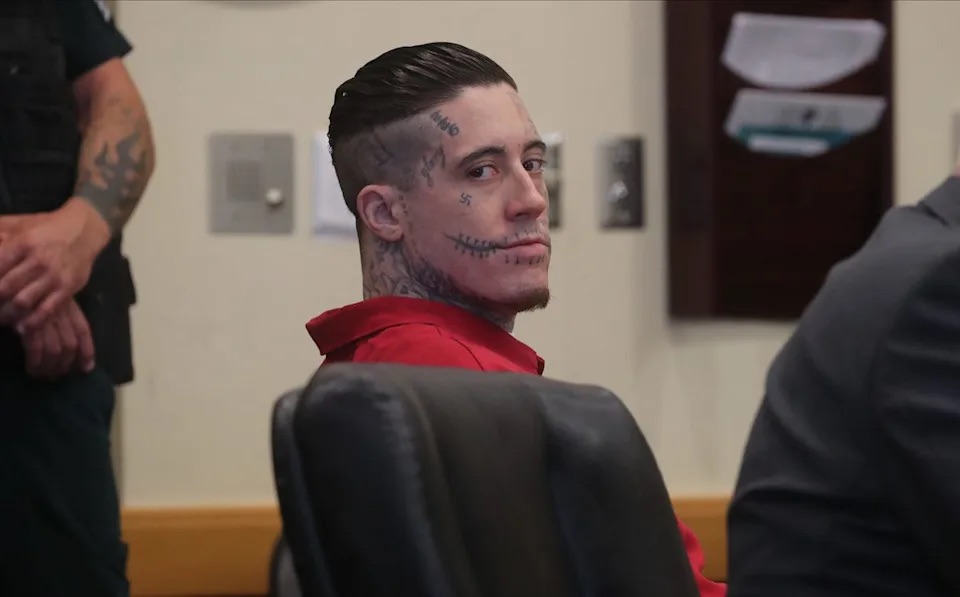
    Wade is sitting on death row. He’s gained weight. He’s lost his figure. He’s used his excess canteen money to purchase candy and other snacks, and entertain himself by eating in his cell. He’s also covered his face in obscene tattoos like swastikas and a skeleton. I’ve heard before that the worst punishment for a man like him is to lose his looks. I can’t help but agree.


    Sources
  • Two Female Teachers Face Felony Charges for Grooming the Same Male Student

    Two Female Teachers Face Felony Charges for Grooming the Same Male Student

    Centennial High School in Peoria, Arizona, which serves about 2,000 students in grades nine through 12, is under scrutiny for having not one, but two, female teachers being investigated for grooming the same male student. The school, which is part of Peoria Unified School District, is located 20 miles outside of Phoenix.

    Centennial High School in Peoria, Arizona. Photo from Homes.com.

    The teachers, Angela Burlaka, 49, and Haley Beck, 27, were terminated and deemed ineligible for rehire at Centennial High School, but neither of them have been arrested or charged (yet). Burlaka worked there for 26 years and was the current director of Cooperative Education and Beck began her employment in 2020.

    The investigation began when a male student showed his grandmother a video on his phone of Burlaka masturbating in the shower. Identifying tattoos were visible in the video that were ultimately used to positively identify Burlaka. The grandmother called police to report the incident.

    Around the same time, Peoria police received a tip from a former Centennial High School student about suspicions regarding Haley Beck, another teacher, and an inappropriate relationship with a male student—who happened to be the same student.

    When police spoke with Scott Hollabaugh, principal of Centennial High School, to follow up on both allegations, they learned he also received complaints about an inappropriate relationship between the victim and Beck. Despite knowledge of possible misconduct, Hollabaugh did not issue a report on Beck.

    Both teachers were placed on administrative leave in August 2025. Burlaka ultimately surrendered her teaching certificates and Beck was terminated. Peoria police submitted charges for Burlaka and Beck to the Maricopa County Attorney’s Office in February 2026, which were returned for further investigation and resubmitted on April 8, 2026. The recommended charges are as follows:

    • Burlaka: one count of furnishing obscene material to a minor, a class 4 felony punishable by more than three years in prison, fines and possible probation
    • Beck: one count of pandering, or inducing another to engage in prostitution, a class 5 felony punishable by up to 2.5 years in prison and fines of up to $150,000
    Haley Beck

    The victim was 18 when the investigation began, but he was groomed by both teachers when he was still a minor. Burlaka began communicating inappropriately with the victim when he was 16. Burlaka was not his teacher and it is is unknown as to how the communications began. Beck began grooming the victim during the 2023-2024 academic year, when he was a sophomore, and continued doing so until 2025. She was the victim’s psychology and sociology teacher during his sophomore and junior years.

    The victim has not wanted to cooperate with detectives due to concerns of it interfering with athletic scholarships. The victim has also since transferred to another school, which was allegedly motivated by athletics.

    Angela Burlaka.

    Investigation into Angela Burlaka

    Burlaka is alleged to have sent explicit sexual material to several 16- to 17-year-old football players at the school via text message and SnapChat. Burlaka allegedly told at least one minor male student that her “husband doesn’t satisfy me enough” and asked him to come to her classroom early.

    Information from the near-200-page police report (linked below) indicates Burlaka also began behaving oddly towards a female student after learning she was dating one of the football players. Whenever the female student asked to use the restroom, Burlaka accused her of going to see her boyfriend, and also frequently asked about this same boyfriend.

    The investigation is ongoing, but substantially more information exists publically about Beck, thus far.

    Investigation into Haley Beck

    Beck and the victim exchanged more than 4,000 texts between June 21, 2025 and August 2, 2025. Many of the texts were highly sexual in nature. Text records revealed that Beck offered the victim oral sex on multiple occasions; allowed him access to her vehicle, even handing her car keys to him in front of the girls’ soccer team, which she coached; offered to purchase tequila and marijuana for the victim; completed his homework, raised his grades and improved his attendance, and sent the victim $630 via Apple Pay over two months. In text exchanges, Beck referred to herself as a “sugar mama” and said,” This money exchange felt like straight prostitution.” It is also alleged that a video circulated of Beck engaging in oral sex with the victim.

    People interviewed by police disclosed telling details about Beck’s behaviors at the school and towards the victim. Beck openly favored male students over female students, showing particular favoritism to football team members. On at least one occasion, Beck invited some of the football players to swim at the pool in her apartment complex. She was also known to be unusually close with the female students on the soccer team she coached. She often communicated with them outside of school and offered to do favors for them. She’d also give them special privileges, such as allowing them to get lunch off campus and frequently paying for their food.

    Beck has been described as behaving more like a peer than an authority figure. She got involved in gossip and was concerned with what her students thought of her. Beck was seemingly fixated on reliving her high school experience; a statement that was actually insinuated by the victim, who said she was “stuck in high school.” She frequently took TikTok videos with her underage students and shared them via the platform without parental consent. Many students and staff alike acknowledged Beck’s strange behaviors with students.

    Beck also is the sister of famous TikToker and “Baywatch” star Noah Beck. A TikTok video of Noah and Haley Beck allegedly recently surfaced, where she described all her “best friends” as being some of her students.

    Police issued a search warrant of Beck’s apartment and vehicle in August 2025. Bodily fluids were identified in the backseat. In Beck’s apartment, police seized a long handwritten letter addressed to the victim. The letter was included in the police report and reads verbatim as follows:

    You’re probs gonna think this is cheesy as hell but you know I’m a words girly. I know, I know…you aren’t dying + you’re literally just a text away but I had little notes from people when I was away studying abroad + would just read them whenever I was feelin a little lonely. Obviously, w/ you being away from your closest people, you may feel that way at some point. So read this if you do 12 I’m really proud of you for choosing yourself in this situation even though I know it was tough. It’s kinda crazy to look back + realize in my 2 years of knowing you, our relationship has changed so much. I’m really glad I had the opportunity to teach you your sophomore year bc without that, we would’ve never really been chill w/ each other! I know there’s some random times/days where you decide to hate me – but that’s okay bc I know at the end of the day, we’re solid (most of the time). I genuinely feel like you’re a brother (weird…maybe a cousin or step-bro 12) + truly never thought I would be in this situation w/ you, but I’m glad to have you as someone who I think will be in my life for a while. Even if we don’t talk all the time now or even @ all when you’re in college, I feel like our little bond will always be there – so just hit me up when you wanna go get wasted @ a bar together. And I’ll send you my wedding invite one day.

    I know you are nostalgic af so I hope you look back at our time as a good one 12 and no, this isn’t me like saying good bye, but I know things will be different. But don’t forget our first pickleball hang out + how you wouldn’t get out of my car for like 3 hours, or our sonic run after your state game, or all the random times you “fell asleep” on my couch just waiting for me to invite you into my room (lol). Oooohh our go-kart experience + our word games @ shake shack! You know, for this “relationship” being extremely wrong, I feel like we have really made the most of it. I’m glad I got to come to your tattoo appts (even if you just wanted me to bring u food). All of our car hangouts were fun, too (for eating + other stuff lol). Or our night adventure in Cali! Like there is truly no other student (I know, so wrong) that I’d want to do all this with. Don’t let this all go to your head, but I’m glad you’re in my life 1 – okay ew wtf. I mean, you’ve been to my parents house…in their closet…insane. I feel like you have opened up to me about a lot of things. I’m glad that I’ve been able to be someone you can talk to. Even though sometimes my advice or input is unsolicited, I’m happy we can talk about things. You know you can always reach out of your neee anything 1.

    I won’t lie, I would always look forward to when you would come over. Not even to do anything – but just to hang. I feel like I got good @ being by myself, but even w/ you, it was still just easy. Whether it was to talk, watch movies, make pizza, or do other stuff, I’m glad we have those mems. And lastly, it kinda hit me that it’ll be weird not seeing you during storm the halls + even weirder not seeing you on the field. I’m sure you knew this, but you’re the reason I went to all the games I could. Before I knew you well, I’d go to a few games a season, but last season I wanted to go to as many as I could + I’m glad I did because those were the last ones I’d be at for you 12. It’s not going to be the same, but I’m happy knowing you’re happy w/ where you’re at. I’m proud of you to all you’ve done + all you’ll continue to do. This is just the beginning! Even though you will go to your grave saying “we aren’t peers” I’m glad to have you as a friend. Like bro, you’re the 1st person that got me to smoke weed. You’re always gonna have that title, so we’re locked for real. And maybe one day we’ll be able to go to the aquarium 12. I’m here whenever 1. Even though you never say it back, I love you + wish you all the best, always 1.

    Love, HB

    It should be noted that the victim was 18 when the above communications were made, though grooming is alleged to have begun when he was still a minor, and that Beck used “predatory practices,” such as the exchange of money, to lure him.

    Of Beck’s conduct, Peoria Unified School District released the following statement:

    “The respondent maintained her professional position and used her power to manipulate the complainant and to develop a relationship outside the professional boundaries between student and teacher. These grooming actions were by definition unwelcome, and the behavior is severe, pervasive and objectively offensive.”

    Mandatory Reporting

    Under Arizona State law, any adult who works closely with children and has reason to believe a child is being abused or neglected is required to immediately contact police or the Department of Child Services (DCS). Mandatory reporters include school staff and faculty, law enforcement, medical professionals and religious leaders, as well as the child’s parents or guardians.

    The victim’s mother was aware of their inappropriate relationship. She told investigators that Beck and her son began a sexual relationship when he turned 17 and she told him to “end it.” The victim was a star athlete on a varsity team that won multiple championships, and he and his parents didn’t want him coming forward due to fear of it harming his chances at an athletic scholarship. In this case, the school principal and the victim’s mother were aware of an incident occurring before it was reported. In the state, failing to report child sexual abuse is a class 6 felony.

    Peoria police did not issue charges against anyone who may have failed to report a crime, in this situation, because it “did not meet the legal threshold required to establish reasonable suspicion of abuse that would mandate a report to law enforcement or child protective services,” according to Arizona’s Family.

    More to come as the story develops.


    Sources
  • Erin Caffey Masterminds Family Massacre To Be With Teen Boyfriend

    Erin Caffey Masterminds Family Massacre To Be With Teen Boyfriend

    Erin Caffey, 16, and Charlie Wilkinson, 18, were knee-deep in their romance. The teens were simply consumed with each other. Unfortunately, being young and “in love”didn’t work in their favor. Rather, it was the beginning of the end for them both—and Erin’s family.

    Erin was under the watchful eye of her conservative Christian parents, who monitored when and where Erin and Charlie saw each other, and for how long. If Erin broke one of their rules, like her weeknight phone curfew, she’d have consequences, which often involved reducing time spent with Charlie. Intended to ensure her relationship didn’t overtake her life or become too serious for a girl her age, the restrictions only made Erin and Charlie pine for each other more. They spoke of running away together when Erin turned 17. Charlie suggested getting Erin pregnant, so the Caffey’s would have to fully accept him and their relationship.

    When Erin’s parents demanded she end the relationship out of concern for Charlie’s intentions and character, the couple made the inequivocally evil decision to hurt those who loved Erin the most, by taking their lives. This case is widely known as being featured on shows including “Killer Women with Piers Morgan”, now available on Netflix, and Dr. Phil.

    From left: Matthew “Bubba” Caffey, Terry Caffey, Tyler Caffey, Penny Caffey and Erin Caffey. Photo sourced from Murderpedia.

    A Wholesome Life Destroyed

    Erin Michelle Caffey, 16, was the eldest child and only daughter of Penny, 38, and Terry Caffey, 41. The couple also shared two younger children: Matthew, 13, known as “Bubba,” and Tyler, 8. The family lived in Alba, Texas, a rural town of less than 500 residents, seated halfway between Sulphur Springs and Tyler. Their home was a secluded two-story cabin nestled in the woods on 20 acres of land, and seated at the end of a long and narrow gravel road.

    Penny was a stay-at-home mom and Terry worked as a home health aid and lay preacher; a member of the church who is not ordained and does not hold a formal degree in theology, but is permitted by their church to lead services. The Caffeys were members of Miracle Faith Baptist Church in Emory, Texas, where Terry and Penny were youth ministers. The family attended Bible study on Wednesdays and church on Sundays and devoted time to rehearsing gospels together. Penny played piano and Bubba played the harmonica, while Erin sang in the choir and often performed solo. On occasion, Erin became so moved from the Bible verses she sang, that she’d break into tears and pause mid-song.

    Miracle Faith Baptist Church. Photo from Facebook.

    Faith was paramount to the Caffeys, partly because it brought Penny and Terry together. The couple met at a revival meeting in Garland, Texas, when Penny was 21 and Terry was 24. Above their driveway hung a plank which read: “The Caffeys—Joshua 24:15.” The verse is as follows: “If it seem evil unto you to serve the Lord, choose you this day whom ye will serve . . . as for me and my house, we will serve the Lord.”

    Penny began homeschooling the children in 2005, after moving from Celeste to Alba—an hour’s distance—and intentionally taught them a Bible-based curriculum. There were a few reasons that informed her decision to homeschool, one of them being Erin’s attention deficit disorder (ADD) diagnosis. Now known as inattentive attention deficit/hyperactivity disorder (ADHD), the condition is characterized by impulsive behaviors, hyperactivity, poor memory and focus, and organizational difficulties.

    The other reason was because, when enrolled at Rains Junior High for a month, Erin was approached by a female student who expressed romantic interest and kissed her in the hallway. The incident proved so concerning to her conservative parents that they removed Erin and their other children from the public school system. As someone who enjoyed socializing, homeschooling isolated Erin, confining her to home and church, where she was almost always under supervision. In 2008, the children were re-enrolled into public school, with Erin attending Rains High School six weeks prior to the murders.

    Erin Caffey. Photo sourced from Murderpedia.

    Erin Meets Charlie

    In 2007, Erin, who stood at just 4’11”, made a few steps toward gaining independence. She earned her driver’s license and got a job working at Sonic, a fast-food chain restaurant. Her father bought her an old Chevy pickup truck to drive to and from work.

    Erin worked as a carhop, delivering to-go orders to customers’ vehicles. She was the only carhop who wore roller skates for each shift and thus quickly became well-recognized amongst locals. One of Erin’s coworkers described her as being so sheltered, the experience was akin to her “seeing the world for the first time.”

    Male attention wasn’t new to Erin. She had many admirers at church, some of whom even credited Erin with deepening their faith. The least reserved of the Caffey children, Erin sought and thrived on attention. However, the perception about her was split: some young men secretly admired her while others thought her painfully naive. When men flirted with Erin at work, she simply blushed and smiled.

    During one shift, Erin skated over to the 1991 Ford Explorer of 18-year-old country boy, Charlie Wilkinson. Immediate chemistry sparked between them. Charlie began visiting Erin at Sonic and around Halloween of 2007, he asked her to be his girlfriend.

    Erin’s parents weren’t crazy about Charlie, a legal adult, being involved with their daughter, but they were supportive within parameters. The Caffey’s allowed Charlie over their home, so long as the couple remained in view and he left by 9 pm. Charlie became a frequent dinner guest at the Caffey residence. When Charlie left, they’d talk on the phone until Erin’s phone curfew of 10 pm on weekdays or 11 pm on weekends.

    Outside of the familial home, Charlie tried to prove his dedication by attending church at Miracle Faith Baptist Church. He fell fast and hard for Erin and often described her as “his soulmate to anyone who’d listen.

    Charlie Wilkinson and Erin Caffey. Photo sourced from Murderpedia.

    The Boy Who Fell Under Her Spell

    Charlie Wilkinson was, by all accounts, a simple man from humble beginnings. He had blue eyes and sandy hair, and typically wore his signature Wrangler jeans, and black cowboy boots and hat. He didn’t have a lot of money, but he had some plans. When Charlie met Erin, he recently returned home from boot camp at Fort Sill, Oklahoma, with the National Guard Texas unit. After graduating high school the following year, he planned to go on active duty.

    Charlie lived with his father, stepmother, stepbrother, stepsister and half-sister. He loved the outdoors, especially fishing and four-wheeling, and was skilled at hunting. Though some described him as “hot-headed,” he didn’t have a record of serious disciplinary issues at school.

    Young Love or Infatuation?

    Once Erin returned to public school in December 2007, she and Charlie became inseparable. They held hands in the hallways and snuck off to Erin’s truck to have “alone time” whenever possible. The Caffey’s also allowed them to go on occasional dates—though while Terry and Penny believed their daughter dined out with her boyfriend, the couple was at a friend’s house, fooling around. Sometime that month, Erin and Charlie had sex for the first time, less than two months after their relationship officially began.

    After their sexual relationship progressed, Charles proposed to Erin with his grandmother’s engagement ring symbolizing a promise ring. Penny demanded her daughter return it, believing it too mature of a decision for their 16-year-old daughter. Also outraged, Terry approached Charlie as he was playing basketball outside the church fellowship hall, describing the proposal as inappropriate. From then on, the couple’s out-of-school interactions were limited to once a week and supervised.

    Erin was livid about her parents reducing time with Charlie. She felt they were controlling and unfair, and began talking with Charlie about running away together when she turned 17. Arguments between Erin and her mother escalated, and on at least one occasion, Erin claimed that Penny slapped her.

    Charlie’s visits temporarily came to a full stop in early February 2008, when Penny caught Erin talking on the phone with him after her 10 pm phone curfew. In addition to suspending the visits, she confiscated Erin’s cell phone and car keys, and drove her to and from school for a time. Erin’s freedom was reduced to nothing and her time with Charlie was now restricted to school. Her parents wanted Erin to push the brakes on her relationship and return focus to her studies and faith.

    Terry was never enthusiastic about Charlie dating his daughter, noticing behaviors he felt were disrespectful. On one occasion, Terry returned home from work to find Charlie sitting in his armchair with his legs hanging over one side. Charlie did not stand up or shake Terry’s hand. He often told Penny, “If he can’t show me any respect, how does he treat our daughter?”

    With hardly any time to themselves and the desire to be together, a pivotal shift took place in Charlie and Erin’s conversations. Talk about killing Terry and Penny began. By accounts, Erin started the dialogue and kept it up constantly. She also told Charlie her parents were physically abusing her. Desperately “in love,” Charlie wanted to protect Erin—at all costs.

    Nonetheless, though Charlie was willing to do anything to be her, he didn’t want to kill her parents. Rather, he told a friend he only wished to run away with her. He told this friend he wished he could impregnate Erin so her family would have to accept him. Erin was against the idea, claiming she was too young to have a baby.

    Charlie didn’t know that Erin had these conversations with others before him. He thought she was intensely motivated by their “love” for one another, but that wasn’t so. He wasn’t the first boyfriend Erin enlisted to harm her family. Her ex-boyfriend, Michael Washburn, later came forward to state that Erin tried convincing him to kill them, to which he refused and ended their relationship.

    As the situation escalated, Penny and Terry reached their final straw with the couple’s relationship. On February 27, 2008, Penny went to the local library to search Charlie’s MySpace profile at the suggestion of her sister. On Charlie’s MySpace, where he referred to himself as “hillbilly,” Penny found references to sex with multiple people and drinking. Later that day, she and Terry forbid Erin from seeing Charlie and demanded that she end their relationship. Erin surprisingly complied, saying that she wanted to end it for awhile. However, behind the scenes, she and Charlie put their murderous plan into action.

    The Caffey residence after it was destroyed by the fire. Photo sourced from Murderpedia.

    The Night That Changed Everything

    After midnight on Saturday, March 1, 2008, Erin left the door to her home unlocked as she entered a vehicle with Bobbi Johnson, 18. Charlie Wilkinson and Charles Waid, 20, entered the home. Charles was a hunting buddy of Charlie’s, and Bobbi was his girlfriend and the owner of the vehicle they drove.

    It was approximately 3 am when Penny and Terry awoke to the sounds of their bedroom door smacking into the dryer in their laundry room, which sat next to their bedroom. Penny was shot, stabbed with a samarai sword and nearly decapitated. Terry was shot five times: twice in his back and near his right shoulder, and once in his head.

    Bubba and Tyler ran into Erin’s room to hide. Charlie busted into the room and Bubba kicked him repeatedly in attempts to defend himself. Charles heard the commotion upstairs and shot Bubba in the face. Prior to being shot, Terry recalled his son screaming, “Charlie! Charlie, why are you doing this? No! Charlie! No, please!” Tyler hid in his bedroom closet but was found and repeatedly stabbed with the samarai sword by both men.

    To conceal their crimes, Charlie and Charles set the home ablaze before escaping to a nearby mobile home owned by Charles’s brother, Matthew Waid. Nothing would remain of the home but its foundation.

    Terry managed to survive the shooting and crawled 500 yards—the length of four football fields—to the home of his neighbor, Tommy Gaston. The plight took him over an hour, during which he fell into a creek and nearly drowned. He wasn’t dressed for the weather, donning only his pajamas and a single sock, but he made it. Officer Charles Dickerson was the only officer on duty when the 9-1-1 call was made around 4:30 am. When Officer Dickerson arrived, Terry promptly informed him, “Charlie Wilkinson shot my family.”

    Charles “Charlie” Wilkinson’s booking photo. Photo sourced from Murderpedia.

    Arrests Made

    With direction from Sheriff’s Investigator Richard Almon, Chief Deputy Kurt Fischer and Sheriff’s Deputy Ed Emig, Charlie, Charles, Bobbi and Erin were located and arrested that same day. Everyone knew everyone in a small town like Alba. Chief Deputy Fischer knew Charlie, who was friends with his son. On the drive to the Gaston’s, he noticed Charlie’s vehicle parked outside Matthew Waid’s blue single-wide trailer.

    Acting quickly on the information Terey provided, police went to the trailer. Stepping over piles of clothes and empty beer cans, police found Matthew Waid and his girlfriend sleeping inside, who directed them to a room down the hall. Charlie laid on a bed with his shirt off. The room was dark. Towels covered the windows, preventing light from seeping in, and the room lacked any lighting. A semiautomatic handgun rested on the floor, as did spent shell casings and a used condom. His cowboy boots were splattered with blood.

    Chief Deputy Fischer arrested Charlie, read him his Miranda rights and questioned his involvement in the Caffey family massacre. Charlie claimed innocence: he passed out from drinking alcohol and was home that evening, he said. He was transported to the county jail for further questioning.

    Erin is Found

    With Charlie detained, Chief Deputy Fischer obtained a search warrant of Matthew Waid’s trailer. In the trailer, he located a camouflage purse containing Erin’s driver’s license, shell casings, a box of ammunition and a used condom. Then, he lifted a blanket from the floor, which revealed his most shocking find: a nest of blonde hair belonging to Erin. She laid in the fetal position. When asked how she got there, she said she didn’t know and questioned her whereabouts. She whispered to officers, “They’re coming after me.”

    Chief Deputy Fischer suspected Erin was under the influence of drugs because of her disconnected disposition and responses. She was transported to Hopkins Country Memorial Hospital in Sulphur Springs where she underwent a medical assessment and was interviewed by Chief of Police Shanna Sanders. Initially, investigators believed Erin was kidnapped. She claimed to recall two men dressed in black with swords and a house full of smoke. She also claimed to be 14 years old, and said she remembered trying to call Charlie, a friend, but was unable to reach him. She said she was unaware of how she reached the Waid trailer and that once there, she drank an unknown substance and blacked out.

    However, one clear fact remained: Erin didn’t smell like smoke.

    Erin Caffey’s booking photo. Photo sourced from Murderpedia.

    Erin’s maternal grandmother, Virginia Daily, came to the hospital to inform Erin that Terry was alive and receiving treatment at the East Texas Medical Center in Tyler. After five hours at the hospital, Erin was released. However, as her grandparents drove her to see her father, the escorting officers were instructed to detain Erin. She was implicated in her family’s murders.

    Erin’s toxicology results turned up negative, indicating the absence of any drugs that could cause memory loss. Her phone records showed that she called Charlie six times from 11:46 pm on February 29, 2008 until 12:48 am on March 1, 2008, and again seven times from 1:22 am to 1:58 am. She called repeatedly to ask Charlie where they were, and if they were still coming to carry out the deed.

    Charlie is Questioned—and the Truth is Exposed

    While investigators assumed Erin was innocent, Charlie was being interrogated by Detective Almon and Texas Ranger John Vance at the sheriff’s office in Emory. He confessed to everything, as did Charles and Bobbi. Erin was the only perpetrator involved who concocted a story.

    Charlie told investigators Erin was deeply angered by her parents’ demands to end their relationship. For the umpteenth time, she said she wanted them to die and asked Charlie to kill them. He insisted they run away instead, but she refused. She wanted the plan in action. So, at 1:30 am, Charlie and Charles drove to the Caffey residence with Bobbi, Charles driving Bobbi’s silver Dodge Neon. Spooked by the Caffey’s barking black Labrador, Charlie, Charles and Bobbi left only to return soon later. Erin took care of the dog, she said.

    Charles needed fast cash and Charlie agreed to pay him $2,000 if he helped kill them. The $2,000 was in a lockbox in the home, according to Erin, and was the exact anount Charles needed for court proceedings. He was in the process of divorcing his spouse and was in a child custody battle over his 5-month-old child. Bobbi allegedly didn’t know what the men planned to do.

    The group met Erin at the end of the driveway, where she hopped in the vehicle. The four of them drove around for an hour, stopping periodically at a nearby cemetery to discuss their plan; an ironic move considering what was to happen. Charlie continued insisting that Erin run away, but she was adamant about their plan. It was decided: Charlie would kill her parents and Charles would kill her brothers.

    Erin and Bobbi remained in the vehicle as Charlie and Charles entered the unlocked front door, carrying two samari swords and a .22-caliber pistol. They entered Penny and Terry’s bedroom first and subsequently went to Erin’s room, where her brothers hid. After the men believed all four people were dead, Charlie retrieved a suitcase that Erin packed previously. When he put the suitcase in the vehicle, Erin smiled. Charlie and Charles then went to collect the lockbox, which contained just $375. Before leaving, the men set furniture, clothing and bedsheets ablaze using their lighters. Then, they drove off, with Erin shouting,“Holy shit, that was awesome!”

    Charles, who was driving, dropped off Erin and Charlie at the trailer owned by his brother. Once inside, he and Erin had sex.

    Charles Waid’s booking photo. Photo sourced from Murderpedia.
    Bobbi Johnson’s booking photo. Photo sourced from Murderpedia.

    Legal Proceedings

    Because of the heinous nature of the crimes, Erin was tried in court as an adult. On January 2, 2009, she accepted a plea deal in exchange for two life sentences. She will be eligible for parole in 2038 at the age of 59.

    Charlie Wilkinson and Charles Waid also accepted plea deals to avoid the death penalty. Both were sentenced to life imprisonment without the possibility of parole. Charlie has since expressed remorse for the crimes.

    Bobbi Johnson was identified as an accomplice and sentenced to 40 years imprisonment. She will be eligible for parole in 2028.

    Erin Caffey and her father, Terry Caffey. Photo sourced from Murderpedia.

    Where Is Terry Caffey Now?

    Not long after the murders, Terry announced his public forgiveness of his daughter and the other perpetrators. Nonetheless, he struggled with thoughts of suicide. The first time he returned to the remains of his home, he looked upward and pleaded, “God, why didn’t you take me? Why did you take my family? I need an answer now! Not next week, not next month—now!” At that moment, he saw a piece of paper stuck to a tree that read, “You’re sovereign; You’re in control.” He believed it to be a sign from God, which motivated him to refute the death penalty for the perpetrators, stating their deaths wouldn’t bring back his family, and that Jesus would have “spared them.”

    To help his healing, Terry purchased a used RV and parked it where his house once stood. He remained there for about four months, sleeping with a loaded gun on his chest. He also drove to Greenville, Texas, where Erin was detained as a minor, to visit her twice a week. After her sentencing, he’d drive three hours once a month to visit Erin at the Hilltop Unit in Gatesville, Texas.

    Crediting his faith for helping him rebuild his life, Terry went on to become an ordained minister. He has since shared his story at more than 800 churches and 600 public schools. Seven months after the murders, Terry married Sonja Webb, a home health care aid he met at work. Unfortunately, his second marriage ended in divorce, with Terry citing that he moved on too quickly. He ultimately married again a few years later, and had a child with his current wife, Karen.


    Sources

  • What Really Happened to Caylee Anthony?

    What Really Happened to Caylee Anthony?

    The 2008 case of Casey Anthony and the death of her 2-year-old daughter Caylee Anthony is infamous. Arguably, anyone of a certain age and living in the U.S. with access to the internet is at least familiar with the case. It remains among the more perplexing cases because there’s no certainty; Casey is a habitual liar, which has been proven time and again, and what happened to Caylee is still heavily debated.

    More than seventeen years have since passed. Caylee would have been 20 years old today.

    As the trial unfolded, America watched in disbelief as Casey crafted a web of lies, and then created more lies to cover up the original lies. She was a master manipulator disguised in a petite form, which she played to her advantage. Many people found it perplexing that an attractive young woman was potentially capable of causing her daughter’s death—as if appearance is suggestive of culpability.

    It was disturbing to see photos of Casey dancing at night clubs, chasing men around, getting a tattoo and living life as if her daughter was never part of it, during the 31 days that Caylee’s disappearance went unreported. Parents nationwide couldn’t understand how Casey compartmentalized her daughter’s disappearance and slip on a mask that prevented anyone from suspecting something was array—until she was forced into a corner. But … did she act alone? Was her speculated involvement in Caylee’s death intentional?

    Welcome to what is probably one of the longer deep dives on this blog. Here, we’ll delve in to the case of Caylee Anthony’s disappearance and how Casey Anthony slipped through the (wide open) cracks of the justice system.


    Caylee Anthony Goes Missing: The Backstory

    Caylee Anthony.
    Photo from Facebook.

    Caylee Marie Anthony was born on August 9, 2005 in Orlando, Florida. Her mother, Casey Anthony, was 19 years old at the time. It’s been said that the name “Caylee” was a combination of Casey and her brother Lee’s names.

    Casey claimed her current boyfriend, Jesse Grund, was Caylee’s father; a DNA test proved otherwise. There were also rumors about the father being individuals named Eric Baker, Jesus Ortiz and “Josh.” Nonetheless, Caylee’s father was never named publicly. Casey has since claimed that Caylee’s father died in a motorcycle accident, was in the military, was a childhood acquaintance that passed away, and also that the pregnancy resulted from rape.

    The Anthony’s home at 4937 Hopespring Drive in Orlando, Florida.
    Photo from Google.

    After Caylee was born, she and her mom lived with Casey’s parents, Cindy and George Anthony, in a suburban area on Hopespring Drive in Orlando, Florida. George worked the swing shift as a security guard and Cindy worked day shifts as a nurse manager at a local hospital. By all accounts, they loved being grandparents and stepped in to help Casey with Caylee whenever possible. Both have described Casey as the light of their lives on numerous occasions.

    The grandparents overstepped their boundaries at times, which led to ongoing arguments between them and Casey, but particularly between Casey and Cindy. The arguments often related to expectations of Casey as a mother. Regardless, Caylee had family who genuinely loved her. Her bedroom was decorated in Winnie the Pooh, which she loved, and she even had a playhouse in the backyard complete with her own “address” and mailbox.

    Cindy and George Anthony.
    Credit: A&E Television /Mary Beth Koeth

    Caylee was bright, doe-eyed and charismatic. She loved watching SpongeBob SquarePants and Dora the Explorer, and swimming in the family’s aboveground pool. Impressively, Caylee was able to count to 40 in Spanish. She adoringly called George, “Jojo” and Cindy, “Cece.”

    By many accounts, Caylee and Casey shared a very close bond. For most of Caylee’s life, one was rarely seen without the other. Casey was known for being very attentive and loving, ensuring her daughter was clean, well fed and nurtured. But as time wore on, Casey began seeking the freedom that aligned more with a childless 22-year-old than a mother.

    In summer of 2008, Casey worked as an event planner at Universal Studios; a role that required her to work long hours, late nights and weekends. She previously worked for Kodiak (later Color Vision), a subcontractor for Universal Studios, from 2004 to 2006, which took and sold pictures of patrons on rides. (Despite having begun the manager trainee program, she was fired on April 24, 2006 for job abandonment.) The promotion to event planner was a step forward for Casey.

    Because she worked long hours, Casey needed help caring for Caylee. She learned of a local nanny through an ex-boyfriend, Jeffrey Hopkins, who once dated the nanny and and whose son, Zachary, was often left in her care. The nanny, Zenaida Fernandez Gonzalez, lived in Orlando, and quickly became someone Casey trusted with her daughter. Zenaida, known as “Zanny the Nanny,” remained Caylee’s nanny for nearly two years up until her disappearance. According to Casey, Zanny hailed from New York City, moved to Florida for college and settled in Orlando, having moved three times in the general area. She recently cut her hair short, drove a Ford Focus, and had a mother named Gloria, who was sickly, and a roommate named Raquel Ferrel. Casey told an acquaintance that she paid Zanny $400 a week to watch Caylee.

    In addition to working full time, in summer 2008 Casey started dating Anthony “Tony” Lazzaro, whom she met on Facebook. Lazzaro was a 21-year-old student studying music at Full Sail University in Winter Park, Florida, and a promoter for Fusion Ultra Lounge; a sushi bar that became a martini bar at night. It wasn’t long before Casey introduced Lazzaro to Caylee, and mother and daughter went to his off-campus apartment a handful of times together, located at Sutton Place Apartments, also in Winter Park.


    The Lead-Up to Caylee’s Disappearance

    As you’ll learn in this post, Caylee Anthony was missing for a total of 31 days before Casey reported her missing. Below, you’ll discover what Casey was doing in Caylee’s absence.

    Sun., June 15, 2008

    Cindy and Caylee visit Cindy’s father—Casey’s grandfather—at Avante Mt. Dora Nursing and Rehabilitation Center for Father’s Day. Cindy and Caylee subsequently return home and swim in the pool. Meanwhile, Casey spends the day with Lazzaro.

    That evening, Casey and Cindy argue about Casey stealing money from her grandparents and/or her not spending enough time with Caylee. Cindy’s concerns about Caylee’s welfare reaches the point where she threatens to gain legal guardianship of her. Casey’s brother, Lee, describes the argument as so intense that Cindy chokes Casey. A neighbor overhears and witnesses Casey yelling, “Fuck you, Mom! I don’t want to hear it anymore.” Then, Casey goes for a jog.

    Mon., June 16, 2008

    Casey starts her day messaging with a former love interest, Ryan Green, on AOL Instant Messenger (AIM) from 7:56 am to 8:06 am. At 10:27 am, she uploads a photo of the interior of Fusian Ultra Lounge to her Photobucket account.

    George alleges that Casey and Caylee leave the Anthony home around 12:50 pm. in Casey’s white 1998 Pontiac Sunfire, with both of them wearing backpacks. Caylee wears a pink shirt, jean shorts, pink socks, white sandals, white sunglasses and a backpack, and has her hair pulled back.

    However, phone records show that Casey doesn’t leave the Anthony home until 4:16 pm. Computer usage at the home is heaviest between 2 pm and 3 pm. Both Cindy and George are at work, so it’s assumed that Casey and Caylee return to the home after George leaves, or perhaps they never left at all.

    From 4:11 pm to 4:25 pm, Casey calls several people, including her mother, whom she calls six times. At 5:57 pm, she arrives at Lazzaro’s apartment without Caylee, where she stays for the next few weeks. At 7:54 pm, Casey and Lazzaro are seen on surveillance renting movies at a Blockbuster. Lazzaro’s roommates, Nathan Lesniewicz, Cameron Campana and Roy “Clint” House, claim to see Caylee two to three times since Casey starts dating Lazzaro.

    Cindy reaches out to Casey shortly after her and Caylee leave to ask about their plans to return. Casey tells her mom that Caylee is with Zanny.

    Over the next month, Casey lies about a series of work engagements that prevent her and Caylee from returning home. Zanny lives close to Universal Studios, which makes it convenient for Casey to leave her there. While staying with Lazzaro, Casey helps him with his job as a promoter at Fusion Ultra Lounge, where oversees the shot girls. She also frequently cooks, cleans and does the men’s laundry.

    Tues., June 17, 2008

    Casey stays at Lazzaro’s apartment until 2 pm. She goes to her parents’ home, arriving at 2:45 pm, during which she backs her car into the garage. She remains at the home until 4:30 pm. No one is present but Casey.

    Wed., June 18, 2008

    Casey stays at Lazzaro’s apartment until 12:30 pm. She tells Cindy she has a work event at Busch Gardens in Tampa, Florida, which keeps her and Caylee away for six days. Nonetheless, between 1:30 pm to 2:30 pm, Casey returns to her parents’ home again and asks a neighbor, Brian Burner, if she can borrow a shovel to dig up a bamboo root in the yard. Again, she backs her car into the garage.

    Casey tells her mother that Zanny comes on the trip to Tampa to watch Caylee while Casey attends meetings.

    Fri., June 20, 2008

    Casey Anthony participates in the Hot Body contest at Fusion Ultra Lounge.
    Photo from Reddit.

    Casey enters the infamous “Hot Body” contest at Fusion Ultra Lounge as a stand-in to encourage others to participate. She tells Cindy she is still attending a conference in Tampa, Florida.

    Sat. to Sun., June 21-22, 2008

    Casey tells a friend that Caylee is at the beach with Zanny. She continues telling Cindy that she’s in Tampa and staying at the Hard Rock Hotel.

    Mon., June 23, 2008

    Casey is at Lazzaro’s apartment until around 1:30 pm. Around 2:30 pm, she drives toward her parents’ home but calls Lazzaro at 2:45 pm when her car runs out of gas. Lazzaro finds Casey, picks her up, and brings her to the Anthony home. She asks Lazzaro to break the lock on George’s shed, so she can steal cans of gas.

    Tues., June 24, 2008

    George discovers his shed lock is broken and his gas cans are missing. He files a police report with the Orange County Sheriff’s Office (OCSO) about the theft.

    Around 2:30 pm, Casey goes to her parents and runs in to George. George says he needs to get something out of Casey’s trunk. Casey brushes past him, takes the gas cans and throws them at her father saying, “Here’s your fucking gas cans,” and then gets in her vehicle and leaves. She subsequently calls Cindy to talk about what happened.

    When Cindy asks why Casey is in Orlando when she claimed to be in Tampa, she says that Zanny is hospitalized after being in a car accident and she needed to retrieve Zanny’s insurance information from her home on her behalf.

    Wed., June 25, 2008

    Casey tells her friend Amy Hyzienga—whom she is looking for an apartment with—that her car has a foul smell, which she believes is coming from the engine.

    Thurs., June 26, 2008

    Casey spends most of the day at Lazzaro’s apartment. When she speaks with Cindy, Casey says Zanny was released from the hospital late and her and Caylee are spending another night at the Hard Rock Hotel in Tampa.

    Fri., June 27, 2008

    Fusion Ultra Lounge in Orlando, Florida. The restaurant/nightclub has since closed.
    Photo from Facebook.

    Casey is in the vicinity of her parents’ house around 11:30 am, where she remains for the next half-hour. She texts Hyzienga about an animal being plastered to the frame of her car.

    Casey’s car runs out of gas again, this time at an Amscott in University Boulevard in Orlando. She calls Lazzaro to pick her up. When he arrives, she is holding a large grocery bag of food she collected from her parents’ house.

    At 2:51 pm, Lazzaro and Casey are seen at J.C. Penny’s, where he purchases sneakers. That night, the couple goes to Fusion Ultra Lounge.

    Sat. to Sun., June 28-29, 2008

    Casey tells Cindy that she and Caylee are still at the Hard Rock Hotel in Tampa. Instead, Casey spends time with Lazzaro, during which they visit a Blockbuster and rent a movie.

    Mon., June 30, 2008

    Lazzaro has a planned trip to his home state of New York. Casey drives Lazzaro to the airport using his car and subsequently visits a Target store with Hyzienga.

    Later that day, Casey’s car is impounded and brought to Johnson’s Wrecker in Orlando.

    When Cindy asks for Caylee, Casey says she is working late and claims that Caylee is now with Jennifer Rosa, a relative of Zanny’s, and they are at Universal Studios.

    Tues., July 1, 2008

    With Lazzaro in New York, Casey spends the night at the apartment of her ex-fiancé, Jesse Grund. Caylee is not with her.

    She initially shows up at Grund’s apartment to shower around 4 pm or 5 pm, and then meets Huizenga at J.C. Penny’s and subsequently visits Ale House, a popular bar in Orlando.

    Wed., July 2, 2008

    Casey visits a Ross clothing store and makes a tattoo appointment. That night, she visits two night clubs, Club Voyage and Mako, and sleeps at Huizenga’s apartment. When Huizenga asks about Caylee, she says Caylee is at the park, which is also what she tells her mother Cindy.

    Thurs., July 3, 2008

    Casey Anthony’s “Bella Vita” tattoo.
    Photo credit: Yahoo

    Cindy drives to Universal Studios in attempts to get ahold of Casey and/or see Caylee, because Casey told her that Caylee was attending a character breakfast. After Cindy arrives, Casey tells her that she and Caylee are now in Jacksonville, Florida, visiting Jeffrey Hopkins to rekindle a relationship. She texts her ex-fiance Grund saying not to respond to potential texts from her family because they are “crazy.” She also goes shopping at the Florida Mall in South Orlando with an acquaintance, Melissa England.

    That same day, Casey gets the now-infamous tattoo, “bella vita” on her left shoulder blade. The tattoo is Italian for “beautiful life.”

    That night, Cindy shares a MySpace post titled, “My Caylee is missing.” Her only friend on MySpace is Casey and she makes the post to attract her attention. Cindy also reaches out to her son, Lee, for help tracking down Casey.

    Lee does some online sleuthing and discovers Casey will likely be at a night club in Orlando. He goes with his then-girlfriend (now wife) Mallorie Parker to look for Casey, but someone catches wind of Lee and tells Casey, who hightails it out of the area to avoid confrontation.

    Fri., July 4, 2008

    Casey tells Cindy that she and Caylee are still in Jacksonville, and tells Grund that Caylee is at SeaWorld.

    Rather, Casey is at the home of a new friend, William Walters, helping him and Hyzienga plan a Fourth of July party at Lake Lineola. She drinks, watches fireworks and has a great time.

    Sat., July 5, 2008

    Casey goes to IKEA with Walters, under the guise that she is looking for furniture for her and Hyzienga’s future apartment. She also has lunch with Walters. She then meets up with Lazzaro, who returns to Orlando, has dinner with him at Buffalo Wild Wings and watches a UFC fight.

    When Cindy calls, Casey tells her that her car broke down in Jacksonville, leaving her and Caylee stuck at Hopkins’ house for a few more days. She says Caylee is playing with Hopkins’ son, Zachary.

    Fri., July 11, 2008

    Casey goes to Fusion Ultra Lounge.

    Sat., July 12, 2008

    Casey goes to a Win Dixie at 9:30 pm.

    Sun., July 13, 2008

    Casey tells Cindy that she and Caylee have to stay in Jacksonville longer to attend the wedding of Hopkins’ mother, Jules.

    Tues., July 15, 2008

    Cindy and George receive a letter in the mail about Casey’s vehicle being impounded. Cindy and George retrieve Casey’s car and attempt to contact her without luck. By their accounts, the vehicle has a strong smell akin to garbage.

    Meanwhile, Casey drives Huizenga’s car, as she is in Puerto Rico on vacation. Casey calls the tattoo shop to make another appointment and cashes a check at Bank of America around 1:30 pm. She then drives to the airport to pick up Huizenga and Ricardo Morales—an ex-boyfriend she dated in winter and spring of 2008—all the while speaking to Erika Gonzalez, a shot girl at Fusion Ultra Lounge, and pretending she is with Caylee.

    Cindy searches Casey’s car for clues about what’s going on. In the car she finds Casey’s work bag, which contains Huizenga’s contact information. Cindy never met Huizenga, but nonetheless calls her, tells her what’s going on and asks to pick her up. Huizenga agrees and confirms that Casey is in Orlando living with Lazzaro, and she never left the area in past month as she claimed.

    Cindy goes to Lazzaro’s apartment with Huizenga, where she finds Casey but not Caylee. She demands Casey take her to see Caylee, and they drive around for two hours before Cindy calls the police.


    Caylee is Reported Missing; Casey is Arrested and the Investigation Begins

    Below is the timeline that follows Cindy Anthony’s phone call to 9-1-1.

    Tues., July 15, 2008

    Cindy places several calls to 9-1-1. First, she asks police to arrest Casey for grand theft auto. Next, she reports Caylee missing.

    During one of these phone calls, she makes the now-infamous statement:

    There is something wrong. I found my daughter’s car today and it smells like there’s been a dead body in the damn car.”

    Cindy puts Casey on the phone at the request of the 9-1-1 operator. Casey sounds agitated. Casey tells her mother and the operator that Zanny took Caylee, and that she spoke with Caylee briefly that day, but the phone number is no longer in service. When asked why she waited 31 days to report her daughter missing, Casey says:

    “I have been looking for her and have gone through other resources to try and find her, which is stupid.”

    Casey later tells investigators that she was introduced to Zanny through Hopkins, who uses the nanny’s services for his son. Investigators identify an individual named Jeffrey Hopkins, a former middle school acquaintance of Casey’s, who lives in Orlando. Though Hopkins worked for Universal Studios in 2002, he doesn’t recall seeing Casey there. In fact, Hopkins has no children, doesn’t know anyone named Zenaida Fernandez-Gonzalez, doesn’t have a trust fund (as Casey told her mother), never dated Casey, and never lived in Jacksonville.

    Wed., July 16, 2008

    Casey Anthony’s white 1998 Pontiac Sunfire.

    Police seize Casey’s vehicle. Cadaver dogs pick up the scent of human decomposition in Casey’s trunk and in the Anthony’s backyard, near Caylee’s playhouse. Forensic testing confirms the presence of decomposition in Casey’s trunk the next day.

    Casey is arrested on charges of child neglect, giving false statements and obstruction for lying about Caylee’s whereabouts. She is brought in for questioning and speaks with Detective John Allen, former sergeant with the Orange County Sheriff’s Office Criminal Investigation Division. While Casey fills out paperwork she and Detective Allen engage in small talk, during which she mostly speaks of her aspirations to become a personal trainer. She does not speak about Caylee.

    Zanny and Hopkins Don’t Exist

    Casey tells Detective Allen that Caylee was last seen with Zanny. Police ask Casey to direct them to Zanny’s residence and she brings them to a unit at the Sawgrass Apartments that was vacant for 142 days. (Casey is familiar with the complex because it’s where her former best friend, Annie Downing, once lived.) She is unable to provide Zanny’s phone number because she claims to have lost her phone at work.

    Police learn that no one named Zenaida Fernandez-Gonzalez ever lived at the Sawgrass Apartments. A woman with the same name is located in Orlando, but police confirm there no connection to Casey or Caylee. The real Zenaida Fernandez-Gonzalez had filled out a visitor form to look at an apartment in the complex, but she never lived there. Having found that Casey created a fictional version of Hopkins, they are highly suspicious of her statements about Zanny.

    Casey Doesn’t Work at Universal Studios

    Detective Yuri Melich contacts Leonard Turtya, assistant manager at the Loss Prevention Department at Universal Studios, to inquire about Casey’s job. It’s determined that Casey is not an employee and never was, though she worked for Kodiak (later Color Vision), a subcontractor of Universal Studios, from 2004 to 2006. Police also learn that other colleagues Casey mentioned did not work there either, including Juliette Lewis and Cheryl Davis, and perhaps never existed.

    Detective Allen and Detective Appling Wells pick up Casey to bring her to Universal Studios. She meets with Detective Melich and and Turtua in the employee parking lot. Casey leads them to a building and down a hallway, all the while waving to other people working there. When she reaches the end of the hallway, Casey turns around, puts her hands in her pockets and, with a smile, declares she she doesn’t work there. She is subsequently brought into a conference room, where she is interrogated.

    Casey Anthony’s mugshot photo.
    Photo credit: Orange County Police Department.

    Casey is arrested and charged with child neglect, making false official statements, and obstructing an investigation. Bail is set at $500,000, with her father’s claims of Casey’s vehicle smelling like a dead body—George Anthony previously worked in law enforcement—serving as incriminating evidence.

    Wed., Aug. 20, 2008

    The high-profile nature of the case draws the attention of Leonard Padilla, a bounty hunter from California. Padilla pays Casey’s bond with the intent that if Casey is not in jail, she can better aid in the search for Caylee.

    Fri., Aug. 29, 2008

    The bond is rescinded when Casey is arrested for stealing and cashing four checks worth about $650 from Huizenga.

    Tues., Oct. 14, 2008

    Casey is indicted on seven criminal charges, including first-degree murder. She enters a not-guilty plea.

    Fri., Jan. 23, 2009

    Due to the stress wrought on George by the investigation—the loss of his granddaughter coupled with Casey’s allegations of sexual abuse, which he has and continues to refute—George is hospitalized after a suicide attempt. He is found in a Daytona Beach, Florida, hotel, alongside a five-page suicide note and under the influence of medication and alcohol.


    Caylee’s Remains are Found

    The area where Caylee’s body was found was decorated by community members to honor her memory.

    On December 11, 2008, five months after Caylee disappeared, her skeletal remains are discovered in a wooded area off Suburban Drive, less than 0.3 miles from the Anthony home and within site of the local elementary school. Her body is discovered by Roy Kronk, a meter reader for Orange County, Florida. Deputy Edward Turso reports to the scene and confirm skeletal remains.

    Because Caylee’s body was exposed to the elements for six months, it wasn’t possible to determine the cause of death; nonetheless, many clues were still gathered at the scene. On December 20, 2008, the medical examiner rules Caylee’s death a homicide due to the handling and location of the body.

    Caylee is found with three pieces of overlapping duct tape covering her nose and mouth, and wrapped around her jaw. Overtop the duct tape that is placed on her mouth is a heart sticker. The same brand of duct tape, which is not widely available, is found in the Anthony home and on gas cans in the garage. Stickers matching the one on the duct tape are found in the Anthony home. The body is wrapped in a Winnie the Pooh blanket—the same blanket that was missing from the Anthony home—and placed inside two plastic bags, which are placed inside a laundry canvas bag and put behind a rotting log. The laundry bag comes in a set of two, and the matching bag is located in the Anthony home.

    Curiously, Kronk initially contacts the Orange County Sheriff’s Office (OCSO) on August 11, 2008 to report a suspicious gray bag in a wooded area off Suburban Drive. An officer arrives at the scene, but doesn’t thoroughly investigate. Plagued by a bad feeling, Kronk calls again on August 12, 2008, to report the same gray bag. This time, Deputy Elizabeth Collins responds, but she does not enter the wooded area. Determined, Kronk calls again on August 13, 2008 and meets with Deputy Richard Cain, who briefly searches the area but claims the bag is trash.

    Because of the failure to thoroughly investigate the scene earlier, an internal investigation is launched into Deputy Cain.


    The Murder Trial

    Casey Anthony at the Florida vs. Casey Anthony trial.

    The trial of Florida vs. Casey Anthony begins on May 24, 2011. It is heavily watched, publicized and scrutinized.

    Finding jurors is a major challenge because most people are familiar with the case. Instead of finding jurors who never heard of Casey or Caylee Anthony, the court selects jurors who state they are unbiased. The trial goes on for six weeks and is overseen by Belvin Perry, former chief judge in Florida’s Ninth Judicial Circuit.

    The Prosecution

    The prosecution, led by Assistant State Attorney Linda Drane Burdick and supported by Assistsnt State Attorneys Frank George and Jeff Ashton, paint a picture of Casey as a young mother who wants to freely party, date, and live on her own accord, and who intentionally killed her daughter via suffocation to relieve herself of the responsibilities of motherhood. Having found searches for “chloroform” and “neck breaking” on the family’s computer when Casey was home, the prosecution alleges that Casey used chloroform to suffocate Caylee, after which she placed duct tape on her nose and mouth.

    Assistant State Attorney Linda Drane Burdick tells the court:

    “As difficult as it may be for anyone to accept that a mother would intentionally kill her own child — from the evidence you will hear in this case there is no other conclusion that can be drawn,” Burdick said. “No one but Casey Anthony had access to all the pieces of evidence in this case … no one else lied to their friends, to their family, to the investigators. No one else benefited from the death of Caylee Marie Anthony.”

    The prosecution notes several others points of evidence, which include:

    • human hair found in the trunk of Casey’s car, which is traced to the Anthony’s female lineage via mitochondrial DNA testing: the hair displayed root banding, which is a distinct band of discoloration consistent with decomposition
    • a high presence of chloroform in the trunk of Casey’s car, although it is uncertain whether it was used to subdue Caylee or was simply present in cleaning products
    • a stained paper towel found in the trunk of Casey’s car, which contained fly pupa; the stain is identified as grave wax, produced from the decomposition of human fat
    • the presence of 41 of 424 compounds associated with decomposition in the trunk of Casey’s car
    • the fabrication of Zanny the Nanny
    • the same duct tape used to cover Caylee’s mouth also found in the Anthony household
    • several computer searches on the Anthony family computer for “chloroform”, “neck breaking”, “hydrogen peroxide death”, “how to make chloroform”, “household weapons”, “inhalation chloroform,” “alcohol acetone”, “hydrogen peroxide death”, “shovel”, “making weapons out of household objects”, and “chloroform habit” on various dates in March 2008

    On June 23, 2011, Cindy Anthony takes the stand to refute some of the prosecutor’s arguments. She testifies that she searched “chloroform” on the family computer—despite her being at work at the time. She claims that her dogsn ate bamboo leaves and she was curious if there were any ill effects.

    The Defense

    The defense, led by Attorney Jose Baez—who later defended Aaron Hernandez and Harvey Weinstein—and co-counsel James Cheney Mason, claim that Caylee accidentally drowned in the family pool and George helped cover up her death. To argue their point, the defense notes the following:

    • Zanny the Nanny was fabricated and Casey lied to police throughout the investigation as a result of having learned to lie throughout her life from her father, George Anthony, who sexually molested her as a child
    • no fingerprints are found on the duct tape found on Caylee’s person
    • no blood seen or found on Casey’s belongings

    It is evident that Casey lied throughout the investigation and for years prior, and the defense doesn’t dismiss her behavior patterns; however, reasoning is given as to why Casey lied so often. During the trial, Casey claims her father and older brother, Lee, sexually abused and molested her as a child. The claims are never proven and George and Lee denied them claims and have ever since. Casey claims these memories resurfaced when she was incarcerated and awaiting trial. To support her claim, she says that she never allowed Caylee to be alone with George (false) and she ensured Caylee slept with her so George didn’t have access to her. Casey also claims George assisted her with disposing Caylee’s body, which he has also adamantly refused.

    Casey is Found Not Guilty

    On July 5, 2011, after 10 hours of deliberation, Casey is found not guilty of first-degree murder, manslaughter or child abuse. She is convicted on four counts of lying to police; all misdemeanor charges. On July 7, Casey is sentenced to four years in jail and a $4,000 fine, one for each charge, and she is ordered to pay the $213,000 to the Orange County Sheriff’s Office to pay for the cost of the search for Caylee. Because Casey was previously incarcerated and earned reduced time for good behavior, she is released from Orange County Jail just 10 days later. Casey is free to go.


    Casey’s Inconsistencies

    Below are some inconsistencies in Casey’s statements that are worthy of note:

    • Casey claimed memories of George sexually abusing her resurfaced in jail—but she also claimed that Caylee was never alone with him and slept with Casey, with the door locked, so George wouldn’t have access to her—which was before the memories “resurfaced.” She also believed George “was with” Caylee during the entire 31 days she was “missing,” and told George on a jailhouse phone call that he was “the best grandpa.” So, which one is it?
    • Casey claimed George took and disposed of Caylee’s body, but how does this explain the presence of chloroform, coffin flies, decomposition material, and a hair with root banding inside of Casey’s trunk, coupled with the smell, if Caylee was never inside?
    • Casey claimed that Caylee drowned in the pool, but she was found with duct tape over her mouth and nose, in what appeared to be a staged homicide. If her death was accidental, why the attempt to make it look intentional?
    • Casey claimed the last time she saw Caylee was when she dropped her off at the bottom of the stairs at the Sawgrass Apartment Complex leading up to Zanny’s apartment. She later claimed that she met Zanny in a park, and Zanny aggressively threw her down and took Caylee from her. (Either way, Zanny was fictional.)
    • Casey claimed to have slept late on the morning of Caylee’s alleged disappearance because she didn’t feel well, but phone and computer records showed she was up late texting and talking to Lazzaro, and awake early messaging on AIM and using the internet.
    • Casey claimed in Part I of the 2022 Peacock documentary that there “is no such thing as good sleep for her.” In a 2017 interview with the Associated Press, she stated, “I don’t give a shit what anyone thinks of me. I never will. I’m OK with myself. I sleep pretty good at night.”

    “Most-Hated Mom in America”: The Aftermath

    Even though Casey was found not guilty, she remains guilty in the eyes of public opinion and across social media. Her case occurred at a unique time when social media, particularly MySpace, was extremely popular, which allowed people to post and share about their thoughts on the trial.

    After the trial, Casey went into hiding, avoiding public places due to the intense scrutiny and obvious hatred from the general public. Even though the jury determined there wasn’t enough evidence to convict her, the public remained convinced that Caylee’s disappearance and death was Casey’s fault—and her behavior through the investigation and trial didn’t dissuade their beliefs.

    After the trial ended, Casey’s defense team was worried about her safety. She had nowhere to go and wasn’t going to return to living with her parents due to the allegations made against George and extreme family divide. Instead, Casey stayed with Patrick McKenna, the lead investigator on her case, and worked for him for the next 10+ years. McKenna, a high-profile private investigator, previously worked on the OJ Simpson case.

    2015

    The real Zenaida Fernandez-Gonzalez, a 42-year-old mother of six, filed a defamation lawsuit against Casey in 2008, claiming her reputation was smeared. In 2015, the lawsuit was dismissed.

    2016

    In 2016, Casey launched her own photography business, Case Photography, LLC in West Palm Beach, Florida. The business shut down three years later.

    2017

    In March, Casey gave an interview to the Associated Press. In the interview, she said: “I’m OK with myself, I sleep pretty good at night.”

    Casey also said, “I understand the reasons people feel about me. I understand why people have the opinions that they do. I’m still not even certain as I stand here today about what happened.”

    2020

    In December 2020, Casey submitted paperwork to start a private investigation business, Case Research & Consulting Services LLC. Her paperwork was denied, as Casey didn’t have a private investigator license to operate in the state of Florida and wouldn’t be able to obtain one due to formerly being charged with a felony.

    2022

    Casey appears in a three-part docuseries that aired on Peacock, Casey Anthony: Where the Truth Lies. In the docuseries, she claims that Caylee drowned in the pool and George helped to cover up the accident.

    2024

    On January 24, 2024, Cindy and George agree to take polygraph tests on camera as part of an A&E series Casey Anthony’s Parents: The Lie Detector Test.

    2025

    Casey resurfaced on TikTok, announcing the launch of her TikTok and Substack newsletter, and her status as a legal advocate.


    Caylee’s Law

    In the aftermath of Caylee’s death and the subsequent trial, the term “Caylee’s Law,” was created in reference to various states making it a felony for parents and/or caregivers to fail to report a child missing if there is awareness or speculation of the child being in danger.

    The following states have enforced an iteration of Caylee’s Law:

    • Alabama
    • Connecticut
    • Florida
    • Illinois
    • Kansas
    • Louisiana
    • New Jersey
    • North Carolina
    • Oklahoma
    • South Dakota
    • Virginia
    • Wisconsin

    Sources
  • The Case of Emmanuel Haro and His Sorry Excuse for “Parents”

    The Case of Emmanuel Haro and His Sorry Excuse for “Parents”

    At 7 months old, Emmanuel Haro of Cabazon, California, was described as a happy baby. Born to Rebecca Renee Haro, 41, and Jake Mitchell Haro, 32, on December 21, 2024, Emmanuel lived with his parents and at least one other sibling, 2-year-old Makenzie.

    Emmanuel was reported missing on Friday, August 14, 2025 when his mother was allegedly attacked by an unknown man outside of a Big 5 Sporting Goods store on Yucaipa Boulevard. But much to Rebecca and Jake’s surprise, the investigation quickly turned in the direction of the baby’s parents.

    Emmanuel has not been found, but the search for him remains ongoing. At the time of his alleged disappearance, Emmanuel was approximately 2’ tall and weighed 21 lbs., with brown hair and brown eyes. He is cross-eyed. He was last seen wearing a black Nike onesie. Both Jake and Rebecca are currently detained without bail on charges of murder and filing a false police report, and are awaiting trial for the murder of their son.

    Here’s more on the developing story.


    The Timeline

    The timeline of this case has moved rapidly and continues to do so. As updates present, more information will be added below.

    Emmanuel Haro.
    Photo from Facebook.

    Fri., August 14, 7:41 pm

    Rebecca calls 9-1-1 to report her son Emmanuel missing. She tells the operator that she was attacked from behind while standing outside of her vehicle, changing the baby’s diaper.

    She is in the parking lot of a Big 5 Sporting Goods store on Yucaipa Boulevard. She only recalls the perpetrator saying, “Hola.” Rebecca claims the attack renders her unconscious and Emmanuel is gone when she regains consciousness. When she awakes, Rebecca runs into the store to ask if anyone saw her baby or someone with a baby, after which she calls 9-1-1.

    Big 5 Sporting Goods store on Yucaipa Boulevard.
    Photo from Facebook.

    Rebecca later states that her and Emmanuel were in the the area for an older step-child’s youth sports competition, which began at 6 pm. Her and Emmanuel drive to the store to purchase a mouthguard for her stepson to use. (It is later reported that Rebecca and Emmanuel were never seen at the sports game.)

    7:47 pm

    Police from San Bernardino and Riverside counties report to the scene. K9 dogs and helicopters are dispatched but Emmanuel is not located.

    8:00 pm

    Jake Haro, Rebecca’s husband and the father of Emmanuel, arrives at the scene.

    Sat., Aug. 15

    Local authorities release a statement about the ongoing search for Emmanuel. No Amber Alert is issued due to the lack of description about a suspect or vehicle.

    Rebecca and Jake speak to Los Angeles ABC station KABC about their son’s disappearance. Rebecca describes Emmanuel as a “happy boy” and both parents plead for his safe return. Rebecca interchangeably refers to her son in the past and present tenses. Both parents cry during the interviews, but no tears are visible.

    Rebecca has two black eyes that do not appear fresh, but are in the stages of healing. Her eyes aren’t swollen but have bruising underneath. (It is later reported that Rebecca had black eyes days prior to the alleged attack.)

    Sun., Aug. 16

    The Sheriff’s Office releases a statement that multiple individuals have been interviewed about Emmanuel’s disappearance. Inconsistencies are noted in Rebecca’s statements. When Rebecca is alerted to the inconsistencies, she declines to continue her police interview. The parents are not ruled out as suspects.

    The Uvalde Foundation for Kids, a nonprofit founded in Texas to stop school violence, but which occasionally gets involved in outside issues, initially offered to aid in the search for Emmanuel and provide a $5,000 reward for his safe return. However, as new information became available about the parents as suspects, the organization withdrew their offer.

    Mon., Aug. 17

    Riverside County Child Protective Services takes Makenzie, 2, Emmanuel’s older sibling, into protective custody.

    A search warrant is issued for the family’s home on Ramona Street in Cabazon. K-9 units search the property.

    Around 7:30 pm, community members gather in the parking lot of the Big 5 Sporting Goods store in Yucaipa, holding candles and praying for Emmanuel’s safe return.

    Tues., Aug. 18

    The Sherriff’s office releases a press release stating that extensive searches were conducted in Yucaipa and Cabazon. Officials are also reviewing surveillance video from areas of interest and served several search warrants at the Haro residence.

    Thurs., Aug. 19

    Officials investigate a reported signing of Emmanuel in Kern County. No additional information is provided.

    Vincent Hughes, attorney for Jake Haro, tells ABC News that both parents “seek answers about their missing child” and that Jake is “fully cooperating with law enforcement and investigators.”

    Jake’s vehicle is seized by authorities.

    Jake’s first ex-wife, Isabel Gonzalez, files a domestic violence restraining order against him in efforts to protect their son, Eli Mitchell Haro.

    Fri., Aug. 20

    Rebecca and Jake Haro are seen leaving the Riverside Superior Juvenile Courts, allegedly regarding a separate issue involving 2-year-old Makenzie, who was taken into protective custody.


    Rebecca and Jake Haro are arrested ar their home in Cabazon, California, on Aug. 22, 2025.
    Credit: Bernardino County Sheriff’s Office

    Sat., Aug. 22

    Eight days after their son went missing, Rebecca and Jake Haro are arrested at 7:28 am at their home for the murder of Emmanuel. There are no other suspects at this time. The search for Emmanuel continues.

    Rebecca is taken into custody at the Robert Presley Detention Center in Riverside, California and Jake is placed in custody at the Larry D. Smith Correctional Facility in Banninf, California.

    Mon., Aug. 24

    Rebecca and Jake Haro are arrested ar their home in Cabazon, California, on Aug. 22, 2025.
    Photo from Facebook.

    Another search is conducted for Emmanuel along the westbound shoulder of the 60 Freeway, near Gilman Springs Road in Moreno Valley with cadaver dogs. Jake is also present and is seen wearing an orange jumpsuit. Emmanuel is not found.

    Wed., Aug. 26

    Jake Haro, 32, and Rebecca Haro, 41.
    Credit: Bernardino County Sheriff’s Office

    Rebecca and Jake appear in a California court and are formally charged with murder and filing a false police report. Both individuals are in court for less than five minutes and a $1 million bail is set for each of them.

    The Haro’s are scheduled to appear in court again on September 4, 2025.

    Thurs., Aug. 27

    Riverside County District Attorney Michael Hestrin leads a press conference. Officials announce that they have a “pretty strong indication” about Emmanuel’s location and remains, and the alleged murder “was preventable in numerous ways.”

    Hestrin shares the belief that Emmanuel was “severely abused over a period of time” and that both parents “would have been aware of the abuse.” It is presumed that Emmanuel likely succumbed to his injuries.

    Hestrin describes Jake Haro as an “experienced child abuser,” stating that he “should have gone to prison” due to previously abusing a daughter he shares with an ex-wife in 2018. His daughter is bedridden as a result. The judge in that case granted Jake probation in what Hestrin describes as an “outrageous error in judgement.” Jake was on probation at the time of Emmanuel’s disappearance for a separate matter.

    Fri., Sept. 4

    Rebecca and Jake appear in court and plead not guilty to the murder of Emmanuel. The preliminary hearing is scheduled for September 17, 2025.

    Investigators believe Emmanuel was likely killed between August 5 to 14 as a result of severe long-term abuse. August 5 was the last confirmed sighting of Emmanuel.

    Wed., Sept. 10

    Investigators confirm the discovery of a shallow hole near the Haro residence that contains clothing believed to be Emmanuel’s. The clothing appears to have faint blood marks.

    Jake is being represented by Deputy Public Defenders Allison Lowe and Paulette Garthwaite, assigned to him from the Riverside County Public Defender. Rebecca is being represented by attorney Jeff Moore of Blunenthal & Moore.


    Digging in to Rebecca and Jake Haro

    Rebecca Renee Chavez was born on February 3, 1984. She was adopted by Mary Beushausen, who has been identified as both her adoptive mother and grandmother. Rebecca and her first husband, Edgar Gomez Chavez, were married for 11 years. Rebecca has two daughters with her first husband, who are both adults.

    Jake Mitchell Haro was born on February 11, 1993. The names of his parents are not publically available at this time. Like his own children, Jake was removed from the custody of his parents due to drug issues and abuse allegations. His grandfather was mentally ill and his mother, who suffered from substance abuse, frequently left Jake home alone in the care of his grandfather. Domestic violence also occurred between Jake’s parents, of which he observed on many occasions. At 13, Jake and his siblings, a brother and sister, were removed from his parents’ care and placed into an adoptive family.

    On March 3, 2014, Jake married his first wife, Isabel Gonzalez. The couple welcomed a son on March 9, 2014, Eli Mitchell Haro. Isabel filed for divorce on May 11, 2016 and the divorce was finalized on July 8, 2016.

    Sometime in 2017, Jake began a relationship with Vanessa Avina. The couple married and had two children, a boy and girl. On April 26, 2018, Jake filed a $100,000 personal injury claim due to a car accident in Beaumont, California. On August 10, 2018, Jake and Vanessa filed for bankruptcy in Riverside County.

    Information is not available as to when Jake Haro and Rebecca Haro married. However, it is known that the couple have at least two children together: 2-year-old, Makenzie, and 7-month-old Emmanuel. At the time of their arrest, Jake and Rebecca lived in the home of Jake’s mother, who lived next door to them

    After Rebecca became involved with Jake, it is alleged that she distanced herself from her own family. The distance created tension because it appeared that Rebecca chose Jake over them.


    Jake Haro’s Record of Abuse

    In 2021, Jake was convicted of cruelty to a child in Hemet, California in 2018; that child was his then-10-week-old daughter, identified in some sources as “Carla,” with his second wife Vanessa Avina. On October 12, 2018, Carla was admitted to Hemet Valley Hospital with multiple broken bones and a brain hermorage. The extent of Carla’s injuries were as follows:

    • fracture to the fifth rib on her left side
    • partial skull fracture
    • brain hemorrhage
    • significant neck swelling

    On October 13, 2018, Carla was transferred to Loma Linda University Medical Center, where she was intubated in critical condition. Healing fractures were identified in eight ribs, and there was a healing tibia fracture on her right left, indicating ongoing abuse.

    When questioned, Jake told authorities that he accidentally dropped Carla while bathing her in the sink. In December 13, 2018, Carla’s injuries were determined to be intentional and the result of shaken-baby syndrome, squeezing of the chest, and twisting of the tibia. Jake, who also allegedly abused his ex-wife, blamed her for Carla’s injuries.

    Carla, now 7, was diagnosed with cerebral palsy as a result of her injuries. She is unable to walk or talk, and is blind, and allegedly only has use of 3% of her brain. A cousin of Jake’s ex-wife has custody of both Carla and her brother.

    Jake pled guilty to a single count of willful child neglect as part of a deal stricken with law enforcement. Instead of being sentenced to prison time, Judge Dwight W. Moore sentenced him to 48 months (four years) of probation, a 180-day work-release program and counseling in 2023. This horrific oversight was an example of Gov. Gavin Newsom’s efforts to shut down penitentiaries and prioritize rehabilitation over jail time—including for violent criminals.

    Vanessa Avina was also charged with felony child cruelty for placing a child in circumstances that could have resulted in serious injury or death.

    In 2024, Jake was arrested and charged with being a felon in possession of a handgun and ammunition, and thus violating his probation. Despite his previous charges and current violation, he was released on a $10,000 bail in August 2024. He was scheduled to appear in court on September 2, 2025, but it is currently unknown as to how or whether his previous charges will affect his current charges.


    Shaken Baby Syndrome

    There is a lot of speculation in this case as to whether Emmanuel Haro suffered from shaken baby syndrome. Currently, there is no information that confirms or refutes whether the child is a victim of such; however, some of the photos that surfaced online have drawn questions.

    Shaken baby syndrome is a severe brain injury that occurs when a baby or toddler is forcibly shaken. It typically occurs when a parent or caregiver shakes a child out of frustration and/or anger, which can resul in permanent brain damage due to the brain rattling against the skull.

    Symptoms of shaken baby syndrome include:

    • a bulging soft spot on the top of the head
    • a large head or forehead
    • coma
    • difficulty breathing
    • dilated pupils
    • extreme irritability
    • inability to focus on or follow movement with their eyes
    • inability to lift the head
    • lethargy
    • not smiling, babbling or talking
    • pale or discolored skin
    • paralysis
    • poor eating
    • seizures
    • tremors
    • vomiting

    Tragically, the extent of Carla’s injuries—Emmanuel’s older half-sister—reflect that of shaken baby syndrome and were presumed to have occurred at least partly as a result of such. In this case, it is certainly speculated that Emmanuel may have suffered from shaken baby syndrome as well. In photos, he is not seen smiling, actively engaging or playing. He is cross-eyed, despite allegedly not always having been so. Being cross-eyed, or failing to follow movement with his eyes, may be a sign of shaken baby syndrome. It is also unknown as to whether he was scooting or engaging appropriately for his age.


    Unusual Connections

    Rebecca Haro’s brother, James Beushausen is the convicted “Palm Springs killer.” In 2017, the then-34-year-old was arrested for murdering his girlfriend, Jaylynn Amanda Keith, 27. Keith was discovered in the bathtub with a gunshot wound to her head. Beushausen reported her death as a suicide but was ultimately found guilty and sentenced to 50 years to life imprisonment.


    My 2 Cents

    This case is both heartbreaking and also somewhat difficult to follow. There is a lot of misinformation.

    From the information I’ve gathered, Jake Haro has at least five young children, including the two children he shares with his third wife, Rebecca Haro, who has two children of her own. I also must note that Jake is on his third marriage in 10 years at just 32 years old.

    From the research publically available, I believe Jake has an anger problem and is unable to control himself—so much so that he has taken his anger out on numerous romantic partners, likely including Rebecca, and small children, which (I believe) likely includes Emmanuel and factually includes his then-10-week-old daughter, Carla. Imagine being an adult and having so little control that you intentionally and repeatedly abuse a 10-week-old child; someone that is so small and fragile, yet also dependent on you to keep them safe. The fact that he wasn’t already in jail for this is DESPICABLE.

    Judge Dwight W. Moore essentially ruled that Carla’s life was only worth a measly 180-day work-release program and some probation and counseling. This makes no sense and directly led to the incident in question involving Emmanuel. If Jake was incarcerated for his past child abuse, then this current case would have never happened.

    The judge’s intentions were rehabilitation but it’s been at least seven years since Carla was abused and Jake is still abusing his young children and partners. Rehabilitation is not possible for him and shouldn’t be considered otherwise.

    I believe—and again, this is purely speculation—that Emmanuel is deceased and his death resulted from long-term abuse. I believe he succumbed to his injuries and Jake, with the help of Rebecca, concocted a story and hid his body, because they knew Jake would face a harsh sentence due to his past crimes coupled with the current case.

    I also believe Rebecca knows what happened to Emmanuel. However, I wonder if she was so beaten down mentally and physically as a result of ongoing abuse from Jake, that she agreed to (or was manipulated to) help conceal Emmanuel’s body. I would not be surprised if Rebecca turns against her husband as the trial begins, using allegations of abuse to justify her involvement, and if she is offered a plea deal for revealing what happened.

    Rest in peace, Emmanuel.


    Anyone with information about Emmanuel’s disappearance and alleged murder should contact the San Bernardino County Sheriff’s Specialized Investigation Division at (909) 890-4904.

    Anonymous tips can be made by contacting WeTip at (800) 78-CRIME (27463) or at wetip.com.


    Sources

  • Mother Leaves Toddler Alone For 10 Days To Go On Vacation

    Mother Leaves Toddler Alone For 10 Days To Go On Vacation

    Jailyn Candelario waited desperately in her Pack ‘n Play for her mother to return. It wasn’t the first time Kristel Candelario, 31, left her 16-month-old daughter unattended for a lengthy time, but it was the most heinous.

    For several days, Jailyn remained trapped in her Pack ‘n Play, gradually growing weaker as her pleading cries went unanswered. She only had a few bottles of milk, which was somehow to last her some 10 days. While her mother was gone, Jailyn remained in the same soiled diaper, with urine and feces saturating her blankets and the Pack ‘n Play liner. In a despondent attempt to eat, she consumed her own feces. Out of frustration that no one responded to her cries, Jailyn clawed at her own face.

    At 16 months old, Jailyn could not fend for herself and her mother knew that. She had an older child, a 7-year-old daughter, and was aware of how to care for a child of Jailyn’s age—or so, her family and friends thought.

    Jailyn’s mother wasn’t in danger and wasn’t being held against her will. Rather, she intentionally left for two trips, one to Detroit, Michigan, and another to Puerto Rico, to spend time with two different men while her own parents—Jailyn’s grandparents and primary caregivers—were away. While gone, she visited a Star Wars-themed amusement park, sunbathed on the beach and ate delicious food—all while her daughter was starving, traumatized and abandoned. Kristel packed her bags, closed the door behind her drove away, and knowingly left her daughter to an unthinkable fate.

    When Kristel returned to the West Boulevard neighborhood of Cleveland, Ohio, on June 16, 2023, feeling sun-kissed and refreshed, she opened the door at 7:36 am to find her daughter unresponsive. Jailyn lost a third of her weight while her mother was gone. Kristel called the police, but not until she changed Jailyn’s clothes to make her obviously severe condition appear less so. The Cleveland Division of Police (CPD) and Cleveland Division of Fire responded to the scene, and they weren’t fooled by Kristel’s lies.

    Kristel Candelario.
    Credit: Cuyahoga County Sheriff’s Department

    On June 17, 2023, Kristel was arrested and charged with aggravated murder and endangering children. In March 2024, she was sentenced to life imprisonment without the possibility of parole.

    Here’s more on the case.


    Who is Jailyn Candelario?

    Jailyn Candelario.
    Photo from FindAGrave.

    Jailyn Amelia Candelario was born on January 26, 2022 to parents Kristel Candelario and Henry Garcia in Cleveland, Ohio.

    Jailyn was a happy, sweet and curious 16-month-old toddler. She lived with her mother, Kristel, her older sister, Amaya, and her grandparents, Ketty and Clever Torres, in a three-bedroom home in Cleveland’s West Boulevard neighborhood.


    Background on Kristel Candelario

    Kristel Andrea Candelario was born on September 11, 1991 in Guayaquil, Ecuador, to parents Clever and KettyTorres. She married and had a daughter with her first husband, though the relationship didn’t work out. In 2016, Kristel left her first husband and moved with her daughter, Amaya, to Cleveland, Ohio, to live with her grandmother in a three-bedroom home. A few years later, Kristel’s parents joined them in Cleveland.

    Kristel had a bachelor’s degree in education. In 2019, she began working as an instructional aide at Hope Academy Northeast during the 2019-2020 school year, and later as a substitute teacher at Citizens Academy Glenville in the fall of 2020; a job she maintained up until her arrest.

    In 2020, Kristel met Jailyn’s father, Henry Garcia, on Facebook. Although Henry lived in Ecuador, Kristel and Henry began a long distance relationship. Kristel eventually traveled to Ecuador to meet Henry in person. The relationship was going well enough that Kristel, Henry and Amaya soon thereafter went on vacation to the Dominican Republic.

    When Kristel and Amaya returned to Cleveland, Kristel learned she was pregnant. Henry was unable to come to the U.S. due to problems with his Visa, so the couple maintained contact via phone, frequently sharing photos and updates. Kristel returned to Ecuador a few times thereafter, but what began as a good relationship became toxic and unstable. Kristel and Henry often broke up and reconnected. Despite their fragmented relationship, Henry was excited about the birth of Jailyn and even “attended” the birth via FaceTime.

    Kristel relied heavily on her parents to take care of her two children. However, it was after Jailyn’s birth that Kristel began leaving her daughter alone and unattended when possible. It was something that happened so frequently, that neighbors—whom Kristel often left Jailyn with—confronted her about leaving her toddler alone and asked her to stop. When Kristel’s parents weren’t available, she seemingly left Jailyn with anyone who offered to take her, regardless of whether she knew them well or not—and that’s where this story begins.

    At the trial, discussed below, Kristel’s mother said she was raised in a home with values, morals, emphasis on love and family, and focus on emotional skills.


    What (and How) Could a Mother Abandon and Neglect her Daughter?

    Jailyn Candelario.
    Photo from FindAGrave.

    Kristel’s parents, who were vacationing with her 7-year-old daughter in Ecuador, were allegedly not aware that Kristel was on vacation—despite Kristel shamelessly posting Facebook photos throughout her trip. Her parents left on June 4, 2023.

    Sun., June 4, 2023

    Kristel’s parents leave for Ecuador with her eldest daughter. That same day, Kristel leaves for Detroit, Michigan, to meet with a love interest identified as “David.” She has a late breakfast at Denny’s in Taylor, Michigan, at 11:29 am. In the meantime, she leaves Jailyn alone, at home, for two days while she’s in Michigan.

    Tues., June 6, 2023

    Kristel returns home to Cleveland, Ohio and her daughter Jailyn, though she does not stay for long. That day, she is seen on surveillance putting luggage into her car and, once again, driving away from the home—this time to join a different man and friends in Puerto Rico on June 8. She leaves for Michigan again at 5:24 pm, where she stays for two days with “David” before leaving for Puerto Rico. Jailyn is left home alone in her Pack ‘n Play.

    Thurs., June 8, 2023

    Kristel leaves for Puerto Rico on Spirit Airlines. While in Puerto Rico, she later claims to have been angry and distracted, to the point where it was noticeable to others. Some of her friends asked about Jailyn, to which Kristel responded, “She’s fine.” At times, she thought about calling relatives and asking them to check on Jailyn, but never once did she make a single phone call for her daughter’s wellbeing. One phone call could have saved Jailyn’s life.

    Fri., June 9, 2023

    A neighbor’s ring camera catches Jailyn crying at 1 am.

    Mon., June 12, 2023

    Kristel returns to Cleveland, Ohio, but heads directly to Michigan from the airport to reunite with David. She spends June 12 to June 15 in Michigan, without picking up Jailyn or, at the very least, stopping to check on her.

    Fri., June 16, 2023, 7:36 am

    Kristel returns to Cleveland and discovers Jailyn is deceased. She calls 9-1-1 some 10 minutes later, but only after dressing Jailyn in clean clothes. On the call, she screams for help.

    When police arrive, Kristel’s demeanor completely changes. She is calm and composed. She tells police that Jailyn was refusing to eat all week, but slept as she normally did—for about 12 hours; something that is not typical for a 16-month-old. She claimed Jailyn vomited on June 12 and June 13 (when Kristel was in Michigan) and that she gave her daughter Tylenol; again, something that would not help a vomiting toddler.

    Detective Teresa Gomez of CPD described Jailyn’s condition as severely dehydrated. Her eyes were sunken and wide open. She had feces in her mouth, underneath her fingernails and on the soles of her feet. Her lips were dried and cracked. There was a green discoloration on her abdomen, indicating that she was deceased for two to three days at the time of discovery. She also had scratches on her face, which were presumed to be self-inflicted.

    Dr. Elizabeth Mooney, the forensic examiner; later told the court that Jailyn’s body showed signs of consuming its own fat as a means of survival and her organs indicated high stress levels. Jailyn had suffered kidney failure and her body was in ketoacidosis, which likely led to coma and ultimately death.

    Dr. Elizabeth Mooney also explained in court that children are born with the natural response to cry when they are hungry and therefore uncomfortable. She stated that babies between the ages of nine months to 18 months experience the highest levels of separation anxiety. Jailyn was most certainly in a state of sheer terror, brought about by caregiver abandonment and coupled with a lack of food and drink for a prolonged period of time. Her death was slow and painful.

    After speaking with investigators, Kristel was apparently so distraught that she returned to Michigan to be with her boyfriend. When her boyfriend discovered what happened to Jailyn, he was allegedly unable to eat, but not Kristel; she had no problem eating as normal.


    Kristel’s “Reasoning”

    In several interviews held in the aftermath of her prison sentence, Kristel attributed her actions to her deteriorating mental health, which allegedly reached an all-time low in January 2023.

    In January and February 2023, Kristel was hospitalized twice due to “emotional and mental problems.” She claimed to suffer from headaches, numbness, and facial drooping. During one of those instances, she claimed to have been suicidal and unable to walk for nearly two weeks.

    A series of tests were run and Kristel was given an anti-seizure medication through an IV drip; however, results indicated nothing was wrong neurologically. She was prescribed antidepressants, though she didn’t fully understand what the medication was for. She allegedly took the medication as directed, but returned to the hospital in March, claiming to have run out. Her doctor stated that she should have had more than enough medication left. Tests were run again and doctors determined that anxiety and stress were to blame for the physical manifestations she experienced. The doctors prescribed her more antidepressants and a medication for trouble sleeping. When the medications ran out, Kristel simply stopped taking them.

    Nonetheless, also in March 2023, Kristel felt well enough to plan a vacation with one of her then-boyfriends.

    A photo of Kristel Candelario taken three days into her 10-day vacation and posted to Facebook. The photo was captioned: “The time that is enjoyed is the true time lived.”
    Credit: Facebook.

    In regards to the vacation, Kristel allegedly told her ex-boyfriend that she would leave Jailyn with her mother. She denied purchasing travel tickets with plans to leave her daughter unattended, but rather, “because of her mental state.” She claimed to have taken only four items with her and impulsively leaving her home.

    Nonetheless, even after her arrest, Kristel didn’t seem to comprehend that Jailyn should have been her first priority. She talked with other inmates about future plans for after her release. She even had a phone call with a friend on November 26, 2023, during which she spoke about how much fun she had in Puerto Rico, joked about them renting a truck vs. a car, which was more expensive, and gossiped about another woman on the trip who spent money freely. There was no mention of Jailyn.

    On January 6, 2024, Kristel had another jailhouse phone call with her mother. The conversation focused on God and His forgiveness. During the conversation, Kristel attempted to explain her actions by stating it was unintentional. She also said, “It’s not like I picked up a gun or a bat or the girl bled or something”—referring to her daughter as “the girl.”

    Not the First Instance of Neglect

    The trip resulting in Jailyn’s death was not the first time Kristel neglected her daughter.

    A prior babysitter, identified only as Carol, has stated that Kristel was especially careless about Jailyn’s care. If Carol called Kristel to ask when she planned to return home, Kristel repeatedly said, “Five minutes,” though hours would pass before she actually returned with little explanation.

    In August 2022, Jailyn introduced herself to neighbors Iris and her daughter Suleym, 13, for the first time, while also asking if they could watch Jailyn for the weekend. A weekend request ultimately turned into six weeks. Iris called Kristel repeatedly to ask when she planned to return and to send money for milk; requests that Kristel largely ignored or made excuses for. Kristel was gone for so long that Jailyn began calling Iris, “Mama.” Suleym said she loved Jailyn like a sister. The mother and daughter watched Jailyn on several occasions afterwards.

    Despite concerns throughout the neighborhood and Kristel’s continuous habit of leaving Jailyn with near-strangers for hours, days or weeks, Child Protective Services was never called.


    The Investigation and Trial

    The case was investigated by CPD’s Homicide Unit. Detectives looked through 648 hours of Ring camera footage as part of the investigation. Dr. Elizabeth Mooney performed the autopsy and presumed that Jailyn died seven to eight days into Kristel’s 10-day vacation. Jailyn died of extreme dehydration and starvation due to parental neglect. At her time of death, she weighed just 13 lbs., having weighed 20 lbs. at her most recent doctor visit.

    Detective TJ Powell, the lead detective, said this was the most horrific case he’d seen during his 17 years with the CPD. Medical professionals and other law enforcement involved echoed this sentiment. Detective Powell even wrote a poem for Jailyn, which he shared at her trial:

    J is for the justice that will be received today.

    A is for the angel wings she earned on that dreadful day.

    I is for the incremental repetitious buildup of suspense for a death that clearly makes no sense.

    “L is for the lack of love while alone for 11 days.

    “Y is for a young life that was taken away.

    “N is for the new eternal life Jailyn gained on that day.

    No child should ever have to die this way.

    The District Attorney (DA) reached out to extended family members of Jailyn on several occasions for information, but received no response. It appeared that Jailyn’s family was more interested in protecting Kristel than Jailyn, and would not provide statements or contribute to the case. Among the only family members that spoke out was Olga Torres, Kristel’s aunt, who stated that Kristel’s mother was Jailyn’s main caregiver and that she was unsure who would have cared for Jailyn in her absence. Her and Kristel weren’t on speaking terms, so Kristel wouldn’t have asked her for help, though it was available if Kristel needed it.

    During the trial, Kristel’s attorney, Derek Smith, argued that Kristel wasn’t thinking clearly as a result of stopping her antidepressants without guidance from doctors. It was obvious there was a difficult road ahead of him with this trial, without much evidence to support his client’s behavior.

    Kristel’s parents asked the judge to have mercy on their daughter. Fortunately, Cuyahoga County Common Pleas Judge Brendan Sheehan did not have mercy on Kristel. In court, he gave the following closing remarks:

    “The bond between a mother and a child is one of the most purest and most sacred bonds between human beings. It’s a relationship built on love, trust, and unwavering protection. Yet, in a shocking betrayal of this fundamental trust, you committed the ultimate act of betrayal: leaving your baby terrified, alone, unprotected, to suffer what I heard was the most gruesome death imaginable with no food, no water, no protection, and lying in her own feces.

    “Ms. Candelario, you know the responsibility of parenthood. You already have another child. You raised another child. I’ve witnessed here, before me, your parents, who showed you love and respect and education. They came here to help you advocate for youmore than you’ve done for your own child. The evidence that I’ve witnessed here before this court shows at this time you simply chose not to be here because you wanted to have fun. You decided you needed a vacation. What followed was an absolute act of depravity.

    “You left your baby, Jailyn, trapped in a Pack ‘n Play without food and water for 10 days. This wasn’t simply an oversight. You could have saved Jailyn’s life many times. You could have found someone to watch her while you were gone. You could have taken her with you while you were in Detroit or to Puerto Rico. You could have called someone in Cleveland and told them that Jailyn needed help.

    “Despite all the suffering, that little baby persevered, waiting for someone to save her, and you could have done that with a simple phone call. Instead, I see photos of you on the beach while your child was eating her own feces in an attempt to survive. Photos mean something and I’m well aware of mental health, but it doesn’t look like you were too concerned about your child.”

    “Just as you didn’t let Jailyn out of her confinement until she died, so should you spend the rest of your life in a cell without freedom. The only difference is that prison will at least feed you and give you liquids that you denied her.”

    Jailyn’s manner of death was ruled as homicide, due to parental neglect and failure to properly support and care for another person that was dependent on them. In March 2024, Kristel was pleaded guilty and was sentenced to aggravated murder in connection with the death of her daughter, Jailyn, and endangering children. She is currently serving her sentence at the Ohio Reformatory for Women. She intends to appeal her sentence.

    In response to her actions, Kristel stated:

    “There’s so much pain that I have in regards to the loss of my baby, Jailyn…I’m extremely hurt about everything that happened. I am not trying to justify my actions, but nobody knew how much I was suffering and what I was going through … God and my daughter have forgiven me.”


    My 2 Cents

    I chose to research this case to call attention to Jailyn Candelario’s life, but the more I read, the more angry I became. I’m not a mental health expect or someone with experience in the justice system. I am, however, a professional in the field of communications and most importantly, a mother. Becoming a mother requires the maternity and sense to know that you cannot live on your own timeline anymore. Life will not always be that way, but when you have young children, it is.

    Kristel Candelario uses mental illness as a way to describe her actions, which I believe is an abuse of the term. I think her actions were taken purely out of selflessness. Someone with raging anxiety and/or depression that compromises their ability to function and causes physical symptoms does not experience a sudden lapse in symptoms when leaving for vacation. Her mental illness flair seems to conveniently work for the story she concocted.

    This instance also wasn’t the first time she left Jailyn alone but it was the most severe because it resulted in death. However, Kristel left Jailyn alone with near-strangers on many occasions and didn’t return for days, weeks and, in one instance, 1.5 months. She met a neighbor for the first time and simultaneously shoved her daughter into their arms, asked them to watch her, and took off. Jailyn could have been placed into the hands of abusers at any moment. If something so severe didn’t happen, Kristel would have continued leaving Jailyn alone. It was only a matter of time before something terrible happened.

    After Kristel was arrested, she still acted like she wouldn’t receive a harsh sentence. She made future plans and she reminisced with friends on the phone about her vacation—during which her daughter died. There is an obvious disconnect between Kristel’s beliefs about Jailyn’s death. She seems unable to take accountability and to also feel she’s entitled to forgiveness. In fact, she’s so entitled that she provides a statement declaring that God and Jailyn have forgiven her; a statement that’s completely outlandish.

    What I see here is immaturity, selfishness, entitlement and perhaps some narcissism. Kristel felt entitled to take a vacation and have a break. She felt her actions weren’t terrible because they weren’t “intentional,” even though her daughter died as a direct result of her own choices. I think she wanted to live on her own timeline and didn’t want the responsibility of caring for a child, so she did what she could to evade that responsibility. As a result, I think she received the sentence she deserved and she’s in the right place considering her actions. She failed her daughter terribly and must pay for it.

    Rest in peace, Jailyn. You deserved so much better.


    Sources

  • The Suspicious Death of Tamla Horsford

    The Suspicious Death of Tamla Horsford

    Tamla Horsford, a 40-year-old wife and mother of five, was found deceased in the backyard of a residence in Cumming, Georgia, on Sunday, November 4, 2018. Tamla spent the prior evening with 12 acquaintances at a sleepover party to celebrate the 45th birthday of Jeanne Meyers, the homeowner.

    Tamla was the only Black woman at the party.

    With Forsyth County having a long history of racism, many questions have surrounded the investigation, the individuals involved and the ultimate ruling of Tamla’s death as “accidental” despite evidence suggesting otherwise.

    Tamla Horsford with her husband Leander Horsford.
    Photo from Facebook.

    In this post, we’ll dive in to the death of Tamla Horsford, the surrounding suspicion, and the hazy timeline.


    The Sleepover

    Tamla attends a sleepover party on Saturday, Nov. 3, 2018 at the residence of Jeanne Meyers at 4450 Woodland Court in Cummings, Georgia, 40 miles outside of Atlanta. She knows Jeanne and the other nine women in attendance through their sons’ youth football league. The women refer to themselves as “football moms.”

    4450 Woodland Court in Cummings, Georgia.
    Photo Credit: RedFin.com

    Tamla and Jeanne met recently in August 2018, and only spent time together on Saturdays during their sons’ games. Tamla went to Jeanne’s home for the first time a few weeks prior for a pumpkin-carving party with their children.

    Stacey Smith was the party host and sent Evites through Facebook. The sleepover was intended to eliminate any risk of drinking and driving. Jeanne held the party at her house to celebrate her 45th birthday and the end of another successful kids’ football season, and also because she was a Louisiana State University (LSU) fan and there was an LSU-Alabama football game that night.

    Tamla Horsford is pictured with seven other women at the overnight house party on November 3, 2018.
    Credit: Forsyth County Sheriff’s Office.

    In the timeline, we will refer to the partygoers by their first names to reduce confusion, but all parties, with the exception of Tamla, will otherwise be referenced by their last names in the duration of this post.

    8:30 pm, Saturday, November 3, 2018

    The party starts at 7 pm, but Tamla arrives around 8:30 pm. Before heading over, she makes dinner for her family and prepares a breakfast casserole for them to have the following morning.

    Tamla joins nine women and three men, though it was previously stated that men would not be in attendance. Rather, the party was initially held with a “no boys allowed” sort of theme. All the women are present when she arrives, with the exception of Paula Seals, who arrives later on.

    The women at the party and their ages at the time of the case are as follows:

    • Jeanne Meyers, 45, the homeowner; now Jeanne Gunter
    • Nichole Lawson, 39
    • Marcy Hardin, 33
    • Bridget Fuller, 43
    • Jennifer Morrell, 46
    • Sarah Cockerham, 36
    • Paula Seals, 46
    • Stacey Smith, 40, the party host
    • Madeline Lombardi, 63, Jeanne’s aunt, who also lives at the residence; now Madeline Verdi

    The men at the party and their ages at the time of the case are as follows:

    • Jose Barrera, 27, Jeanne’s boyfriend
    • Michael Pallerino, husband of Jennifer Morrell, 55
    • Thomas Smith, 41, husband of Stacey Smith

    Jose is expected to leave the home but complains of stomach issues. He promises Jeanne he will stay in the basement and keep to himself.

    At the last minute, Thomas “Tom” Smith, Stacey’s husband, joins Jose. Stacey’s sister, Jamie, hosted her gender reveal party at their home that evening, and prompting Tom to join Stacey at Jeanne’s party. While the men stay downstairs and watch the LSU-Alabama game, the women watch the same game upstairs and drink alcohol. (Michael Pallerino strictly drove his wife Jennifer Morrell to and from the party, but is mentioned in the police report, so he is identified here.)

    A photo of Tamla and two partygoers.
    Credit: Forsyth County Sheriff’s Office.

    Nichole Lawson and Sarah Cockerham are the only women who aren’t drinking because they plan to drive home. Tamla allegedly takes a shot of Fireball whiskey upon arrival, and then alternates between water or Mountain Dew mixed with tequila, which she brought. Everyone at the party is alleged to drink responsibly, including Tamla, with no mentions of outward intoxication aside from Jennifer Morrell.

    Tamla brings a bottle of tequila to the party and a small overnight bag. Upon arrival, she changes into her pajamas: a white onesie with paw prints on it. She is alleged to arrive in a great mood and is both friendly and social.

    The bottle of tequila, imported from Mexico, is brought as a gift for Jeanne. Jeanne expresses her disgust of tequila and her refusal to drink it. When Tamla goes outside for a cigarette, Jeanne says the smell of tequila causes her to “throw up in her mouth.” Because of Jeanne’s refusal, Tamla is the only person who drinks the tequila that night.

    Tamla is allegedly the only cigarette smoker at the party and periodically smokes on the balcony, which faces the backyard. Tamla also smokes marijuana on the balcony with Madeline and Stacey, though Jeanne asks her to stop, stating that Jose, her boyfriend, was a probation officer. She jokes, calling Tamla “the female Bob Marley.”

    At halftime, the men come upstairs to eat—Jeanne had cooked gumbo—and the group finishes the evening watching the game.

    A photo of Tamla and two partygoers.
    Credit: Forsyth County Sheriff’s Office.

    9:30 – 9:45 pm

    Sometime between 9:30 and 9:45 pm, Paula Seals arrives at the party and the group has birthday cake.

    Tamla FaceTimes her children twice—her husband and children around 10 pm and her stepdaughter around 12:30 am, when she happily shows off her pregnancy to the partygoers. After the football game ends, the group plays Cards Against Humanity, a card game typically associated with drinking, until after midnight.

    11:30 pm

    Nichole Lawson and Sarah Cockerham leave the party—allegedly due to childcare.

    12:45 am, Sunday, November 4, 2018

    Marcy Hardin puts an intoxicated Jennifer Morrell to bed upstairs. The friends reportedly watch Shrek and fall asleep shortly afterwards.

    1:15 am

    The remaining partygoers talk about going to bed and their sleeping arrangements. Tamla states she wants to go home. Jeanne, Stacey, and her husband Tom discourage Tamla from driving because she had been drinking. Tamla reluctantly agrees to spend the night, though she doesn’t feel ready for bed and asks other group members to stay up with her.

    Tamla is allegedly upset that she doesn’t have a “sleeping buddy,” because everyone at the sleepover is sleeping in pairs. Stacey leaves her cell phone downstairs with Tamla so “their phones could have a sleepover.” Tamla is the only person who sleeps downstairs.

    A photo of Tamla and two partygoers.
    Credit: Forsyth County Sheriff’s Office.

    1:47 am

    Bridget Fuller leaves the party. She is picked up by her husband, Gary Fuller. Bridget leaves because she has anxiety, stating that she feels she has to sleep with “one eye open” if she is at someone else’s house.

    Bridget is allegedly the last person to see Tamla alive. Tamla eats gumbo downstairs and says she will have one more cigarette before bed.

    1:49 am

    The back door to the house opens.

    1:50 am

    The back door to the house closes.

    1:57 am

    The back door to the house opens—and never closes.

    2 am

    Tamla allegedly smokes a cigarette or attempts to do so on the back porch.

    4:10 am

    Marcy Hardin leaves the residence to get ready for work. She was starting a new job at a Coach retailer in an outlet mall. However, her shift didn’t start until 10 am.

    7:30 am

    Madeline, the homeowner’s aunt, wakes up with plans to make coffee. She lives on the first floor apartment of the home. When Madeline walks past a window, she sees Tamla lying face-down in the backyard. She kneels down, says a prayer, and then goes upstairs to Jeanne and Jose’s room.

    Madeline knocks on their door and hears running water. Wondering if the couple is showering, she returns downstairs to look again at Tamla’s body. Then, she goes back upstairs and knocks on the door again, no longer hearing the running water. Madeline specifically asks to speak to Jose, but ultimately tells both Jeanne and Jose, “Your friend from the islands is dead.” She claims to have forgotten Tamla’s name because they only met recently.

    7:45 am

    Paula Seals leaves the residence.

    8:30 am

    Thomas and Stacey Smith leave the residence. Before she leaves, Stacey goes into the living room to grab her phone, and remembers seeing Tamla’s phone and being happy that she decided to stay the night.

    8:59 am

    Jose, the homeowner’s boyfriend, calls 9-1-1. During the call, Jose describes Tamla as lying face-down and not breathing, with a small cut on her wrist. He suggests the cut may be self-inflicted. A woman is overheard in the background suggesting Tamla may have been pushed off the balcony.

    9:07 am

    Police arrive on scene.

    At some point after police arrive, Jennifer is woken by the commotion.


    Who Was Tamla Horsford?

    Tamla and Leander Horsford.
    Photo from Facebook.

    Tamla “Tam” St. Jour was born on October 10, 1978 in St. Vincent and the Grenadines, an island in the Caribbean. In 1989, when Tamla was 11, her family moved to the Bronx, New York.

    As an adult, Tamla moved to Florida, where she met her husband Leander “Lee” Horsford. Leander had one daughter from a prior marriage, who Tamla accepted as her own. Together, Tamla and Leander also had five sons, the youngest of whom was only 4 years old at the time of Tamla’s passing. The Horsford’s moved to Cumming, Georgia, around 2012 for Leander’s job.

    In the fall of 2018, Tamla and Leander were looking forward to the birth of their first grandchild. Leander’s daughter was pregnant. Sadly, Tamla never had the chance to meet her precious grandchild.

    Tamla is remembered for her warm soul and love for life. She enjoyed dancing, singing, going to the beach and cooking. She actively participated in her sons’ schooling and regularly attended their sporting events.


    The First Investigation

    The site where Tamla’s lifeless body was discovered. Credit: Forsyth County Sheriff’s Office.

    Tamla’s case was investigated by the Forsyth County Major Crimes Unit. Lieutenant Andy Kalin oversaw the case and Corporal Michael Christian was the lead investigator.

    The partygoers who saw Tamla’s body described her as lying face-down with her arms by her side and her palms facing upwards. However, police discovered Tamla’s body with her left arm bent, as if she were waving.

    When discovered, Tamla’s legs were straight with her feet pointed down. The tips of her feet were about 1 foot, 10 inches from the edge of the downstairs patio, and her head faced toward the back of the yard. She had abrasions on her shins, which were consistent with a metal landscape divider in the yard. Despite being directly face-down, Tamla suffered no injuries to her face. When police arrived, her body was stiff and rigor mortis had set in, suggesting that she was deceased for several hours.

    Tamla’s body was taken in for an autopsy that day. The first autopsy revealed multiple blunt-force injuries, which police presumed resulted from a fall from the home’s 14-foot, 10-inch-high balcony.

    A view of the second-floor balcony where Tamla Horsford is alleged to have fallen from.

    Police break the news to Leander. When they arrive at the Horsford residence, they ask, “Is your name Lee?” He responds, “What does this pertain to?” Police repeat their question twice more, with increasing intensity, and then state, “It’s about your wife. She’s deceased.” The police refused to allow Leander to go to the scene. Police also stated that Tamla passed from falling off the balcony—despite there not yet being an investigation.

    Tamla’s death was ruled accidental due to multiple blunt-force injuries caused by her falling off the balcony as a result of alcohol intoxication and/or suffering a “medical event.” No autopsy photos were taken and the crime scene was not secured. Jeanne had rechargeable cameras in her backyard, but none of them were functioning on the night of Tamla’s death.

    Between Nov. 9, 2018 and Nov. 20, 2018, interviews were held, not at the police station, but at Jeanne’s house. The partygoers were not separated from each other, thus affording them time to possibly develop consistent storylines. Holiday music played in the background. Advocates for Tamla dub this group of partygoers the “Forsyth 12.”

    Unsatisfied with the first autopsy, Tamla’s family requested a second autopsy to be performed by the Georgia Bureau of Investigations (GBI). The second autopsy revealed that Tamla suffered severe injuries to her head, neck and torso—which included a broken neck, a compound fracture to her wrist and four types of hemorrhages in the skull and brain—as well as superficial cuts to her face, wrist, hand and lower legs, a laceration to the right ventricle of her heart—which caused internal bleeding into the sack surrounding the heart—and a fracture to her second cervical vertebrae. Despite being discovered face-down, Tamla’s face didn’t sustain the same level of injuries as her body. Also, although a bone was physically sticking out of Tamla’s wrist, very little blood was found at the scene, leading to speculation about the body being moved. Michael Christensen, the lead detective, stated that it appeared more like Tamla fell at ground level as opposed to off the balcony.

    The toxicology report showed a blood alcohol concentration (BAC) of .238–three times the legal limit—trace amounts of THC, the psychoactive component in marijuana, and Alprazolam (Xanax), a medication prescribed to treat anxiety. Nonetheless, Tamla never appeared drunk or out of control. She was not known to take Xanax and was not prescribed it. Xanax wasn’t yet metabolized by her liver, which meant she took it shortly before her death. It must be noted that Bridget—who described herself in interviews as a “Mother Hen”—was prescribed Xanax for her anxiety, and even wore an apparatus that contained the medication around her neck.

    Despite the results of the second autopsy and the suspicions surrounding Tamla’s death, Major Joe Perkins of the Forsyth County Sheriff’s Office announced the case was closed on Feb. 20, 2019, and ruled it an accidental death. Of Tamla’s death, Major Joe Perkins said:

    “It was a party. They were drinking. She was drinking. Most of the partygoers had gone to bed at that time, and she was on the deck alone.”


    Other Mitigating Circumstances

    1. Improper Preparation of Tamla’s Body

    When Leander went to see Tamla’s body at McDonald & Son Funeral Home in Cumming ahead of the viewing, he saw that his wife’s face was covered in dark makeup that resembled shoe polish. Tamla was light-skinned, but her makeup was that of someone with a much darker complexion. Leander equated her appearance to blackface; an observance that only adds to the potentially racially-fueled nature of her suspicious death.

    2. Lead Detective Mike Christian is Fired

    Michael Christian.
    Photo from AJC News.

    Corporal Michael “Mike” Christian, the lead detective on Tamla’s case, resigned from his position with the Forsyth County Sheriff’s Office in October 2020 in the midst of an internal affairs investigation. He ultimately lost his certification to work as a police officer for violating his oath of office.

    Two women came forward stating that Christian shared confidential information with them, including crime scene photos of Tamla’s case and others. He also spent hours on the phone with one of the women while he was on duty, engaged in inappropriate relations in his vehicle with one of the women while on duty, and sent both women confidential information via his work email address. He used SnapChat as a major point of communication, which he used to send photos and updates. He claimed to have sent photos and shared information to keep the women interested in him. He had been married 15 years at the time.

    Throughout Tamla’s investigation, he referred to her as “porch lady” so much, that one of the women forgot Tamla’s name.

    Christian resigned before the internal investigation was completed.

    3. Jose Barrera Leaks Information

    Jose Barrera.
    Photo credit: Forsyth County News.

    Michelle Graves, one of Tamla’s closest friends, was unsatisfied with the investigation. From the start, she created a total of 13 Facebook posts which detailed what happened to Tamla and listed the names of all involved. Her posts were viewed more than 100,000 times.

    Shortly after making these Facebook posts, Graves filed a police report stating that she believed Jose Barrera, Meyers’s boyfriend, accessed her personal information through his job (as a probation officer), and shared it with the partygoers. The Forsyth Counry Sheriff’s Office placed Barrera on leave as they carried out an investigation. Jose was subsequently fired on Dec. 20, 2018, as it was found that he did, indeed, access Tamla’s incident report on Nov. 7 and again on Nov. 20, and shared the confidential information with five people.

    In February 2019, Graves compiled a nine-page report about Barrera’s actions—after which the media picked up Tamla’s case. Barrera’s actions led to major suspicions concerning possible foul play and segued into the spread of hash tag #TamlaHorsford and #JusticeForTamlaHorsford across social media. Despite being fired, no legal action was taken against Barrera.

    4. Further Retaliation Against Michelle Graves

    Michelle Graves and Tamla Horsford.
    Photo from Facebook.

    Jeanne Meyers and other partygoers—Nichole Lawson, Stacey Smith, Thomas Smith, Bridget Fuller, Marcy Hardin, and Jose Barrera—filed a lawsuit, Meyers et al. v. Graves—sued Graves for causing “irreparable damage” to their reputations as a result of the statements she shared on social media. The partygoers claimed to have received death threats. Meyers filed her own temporary order of protection against Graves on November 20, the month after Tamla’s body was found. Graves also allegedly received a cease and desist letter on Dec. 15, 2018, which she interpreted as an intimidation tactic and effort to silence Graves.

    In 2023, Graves published a 264-page book about Tamla’s death and investigation, Search for the Truth: Black Woman Failed by the State of Georgia.

    5. Persisting Racism

    Coroner Chris Shelton performed the autopsy. He was also fired in from a previous job as a police lieutenant with the Brookhaven Police Department in 2014 for taking a photograph of himself and a subordinate holding racist Mammy dolls—dolls meant to depict Black Americans as servants for white families—and sharing the photos with fellow officers via text.

    Chris Shelton and another unidentified individual holding the handmade racist Mammy dolls.
    Photo from Facebook.

    Chris Shelton was allegedly told by Chief Coroner Lauren W. McDonald, his superior, to either not photograph or take limited photographs of Tamla’s autopsy. Coincidentally, Lauren McDonald also owns McDonald & Son Funeral Home, the only family-owned funeral home in Cumming, which ill-prepared Tamla’s body and held her funeral services.

    Sheriff Ron Freeman.
    Photo credit: Forsyth County Sheriff’s Office.

    Chris Shelton has direct ties to Sheriff Ron Freeman of Forsyth County. Freeman began his employment with the sheriff’s department in 1987; the same year Forsyth County had a civil rights protest to advocate for fair treatment and fair housing for Blacks, which drew some 20,000 participants.

    In 2016, Freeman became the Sheriff of Forsyth County, but two years earlier, in 2014, he was hired by the city of Brookhaven. Freeman was soon forced to resign due to his involvement in the attempted cover-up of a colleague’s racial actions. Specifically, Freeman was caught trying to alter a file for a colleague who shared racial photos—and that colleague? Chris Shelton. Freeman then appointed Shelton as the deputy coroner in Forsyth County.


    The Second Investigation

    Tamla’s case received renewed attention after an onslaught of racially fueled tragedies, such as the 2020 murder of George Floyd and subsequent anti-police brutality protests, and the Black Lives Matter movement.

    On June 5, 2020, Ralph E. Fernandez, the Horsford family attorney, wrote a letter to Tamla’s husband, Leander, stating that his team’s investigation of the case strongly suggested homicide. He explained that Tamla’s body showed signs of a struggle but the absence of initial autopsy photos prevented a definite conclusion. In the letter, the attorney also stated:

    Witness statements are in conflict. A potential subject handled the body as well as the evidence prior to law enforcement arriving. Evidence was disposed of and no inquiry followed. The scene was not preserved.”

    A few days later, an Atlanta journalist published the letter, which brought renewed attention to Tamla’s case. Protestors gathered in Cumming with signs that read Tamla’s name, along with the names of other Black individuals who faced maltreatment and/or were killed by police in recent years. A Change.org petition was started, which called for the case to be reopened. The petition received more than 709,000 signatures. The case was also shared by celebrities, including celebrities 50 Cent, T.I., Kim Kardashian and Gabrielle Union, who asked for the case to be reopened.

    In response to pushback from the media and public, Forsyth County Sheriff Ron Freeman sent a letter to the GBI on June 12, 2020, asking for Tamla’s case to be reopened. The GBI agreed to reopen the case on June 18, 2020, but did not specify when the investigation would begin.

    A year later, on July 28, 2021, the GBI closed the second investigation, reiterating the first ruling of Tamla’s death as accidental.


    Worthy of Mention

    Jeanne Meyers

    When investigators interviewed Madeline Lombardi, Meyers’s aunt, Meyers interrupted the interview to offer investigators Dunkin’ Donut gift cards. The detectives declined. Nearly two years later, in December of 2020, Meyers updated her Facebook profile picture to one of her, Stacey Smith and Nichole Lawson, wearing Dunkin’ Donut masks, with the caption, “The best masks! EVER! #iykyk”

    The day after the sleepover, Meyers posted a Facebook status that read, “There was no fall from my deck,” which she subsequently deleted.

    When Meyers was asked if Tamla ever made it to bed, she immediately responded “no”—despite Meyers having allegedly gone to bed at 1:30 am. She then followed up with an explanation about how the bed was still made, which is what “she meant.”

    Meyers sold her home in June 2019 for $389,000 to a Forsyth County police officer.

    Bridget Fuller

    Bridget Fuller was the only known partygoer who was prescribed and regularly known to take Xanax, which was found in Tamla’s system. Fuller told officers that she was so dependent on the medication to function that she wore it in a necklace. She also claimed the medication made it “impossible for her to lie.”

    Despite such a statement, evidence was found in some of the partygoers’ cell phone records that Fuller shared her medication with friends at least twice prior to Tamla’s death and once on the day of Tamla’s death. When questioned, the women admitted this was true, but stated it was only because Fuller knew them well, and that she did not know Tamla well.


    Racial History of Forsyth County

    Tamla’s death occurred in Forsyth County, Georgia, which is notorious for its racist past.

    Perhaps the most concerning of many troubling details is the county being known for having one of “the most successful examples of racial cleansing” in U.S. history.

    In 1912, white mobs forced out the population of 1,098 Black Americans due to a case that wasn’t proven. Mae Crow, 18, was beaten and left unconscious in a wooded area, where she succumbed to her injuries. The only three Black men who lived in the area where Mae’s body was found, were blamed for her death. There was no evidence linking them to the crime, aside from a forced confession from one of the men.

    To say the public response was outrageous and tragic is an understatement. One of the accused, Rob Edwards, 24, was arrested. The next day, he was dragged from his cell by a lynch mob. The mob tied a noose around his neck, attached him to the back of a wagon, and drove him to the downtown square in Cumming, where he was hung from a telephone pole. Members of the lynch mob then took turns shooting his lifeless body. The other two suspects, who were only teenagers—Ernest Knox, 16, and Oscar Daniel, 18–were publically hanged after one-day trials with all-white jurys.

    From then on, every Black person in Forsyth County faced death threats if they didn’t leave immediately. Forsyth County became known as a sundown town, which meant that Black people were forced out of the area by sundown through intimidation and violent tactics. In just three weeks, nearly all of Black population left, and it largely remained that way until the 1990s.

    Racial events continued to take place in Forsyth County for years afterwards.

    • 1968: a group of 10 Black children and their counselors went camping at Lake Lanier, only to be forced out by a group of white men, who harassed them until they left.
    • 1980: Miguel Marcelli, a Black firefighter, was fatally shot by two white men after attending a company picnic.
    • 1987: two civil rights march, known as the Brotherhood March, attracted some 20,000 participants and became one of the largest civil rights demonstrations in U.S. history. The march also included more than 3,000 police officers and 1,000 members of the National Guard. It was met by counter efforts from white supremacist groups, like the Ku Klux Klan, and other individuals who wanted to keep Forsyth County “racially pure.” The march was mostly peaceful and ignited changes regarding fairness, fair housing and overall equality.

    In 1990, the U.S. Census reported that of the 44,083 people who lived in Forsyth County, 43,573 were white and only 14 were Black.


    Details of Note

    In discussing Tamla’s case, there are several facts worthy of reiteration:

    • Tamla was the only Black person at the sleepover
    • Tamla was the only person set up to sleep downstairs and without a sleeping buddy
    • Tamla expressed wanting to go home but was discouraged from doing so. It was 2018. Why wasn’t she suggested to call an Uber or her husband to pick her up?
    • Tamla’s injuries were inconsistent with a fall from a balcony. There are suspicions she was killed and later placed in the backyard.
    • Despite Tamla being found in the backyard, no one at the party heard signs of a struggle—and neither did neighbors?
    • Tamla had of Xanax in her system that was not yet processed by her liver. Where did the Xanax come from? No one ever admitted to providing Tamla with the Xanax, despite several of the women stating they received Xanax or Klonopin, another anti-anxiety medication, from Bridget Fuller in the past.
    • The positioning of Tamla’s body was described differently by the partygoers versus police. Why is there a discrepancy?
    • The former lead investigator, Michael Christensen, lost his job for sharing confidential information about crime scenes for his own personal gain: attention from women. If the lead investigator couldn’t be trusted with respecting the case and others, and was found to make racial slurs about Tamla, why should anyone trust that he handled ANY of the case appropriately?
    • Forsyth County is a historically racist area.

    My 2 Cents

    I’ve been pouring over research on this case to gain as thorough of an understanding as possible. But still, I can’t come to any conclusions about what I suspect happened.

    I can say, however, that I don’t believe Tamla fell off the balcony and died. It simply doesn’t make sense considering the condition of her body. I don’t know what any of the partygoers would have to gain by Tamla’s death, or why they may or may not have been involved, but I believe someone knows something.

    Law enforcement appears to have mishandled this case from the start. As it happens sometimes, and most unfortunately so, it seems the officers determined what happened to Tamla without an investigation, and ran with that idea. I can only assume the racial past of Forsyth County left them less than inclined to dedicate themselves to Tamla’s case, but that is merely speculation. Also, it’s clear the lead detective was distracted throughout and did not handle Tamla’s case with respect for the deceased.

    I hope that this case can be solved one day, and that Tamla’s loved ones can find peace.


    Sources

  • Graduate Student Eliotte Heinz Found in Mississippi River

    Graduate Student Eliotte Heinz Found in Mississippi River

    In a college town, where drinking is often accepted, encouraged and done to excess, it can be hard to walk the line between buzzed and blackout.

    When preparing for a night out, most college students probably assume (or hope) their worst outcome will be a bad hangover. However, for many young people each year, the aftermath of a night spent drinking heavily can look darkly grim. Tragically, one of these catastrophes is exactly what police suspect happened to 22-year-old Viterbo University graduate student Eliotte Heinz.

    Sometime on the evening of Saturday, July 19, 2025, Elliott went to Bronco’s Bar in La Crosse, Wisconsin, with friends. In the early morning hours of Sunday, July 20, 2025, she was last seen walking at the 500 Block of Front Street South in La Crosse, in front of the Weber Center for the Performing Arts, at 3:22 am. She was seen on surveillance walking alone, and is believed to have been headed toward her apartment, which was less than a mile away. This specific location is immediately adjacent to the Mississippi River.

    Four days later on Wednesday, July 23, 2025, her body was discovered at 10:28 am by a fisherman along the Mississippi River near Brownsville, Minnesota. Eliotte’s last known location was not far from the Mississippi River and Brownsville is 13 miles downstream from that location. Eliotte was lying face-down and her body was wrapped in duckweed, a type of free-floating aquatic plant. Friends later located her cell phone on a sign at Courtyard La Crosse Downtown/Mississippi Riverfront, which is 0.4 miles from Bronco’s Bar.

    Currently, police don’t believe there is evidence of foul play. However, the full autopsy report will not be available for months.

    Many questions remain:

    What was Eliotte doing between 2:30 am and 3:22 am on Sunday, July 20, 2025?

    During these 52 minutes, was she speaking to someone on the phone?

    Did she meet up with someone?

    What route did she take from the bar the 500 Block of Front Street South, where she was last seen?

    Did Eliotte intend to leave her cell phone behind or was foul play involved?

    What did her last cell phone conversations consist of?


    Remembering Eliotte Heinz

    Eliotte Heinz.
    Photo from Facebook.

    Eliotte Heinz of Stevens, Wisconsin, was enrolled in Viterbo University’s graduate mental health counseling program. Born on June 8, 2003, she was the eldest of three children. Eliotte graduated from from University of Wisconsin – Stevens Point in 2024, where she was on the Board for the Psychology Club, and was an aspiring mental health therapist.

    Eliotte was 5’4” tall and weighed approximately 120 lbs., with blonde hair and blue eyes. The last time she was seen, she was wearing jean shorts and a white t-shirt.

    WISN reported that Eliotte’s family released the following statement about their daughter:

    “She was smart, funny, caring, and loved fiercely by us. 

    “We don’t know why we were so blessed to have her as a daughter or why we are unable to keep her. She is amazing and would have continued to amaze us. We are devastated that she is no longer with us. Our family will forever have a missing piece. 

    “We cannot thank our family, friends, the La Crosse community, Viterbo University, or the La Crosse PD enough for showing up for Eliotte. They were an amazing light in an incredibly dark space. Eliotte’s walk home is finished. Unfortunately, our family’s walk down this new hard path is just beginning. We love you, Eliotte.”

    An Eliotte Heinz Memorial Fund has been established through Community First Credit Union. Those interested in donating can do so at any Community First Credit Union branch, or via mail to: N1230 County Road CB, Greenville, WI 54942. Donations must include a note indicating the contribution is intended for the Eliotte Heinz Memorial Fund.


    Alcohol, Walking Alone, and the Mississippi River

    La Crosse, Wisconsin, is a city known for its bar scene. Its downtown area is home to more than 20 bars, and combined with Onalaska, another city that borders La Crosse, there are more bars than any other U.S. metropolitan region, reports WTMJ. On its own, La Crosse is also a college town, home to some 20,000 college students attending its three largest universities—University of Wisconsin–La Crosse, Viterbo University, and Western Technical College—and more than 51,000 residents.

    The city is sits on the Mississippi River, otherwise known as the “Mighty Mississippi.” The Mississippi River is the second-largest river in the U.S., running from Minnesota to the Gulf of Mexico. It’s known for its strong undercurrents, with some areas more dangerous than others. Swimming in the river is not recommended for safety concerns.

    Bringing the focus back to Eliotte’s untimely death, there are questions surrounding the location that her body was found. Eliotte was found 13 miles downstream from her last location, just over the Wisconsin-Minnesota border in Brownsville, Minnesota. Based on the currents, there is speculation that Eliotte’s body would have been more likely to travel towards Goose Island, not towards Minnesota.

    If Eliotte did, indeed, pass away from drowning in the river, she wouldn’t be the first in the La Crosse area. Between 1997 and 2006, 10 college-aged men drowned in the river, according to University of Wisconsin – La Crosse. Alcohol intoxication was a factor in all 10 deaths. As a result, Operation: River Watch, a public safety effort, was established by University of Wisconsin-La Crosse’s Sigma Tau Gamma Fraternity and Student Association, Viterbo University, and the City of La Crosse Police Department.

    Operation: River Watch appoints volunteers from the University of Wisconsin-La Crosse, Viterbo University, and Western Technical College, to monitor Riverside Park—a public park located on the waterfront in downtown La Crosse—Thursday through Saturday from 11 pm to 2 am throughout the school year. The park closes at 11 pm, and volunteers ensure that no one subsequently enters the park. In 2011 alone, volunteers turned away more than 1,300 people from entering the park after hours, though it’s unknown how many of these people were under the influence, reports News 8000.

    According to the University of Wisconsin – La Crosse website, many of the individuals who are turned away from the park are intoxicated, and believe they are walking in the direction of their homes.

    In response to the number of fatalities involving drunkenness and drowning, the city of La Crosse also outlawed public intoxication in 2007, making it an offense punishable by the law. A first offense occurs a penalty of $250. Nonetheless, binge drinking and alcohol-related offenses remain problematic in La Crosse. According to La Crosse County, 26.7% adults in the city drink to excess, and more than 1,040 emergency room visits and 740 inpatient hospitalizations are associated with alcohol each year. Further, it’s estimated that alcohol costs the city $60 million in lost productivity annually

    With La Crosse being a college town, walking home alone is also generally commonplace, particularly when heading back from bars and especially during the summertime. Operation: River Watch is not operational during the summer months, despite there being students attending graduate school.

    NOTE: We will continue reporting on Eliotte Heinz’s case with relevant updates as such becomes available. Eliotte’s story needs to be heard and if foul play was involved, she deserves justice.


    Sources
  • Kiss and Kill: The Murder of Betty Williams

    Kiss and Kill: The Murder of Betty Williams

    Teenage relations, whether purely sexual or borne of genuine feelings, have a reputation for being intense. Couple surging hormones with peer pressure, inflamed reactions, impulsivity, unrealized childhood trauma, and potentially undiagnosed mental illness, and you have a guaranteed recipe for chaos. Go figure.

    When 17-year-old Elizabeth Jean “Betty” Williams of Odessa, Texas, was dumped by her casual boyfriend of a few months, 17-year-old John “Mack” Herring in the summer of 1961, she described her emotions as tragically unbearable. Betty, who had a reputation for being an outcast and promiscuous, with strong, progressive beliefs—something that wasn’t warmly welcomed in the 1960s, especially for a young woman, and especially in West Texas—began expressing openly to her peers that she wanted to die. Mental health wasn’t paid much attention back then, so Betty was written off as being dramatic and attention-seeking, as was judged of her personality.

    What most people didn’t realize until long after her death, was that Betty had reached a breaking point, which started with the breakup but wasn’t purely caused by it. Family problems, academic letdown, a grim future outlook, and plummeting self-esteem followed in close succession of the breakup, which left Betty feeling broken. She often wrote in her diary about feeling alone and misunderstood.

    Unfortunately, Betty was also frequently bullied by her peers for her differences, and disliked by many of her female classmates because she was sex-positive and open to sexual encounters. In her bedroom, Betty had access to a door that led outside and into an alleyway, and she often snuck out after her parents fell asleep. Betty frequently escaped to the drive-in movie theater, Tommy’s Drive-In, where she had sexual encounters with her male classmates, many of whom had girlfriends. These girlfriends were known as “cashmere girls”; they were from wealthier neighborhoods, members of unofficial “sororities” and stood together at football games wearing their boyfriends’ letterman jackets. They hardly looked Betty’s way, unless it was to snicker as she walked by.

    Elizabeth Jean “Betty” Williams.
    Photo sourced from FindAGrave.com.

    Throughout the winter and spring of 1961, Betty’s despair reached the point of suicidal ideation and attempts. She also started asking her peers if they’d kill her—and she was serious. Again, Betty’s peers wrote her off as being dramatic, and no one took her requests seriously.

    No one, except for Mack.

    Betty expressed to Mack that she dreamt of death, fantasized about heaven, and adamantly no longer wanted to live. Surprisingly, Mack agreed to “help” her. And so, on the evening of Wednesday, March 22, 1961, Betty left her home under the guise of attending theater practice for an upcoming school play, hitching a ride with a friend, Ike Nail. Ike brought Betty home afterwards around 10 pm. Betty pretended to enter through the front door, but secretly waited in the alleyway for Mack to pick her up. The next morning, Betty’s mother awoke to find her daughter’s bedroom door locked. Betty never locked her bedroom door, so when her mother gained entry and found Betty wasn’t there, she placed a frantic call to police.

    That day, Betty’s body was discovered submerged in a body of water nearly 30 miles outside of town. She was nearly decapitated her head, having suffered a single gunshot wound from a shotgun, fired at close range.

    Mack led police to her body.

    Mack stood trial twice for Betty’s murder the first of which became sensational in the area. Everyone in Odessa knew about the murder—and arguably, nearly everyone was also on Mack’s side. Shockingly, Mack walked free, never serving any prison time for Betty’s murder.

    How did a self-confessed killer walk free?

    Did Betty really ask Mack to kill her, or was that a cover-up?

    Below, we’ll dive in to the murder of Betty Williams, known as the “Kiss and Kill Murder.”


    Betty Williams, a Young Woman Ahead of Her Time

    Elizabeth Jean “Betty” Williams was born on August 11, 1943 in Marion, Illinois, to parents John Washington Williams and Mary Belle Williams. She was the eldest of four children, which included Patricia Lynn, Kathryn, and Joseph Wayne, who died at the age of one. In 1955, when Betty was 12 years old, her family relocated nearly 1,000 miles west from Goreville, Illinois to Odessa, Texas, a city in West Texas.

    Odessa was known for its booming oil and gas industry, and recently saw its population grow to some 80,000 people. The Williams family settled in a modest home near the oil fields, and they struggled to make ends meet. Betty’s father, a devout Baptist, worked odd jobs, typically doing carpentry work, but rarely found stable employment. Her mother worked as a clerk at J.C. Penney. As a teen, Betty worked part-time at Woolworth’s, a discount store.

    Betty Williams.
    Photo sourced from FindAGrave.com.

    Because of Betty’s nonconformist ways, she was treated as the “black sheep” of the family. Her father often blamed Betty for misfortunes affecting the family, attributing these happenings to Betty’s immorality. His treatment of Betty only worsened with time, as he caught wind of her promiscuity and encounters with young men.

    While Betty was ostracized at home, she was also ostracized by her peers. She was known as an outcast at Odessa High School. Though she didn’t wish to fit in, per say, she longed to belong and be accepted for who she was. Betty’s peers simply didn’t understand her. She loved reading, listening to progressive stand-up and was a fan of Jack Kerouac, Allan Ginsberg and other Beat Generation writers. She adamantly believed that schools shouldn’t be segregated and often vocalized such, despite being from a segregated area. She was also sex positive. Betty probably would have fared much better, and found happiness, had she been in her late teens during the peak of the Free Love Movement.

    Bold and opinionated, Betty liked to get a rise out of people and she relished in the attention. She was known to wear all black outfits with white lipstick, just to see others’ reactions. Or, she dressed in shorts and a t-shirt, forgoing her bra. In fact, she was known to not wear bras.

    Betty aspired to become a Broadway actress. Her bedroom walls gleaned with posters of popular movies and playbills. In high school, she found solace in theater, starring as Juliet in the play, Romeo and Juliet, during her junior year, and performing in three other plays that same year. She relished in the opportunity to get into character and transform on stage. It was the only place she felt free to be herself. Though Betty knew that her parents couldn’t afford to send her to college, she planned to attend Odessa College upon graduation, and start on her path to hopeful stardom.


    When Betty Falls For Mack

    Betty and Mack were friends for a few years before they began having relations. Both teens were very different, but perhaps that’s what drew them to each other, albeit temporarily. Mack, born on September 23, 1943, was a varsity football player who was well-liked by his peers and a skilled hunter. He was also involved in theater production, like Betty. Mack was raised in an upper-middle class home, where he lived with his parents and younger brother, Jack. His father, Herald Omar Herring was a World War II veteran and owned his own electrician business and his mother, Margaret Elizabeth Herring, was a homemaker.

    Mack was drawn to Betty’s unique personality. He found her interesting. Betty liked that Mack’s mind ran deeper than the simpleton conversations that bored her. He could keep up with her, mentally, better than other young men. He was also sensitive and romantic, more so than other boys her age. She liked that, and fell hard for him. Almost immediately after they started dating in the summer of 1960, Betty claimed to be “in love” with Mack.

    John “Mack” Herring, right, with an investigator. P
    hoto sourced from FindAGrave.com.

    Betty’s feelings deepened, but Mack’s actions didn’t align with the intensity of hers. He never introduced her to his friends or family, brought her to house parties, or gave her his letterman jacket to wear. He wanted to keep his relationship with Betty secret, perhaps because of her promiscuous reputation. As Mack pulled back, Betty tried making him jealous in attempts to lure him closer. In a move she’d deeply regret, Betty allegedly had sexual relations with another football player and one of Mack’s friends, Billie Rose. When Mack found out, he broke up with Betty immediately.

    Betty was devastated at their relationship ending. She fell hard for Mack, and really wanted to be with him. Nonetheless, Mack went on to date someone else by the fall; someone he felt comfortable introducing to his friends and family. Betty was heartbroken. She wrote him the following letter:

    Mack,

    Well, I guess you accomplished what you set out to do. You hurt me, more than you’ll ever know. When you handed me that note this morning, you virtually changed the course of my life. I don’t [know] what I expected the note to say, but not that. I’ll not waste time saying that I didn’t deserve it because I guess I did. I’ve never been so hurt in my life and I guess your note was the jolt I needed to get me back on the straight and narrow. I’ve done a lot of things, I know, that were bad and cheap, but I swear before God that I didn’t mean them to be like that. I was just showing off. I know it’s much too late with you, Mack, but I swear that another boy won’t get the chance to say what you said to me. You’ve made me realize that instead of being smart and sophisticated like I thought, I was only being cheap and ugly and whorish.

    Forgive me for writing this last note and thank you for reading it.

    I’ll not trouble you again, and Mack, I haven’t forgotten the good times we had. I really have enjoyed knowing you and I’m awfully sorry that it had to end this way …

    Best of luck with your steady girlfriend. I hope she’s the best.

    Betty

    P.S. When you think of me try to think of the good times we had and not of this.

    To make matters worse for Betty, her classmates soon learned about her sexual involvement with Billie Rose and other young men at the drive-in. She was bullied relentlessly and nothing was done to stop it. Like mental health, bullying also wasn’t taken seriously back then.

    Betty Williams and a cutoff image of Mack Herring yearbook photos.
    Photo sourced from FindAGrave.com.

    Soon after, a new teacher was hired to oversee the theater department, and Betty was demoted from lead actress to theater manager. The teacher also told Betty that she lacked talent, which stung especially hard because she longed to become an actress. Also around this time, Betty’s father discovered and read her diary after looking for evidence of Betty’s wrongdoing in her room. Her diary outlined her sexual escapades and naturally, her religious father was furious.

    Having endured being bullied by her peers, demoted in theater, dumped by her boyfriend, and unaccepted by her father, Betty began struggling emotionally. By the winter of 1961, she started openly expressing her desire to die.


    The Murder

    One day in the spring of 1961, Mack offered to drive Betty and another classmate, Howard Sellers, home from theater practice. On the way, Betty proposed her question to Mack: Would he be willing to kill her? The teens laughed together about Betty’s absurd request, with Mack immediately assuming it was a dark joke. However, the following day at theater practice, Betty urged Mack that she was desperate; she truly wanted to die. She promised to write a letter absolving Mack of all responsibility, if he would only take on the task of killing her. On Wednesday, March 22, 1961, her grim fantasy became reality.

    That night, after theater practice, while Betty was sitting in the car with Ike, Mack pulled up to the alleyway behind her parents’ home. Betty hopped into his car, wearing her pajamas. Then, the pair drove 26 miles to a property where Mack’s father maintained a hunting lease, and walked down a steep hill to a stock tank, which is used to wash livestock. Mack asked Betty for a kiss, to remember her by; a moment responsible for the crime’s namesake as the “Kiss and Kill Murders.” Betty told him, “Thank you, Mack. I will always remember you for that.” Then, she knelt down, directed the 12-gauge shotgun to her temple, and said, “now.”

    And shoot, he did.

    Once deceased, Mack tied weights to Betty’s body to keep her underneath the water.

    Police quickly assumed Mack as a suspect. After Betty’s mother called police to report their daughter missing, police went to Betty’s school to conduct interviews with students. In these interviews, they learned about Betty’s character, reputation, and ultimately about her last being seen with Mack. Mack was brought to the police station for questioning. Initially, Mack denied any involvement in Betty’s death, but 45 minutes later, he confessed to killing Betty. Later that day, he led police to her body. Oddly, when police arrived at the crime scene, they instructed Mack to remove his clothes, with the exception of his underwear, and bring Betty’s body to the surface.

    Mack obliged and was subsequently arrested.


    The Trial Begins: The State of Texas v. John Mack Herring

    News of Mack’s arrest spread quickly through Odessa. People were in disbelief that someone “like Mack” could commit such an act; “like Mack” essentially meaning a Caucasian all-American football player from a good family. Opinions formed that suggested if Mack had been involved in Betty’s death, he must have had good reason to be—or, perhaps he was convinced to do so. Whatever the case, he remained accepted by his community and included in happenings with his friends. He was still invited to houseparties and movies at the drive-in, and young women still asked him to spend time with them. In fact, the crime made Mack ever-more popular and sought after by females his age.

    Because public opinion labeled Mack as “a nice guy,” whispers around town centered on bashing Betty. People referred to Betty as a “slut” and “manipulative,” essentially blaming her for coercing Mack to commit such a crime. The tendency to fault Betty entirely for what happened only grew more pronounced during the trial.

    On February 20, 1962, The State of Texas v. John Mack Herring officially began. Warren Burnett, a 34-year-old attorney and former Marine from Odessa, defended Mack. Luck was on Mack’s side, because Warren was one of the top attorneys in the area; at 25, he became the youngest practicing attorney in the Odessa area. Not a single one of Warren’s clients had been sent to prison.

    The trial was led by District Court Judge G. C. Olsen and Dan Sullivan, 32, defended the state. Unlike Warren, Dan’s experience spanned about a year and focused mostly on DWIs and theft cases.

    A newspaper clipping of Betty Williams’s murder. Image sourced from findagrave.com.

    By today’s standards, Mack would undoubtedly be found guilty and serve prison time:

    • He gave police a full confession
    • He showed little to no emotion for the victim
    • He led police to Betty’s body
    • He stated the murder was premeditated
    • He brought along items to help him commit the murder: a shotgun with ammo, rope, lead weights to weigh down Betty’s body, and a miner’s helmet to provide light as he ensured her body was fully submerged

    However, Mack’s attorney concocted a story that he was confident would win over the jury. His plan was to argue the insanity plea, pledging that Mack was insane at the time of the crime. He requested for Judge Olsen to focus the trial on whether or not Mack was deemed insane, and not on whether he actually committed the murder. In a shocking move, Judge Olsen agreed with Warren, and determined that Mack wouldn’t stand trial for murder—his role in the murder itself was clear—but instead, the jury would deliberate whether Mack was insane or not at the time of the killing. Mack was not to be evaluated by a psychiatrist during the trial because his current mental state was not of concern—only his mental state at the time of the crime.

    The trial became a local sensation, and one that was filled with teenagers, most of them female. Many young women became infatuated with Mack and flocked to his trial to steal glimpses of him. The media nicknamed these young women “Mack’s girls.”

    Everyone in the courtroom was there with the belief that Mack should walk free. The only people present to support Betty were her parents—not even a single friend stepped forward for her.

    Many people took the stand to speak on Mack’s behalf, including several classmates and his own father. Mack himself even testified. The most compelling testimony, however, was given by Marvin Grice, a psychiatrist in Odessa, who evaluated Mack three days after the murder. The psychiatrist stated that Mack experienced such a high level of stress as a result of Betty’s request, that he believed he was doing her a favor by killing her; essentially, it was a mercy killing, in Mack’s mind. The psychiatrist’s statements aligned with Mack’s own testimony, during which he expressed that in hindsight, he knew killing Betty was wrong, but that night, he believed he was helping her gain entry to heaven, which was a topic she talked about a lot.

    Betty hers or didn’t want Mack to be held responsible for her death, and she thought of such before the act was committed. In attempts to absolve him of his role in her murder, she left behind the following letter dated March 20, 1961, which was shared with the court:

    I want everyone to know that what I’m about to do in no way implicates anyone else. I say this to make sure that no blame falls on anyone other than myself.
    I have depressing problems that concern, for the most part, myself. I’m waging a war within myself, a war to find the true me and I fear that I am losing the battle. So rather than admit defeat I’m going to beat a quick retreat into the no man’s land of death. As I have only the will and not the fortitude necessary, a friend of mine, seeing how great is my torment, has graciously consented to look after the details.
    His name is Mack Herring and I pray that he will not have to suffer for what he is doing for my sake. I take upon myself all blame, for there it lies, on me alone!

    Betty Williams

    After only deliberating for 11 hours, the jury determined Mack was insane at the time of the murder. Despite the obvious, no one considered that Mack had the capacity to decline Betty’s request, but only that Betty was at fault for involving him.

    A Second Trial is Held

    Attorney Dan Sullivan, representing the state, motioned for an appeal, stating that Judge Olsen did not have the power to pre-determine the trial should only focus on Mack’s sanity at the time of the murder, and nothing else. On June 27, 1962, a new trial began, only this time it was held in Beaumont, nearly 600 miles away, in attempts to escape the influence of local publicity.

    Attorney Warren Burnett took control of the courtroom once again. He brought back the psychiatrist, along with a slew of students, some teachers and Mack’s football coach to defend his character. Warren argued that nearly two years later, no motive was ever established. What would Mack have to gain by killing Betty? he asked the courtroom. And once again, the jury agreed. On December 13, 1962, Mack was found not guilty by reason of insanity for a second time.


    Mack’s Life Post-Trial

    Everyone in the area knew Mack Herring because of the crime and subsequent trial. Despite the crime attracting such publicity, he remained local, and the community embraced him.

    He went on to pursue a degree at Texas Tech University in Lubbock, and subsequently returned to Odessa, where he never had another run in with the law again. For most of his adult life, more than 25 years, he followed in his father’s footsteps and worked as an electrician. He also worked as a carpenter, welder and as a dock foreman, and married and divorced twice.

    Over time, the sensationalism surrounding Mack faded. He lived a quiet, private and conservative life until his passing on January 5, 2019, at the age of 75.


    Remembering Betty Williams

    Betty Williams.
    Photo sourced from FindAGrave.com.

    Even though so many years have passed, Betty is often remembered at Odessa High School, where her murder is recalled as something of an urban legend. Strange occurrences at the school, like slamming doors, flickering lights and sounds of footsteps, particularly in the theater room, are commonly attributed to Betty. After Betty’s passing, her cousin, Shelton Williams, went on to publish a book in 2006 about Betty and the aftermath of her murder titled, Washed in the Blood.

    Betty was a woman ahead of her time. Her views were bold and progressive. She embraced her individuality and was unapologetically herself, though she wished that someone would embrace and understand her. Initially, she thought it was Mack, but perhaps she over-romanticized the relationship.

    With troubles at home and bullying at school, Betty likely felt a perpetual sense of unacceptance. Perhaps she earned the reputation of being promiscuous because having relations with men, was the closest she was able to feel with anyone; her attempt at intimacy without having to reveal too much of her inner self. Perhaps, it was also something of an escape. While female friends avoided her, men welcomed her, even if the reasoning was mostly sexual. That all being said, I’m not a psychologist by any means, but I do believe Betty had some form of mental illness and/or personality disorder. Her symptoms and behaviors, in my uneducated opinion, appear reminiscent of borderline personality disorder, but I’m in no position to suggest a true diagnosis.

    If Betty were to have lived past the too-young age of 17, I imagine she’d made a difference. I see her as someone who would’ve left Odessa and gone elsewhere, perhaps a big city like New York or Los Angeles. I believe she would have embraced the underdogs she came along—the forgotten and down on their luck. She’d feel compassion for them and they’d relate to and look up to her. I think she would have enjoyed the Free Love Movement and perhaps attended the Summer of Love in San Francisco. I think she would have been involved in protests and riots, and continued to loudly proclaim and defend what she believed in. Unfortunately, her potential was lost in a second, and her life was disrespected when the law found a way to favor social norms, expectations, and reputation, instead of concrete facts. May Betty’s memory be remembered for the individual she was, and may she rest in peace.

    Betty is buried at Sunset Memorial Gardens in Odessa, Texas.

    Betty Williams’ grave.
    Photo from FindAGrave.com.

    R.I.P Betty Williams


    Sources

    • FindAGrave.com – Elizabeth Jean “Betty” Williams

    Texas MonthlyA Kiss Before Dying

    • Women & Crime – Episode 125: Betty Williams