Tag: Murder

  • Erin Caffey Masterminds Family Massacre To Be With Teen Boyfriend

    Erin Caffey Masterminds Family Massacre To Be With Teen Boyfriend

    Erin Caffey, 16, and Charlie Wilkinson, 18, were knee-deep in their romance. The teens were simply consumed with each other. Unfortunately, being young and “in love”didn’t work in their favor. Rather, it was the beginning of the end for them both—and Erin’s family.

    Erin was under the watchful eye of her conservative Christian parents, who monitored when and where Erin and Charlie saw each other, and for how long. If Erin broke one of their rules, like her weeknight phone curfew, she’d have consequences, which often involved reducing time spent with Charlie. Intended to ensure her relationship didn’t overtake her life or become too serious for a girl her age, the restrictions only made Erin and Charlie pine for each other more. They spoke of running away together when Erin turned 17. Charlie suggested getting Erin pregnant, so the Caffey’s would have to fully accept him and their relationship.

    When Erin’s parents demanded she end the relationship out of concern for Charlie’s intentions and character, the couple made the inequivocally evil decision to hurt those who loved Erin the most, by taking their lives. This case is widely known as being featured on shows including “Killer Women with Piers Morgan”, now available on Netflix, and Dr. Phil.

    From left: Matthew “Bubba” Caffey, Terry Caffey, Tyler Caffey, Penny Caffey and Erin Caffey. Photo sourced from Murderpedia.

    A Wholesome Life Destroyed

    Erin Michelle Caffey, 16, was the eldest child and only daughter of Penny, 38, and Terry Caffey, 41. The couple also shared two younger children: Matthew, 13, known as “Bubba,” and Tyler, 8. The family lived in Alba, Texas, a rural town of less than 500 residents, seated halfway between Sulphur Springs and Tyler. Their home was a secluded two-story cabin nestled in the woods on 20 acres of land, and seated at the end of a long and narrow gravel road.

    Penny was a stay-at-home mom and Terry worked as a home health aid and lay preacher; a member of the church who is not ordained and does not hold a formal degree in theology, but is permitted by their church to lead services. The Caffeys were members of Miracle Faith Baptist Church in Emory, Texas, where Terry and Penny were youth ministers. The family attended Bible study on Wednesdays and church on Sundays and devoted time to rehearsing gospels together. Penny played piano and Bubba played the harmonica, while Erin sang in the choir and often performed solo. On occasion, Erin became so moved from the Bible verses she sang, that she’d break into tears and pause mid-song.

    Miracle Faith Baptist Church. Photo from Facebook.

    Faith was paramount to the Caffeys, partly because it brought Penny and Terry together. The couple met at a revival meeting in Garland, Texas, when Penny was 21 and Terry was 24. Above their driveway hung a plank which read: “The Caffeys—Joshua 24:15.” The verse is as follows: “If it seem evil unto you to serve the Lord, choose you this day whom ye will serve . . . as for me and my house, we will serve the Lord.”

    Penny began homeschooling the children in 2005, after moving from Celeste to Alba—an hour’s distance—and intentionally taught them a Bible-based curriculum. There were a few reasons that informed her decision to homeschool, one of them being Erin’s attention deficit disorder (ADD) diagnosis. Now known as inattentive attention deficit/hyperactivity disorder (ADHD), the condition is characterized by impulsive behaviors, hyperactivity, poor memory and focus, and organizational difficulties.

    The other reason was because, when enrolled at Rains Junior High for a month, Erin was approached by a female student who expressed romantic interest and kissed her in the hallway. The incident proved so concerning to her conservative parents that they removed Erin and their other children from the public school system. As someone who enjoyed socializing, homeschooling isolated Erin, confining her to home and church, where she was almost always under supervision. In 2008, the children were re-enrolled into public school, with Erin attending Rains High School six weeks prior to the murders.

    Erin Caffey. Photo sourced from Murderpedia.

    Erin Meets Charlie

    In 2007, Erin, who stood at just 4’11”, made a few steps toward gaining independence. She earned her driver’s license and got a job working at Sonic, a fast-food chain restaurant. Her father bought her an old Chevy pickup truck to drive to and from work.

    Erin worked as a carhop, delivering to-go orders to customers’ vehicles. She was the only carhop who wore roller skates for each shift and thus quickly became well-recognized amongst locals. One of Erin’s coworkers described her as being so sheltered, the experience was akin to her “seeing the world for the first time.”

    Male attention wasn’t new to Erin. She had many admirers at church, some of whom even credited Erin with deepening their faith. The least reserved of the Caffey children, Erin sought and thrived on attention. However, the perception about her was split: some young men secretly admired her while others thought her painfully naive. When men flirted with Erin at work, she simply blushed and smiled.

    During one shift, Erin skated over to the 1991 Ford Explorer of 18-year-old country boy, Charlie Wilkinson. Immediate chemistry sparked between them. Charlie began visiting Erin at Sonic and around Halloween of 2007, he asked her to be his girlfriend.

    Erin’s parents weren’t crazy about Charlie, a legal adult, being involved with their daughter, but they were supportive within parameters. The Caffey’s allowed Charlie over their home, so long as the couple remained in view and he left by 9 pm. Charlie became a frequent dinner guest at the Caffey residence. When Charlie left, they’d talk on the phone until Erin’s phone curfew of 10 pm on weekdays or 11 pm on weekends.

    Outside of the familial home, Charlie tried to prove his dedication by attending church at Miracle Faith Baptist Church. He fell fast and hard for Erin and often described her as “his soulmate to anyone who’d listen.
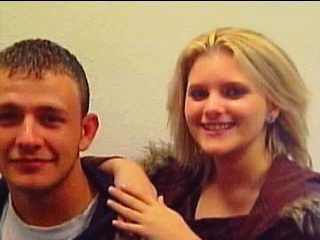
    Charlie Wilkinson and Erin Caffey. Photo sourced from Murderpedia.

    The Boy Who Fell Under Her Spell

    Charlie Wilkinson was, by all accounts, a simple man from humble beginnings. He had blue eyes and sandy hair, and typically wore his signature Wrangler jeans, and black cowboy boots and hat. He didn’t have a lot of money, but he had some plans. When Charlie met Erin, he recently returned home from boot camp at Fort Sill, Oklahoma, with the National Guard Texas unit. After graduating high school the following year, he planned to go on active duty.

    Charlie lived with his father, stepmother, stepbrother, stepsister and half-sister. He loved the outdoors, especially fishing and four-wheeling, and was skilled at hunting. Though some described him as “hot-headed,” he didn’t have a record of serious disciplinary issues at school.

    Young Love or Infatuation?

    Once Erin returned to public school in December 2007, she and Charlie became inseparable. They held hands in the hallways and snuck off to Erin’s truck to have “alone time” whenever possible. The Caffey’s also allowed them to go on occasional dates—though while Terry and Penny believed their daughter dined out with her boyfriend, the couple was at a friend’s house, fooling around. Sometime that month, Erin and Charlie had sex for the first time, less than two months after their relationship officially began.

    After their sexual relationship progressed, Charles proposed to Erin with his grandmother’s engagement ring symbolizing a promise ring. Penny demanded her daughter return it, believing it too mature of a decision for their 16-year-old daughter. Also outraged, Terry approached Charlie as he was playing basketball outside the church fellowship hall, describing the proposal as inappropriate. From then on, the couple’s out-of-school interactions were limited to once a week and supervised.

    Erin was livid about her parents reducing time with Charlie. She felt they were controlling and unfair, and began talking with Charlie about running away together when she turned 17. Arguments between Erin and her mother escalated, and on at least one occasion, Erin claimed that Penny slapped her.

    Charlie’s visits temporarily came to a full stop in early February 2008, when Penny caught Erin talking on the phone with him after her 10 pm phone curfew. In addition to suspending the visits, she confiscated Erin’s cell phone and car keys, and drove her to and from school for a time. Erin’s freedom was reduced to nothing and her time with Charlie was now restricted to school. Her parents wanted Erin to push the brakes on her relationship and return focus to her studies and faith.

    Terry was never enthusiastic about Charlie dating his daughter, noticing behaviors he felt were disrespectful. On one occasion, Terry returned home from work to find Charlie sitting in his armchair with his legs hanging over one side. Charlie did not stand up or shake Terry’s hand. He often told Penny, “If he can’t show me any respect, how does he treat our daughter?”

    With hardly any time to themselves and the desire to be together, a pivotal shift took place in Charlie and Erin’s conversations. Talk about killing Terry and Penny began. By accounts, Erin started the dialogue and kept it up constantly. She also told Charlie her parents were physically abusing her. Desperately “in love,” Charlie wanted to protect Erin—at all costs.

    Nonetheless, though Charlie was willing to do anything to be her, he didn’t want to kill her parents. Rather, he told a friend he only wished to run away with her. He told this friend he wished he could impregnate Erin so her family would have to accept him. Erin was against the idea, claiming she was too young to have a baby.

    Charlie didn’t know that Erin had these conversations with others before him. He thought she was intensely motivated by their “love” for one another, but that wasn’t so. He wasn’t the first boyfriend Erin enlisted to harm her family. Her ex-boyfriend, Michael Washburn, later came forward to state that Erin tried convincing him to kill them, to which he refused and ended their relationship.

    As the situation escalated, Penny and Terry reached their final straw with the couple’s relationship. On February 27, 2008, Penny went to the local library to search Charlie’s MySpace profile at the suggestion of her sister. On Charlie’s MySpace, where he referred to himself as “hillbilly,” Penny found references to sex with multiple people and drinking. Later that day, she and Terry forbid Erin from seeing Charlie and demanded that she end their relationship. Erin surprisingly complied, saying that she wanted to end it for awhile. However, behind the scenes, she and Charlie put their murderous plan into action.

    The Caffey residence after it was destroyed by the fire. Photo sourced from Murderpedia.

    The Night That Changed Everything

    After midnight on Saturday, March 1, 2008, Erin left the door to her home unlocked as she entered a vehicle with Bobbi Johnson, 18. Charlie Wilkinson and Charles Waid, 20, entered the home. Charles was a hunting buddy of Charlie’s, and Bobbi was his girlfriend and the owner of the vehicle they drove.

    It was approximately 3 am when Penny and Terry awoke to the sounds of their bedroom door smacking into the dryer in their laundry room, which sat next to their bedroom. Penny was shot, stabbed with a samarai sword and nearly decapitated. Terry was shot five times: twice in his back and near his right shoulder, and once in his head.

    Bubba and Tyler ran into Erin’s room to hide. Charlie busted into the room and Bubba kicked him repeatedly in attempts to defend himself. Charles heard the commotion upstairs and shot Bubba in the face. Prior to being shot, Terry recalled his son screaming, “Charlie! Charlie, why are you doing this? No! Charlie! No, please!” Tyler hid in his bedroom closet but was found and repeatedly stabbed with the samarai sword by both men.

    To conceal their crimes, Charlie and Charles set the home ablaze before escaping to a nearby mobile home owned by Charles’s brother, Matthew Waid. Nothing would remain of the home but its foundation.

    Terry managed to survive the shooting and crawled 500 yards—the length of four football fields—to the home of his neighbor, Tommy Gaston. The plight took him over an hour, during which he fell into a creek and nearly drowned. He wasn’t dressed for the weather, donning only his pajamas and a single sock, but he made it. Officer Charles Dickerson was the only officer on duty when the 9-1-1 call was made around 4:30 am. When Officer Dickerson arrived, Terry promptly informed him, “Charlie Wilkinson shot my family.”

    Charles “Charlie” Wilkinson’s booking photo. Photo sourced from Murderpedia.

    Arrests Made

    With direction from Sheriff’s Investigator Richard Almon, Chief Deputy Kurt Fischer and Sheriff’s Deputy Ed Emig, Charlie, Charles, Bobbi and Erin were located and arrested that same day. Everyone knew everyone in a small town like Alba. Chief Deputy Fischer knew Charlie, who was friends with his son. On the drive to the Gaston’s, he noticed Charlie’s vehicle parked outside Matthew Waid’s blue single-wide trailer.

    Acting quickly on the information Terey provided, police went to the trailer. Stepping over piles of clothes and empty beer cans, police found Matthew Waid and his girlfriend sleeping inside, who directed them to a room down the hall. Charlie laid on a bed with his shirt off. The room was dark. Towels covered the windows, preventing light from seeping in, and the room lacked any lighting. A semiautomatic handgun rested on the floor, as did spent shell casings and a used condom. His cowboy boots were splattered with blood.

    Chief Deputy Fischer arrested Charlie, read him his Miranda rights and questioned his involvement in the Caffey family massacre. Charlie claimed innocence: he passed out from drinking alcohol and was home that evening, he said. He was transported to the county jail for further questioning.

    Erin is Found

    With Charlie detained, Chief Deputy Fischer obtained a search warrant of Matthew Waid’s trailer. In the trailer, he located a camouflage purse containing Erin’s driver’s license, shell casings, a box of ammunition and a used condom. Then, he lifted a blanket from the floor, which revealed his most shocking find: a nest of blonde hair belonging to Erin. She laid in the fetal position. When asked how she got there, she said she didn’t know and questioned her whereabouts. She whispered to officers, “They’re coming after me.”

    Chief Deputy Fischer suspected Erin was under the influence of drugs because of her disconnected disposition and responses. She was transported to Hopkins Country Memorial Hospital in Sulphur Springs where she underwent a medical assessment and was interviewed by Chief of Police Shanna Sanders. Initially, investigators believed Erin was kidnapped. She claimed to recall two men dressed in black with swords and a house full of smoke. She also claimed to be 14 years old, and said she remembered trying to call Charlie, a friend, but was unable to reach him. She said she was unaware of how she reached the Waid trailer and that once there, she drank an unknown substance and blacked out.

    However, one clear fact remained: Erin didn’t smell like smoke.

    Erin Caffey’s booking photo. Photo sourced from Murderpedia.

    Erin’s maternal grandmother, Virginia Daily, came to the hospital to inform Erin that Terry was alive and receiving treatment at the East Texas Medical Center in Tyler. After five hours at the hospital, Erin was released. However, as her grandparents drove her to see her father, the escorting officers were instructed to detain Erin. She was implicated in her family’s murders.

    Erin’s toxicology results turned up negative, indicating the absence of any drugs that could cause memory loss. Her phone records showed that she called Charlie six times from 11:46 pm on February 29, 2008 until 12:48 am on March 1, 2008, and again seven times from 1:22 am to 1:58 am. She called repeatedly to ask Charlie where they were, and if they were still coming to carry out the deed.

    Charlie is Questioned—and the Truth is Exposed

    While investigators assumed Erin was innocent, Charlie was being interrogated by Detective Almon and Texas Ranger John Vance at the sheriff’s office in Emory. He confessed to everything, as did Charles and Bobbi. Erin was the only perpetrator involved who concocted a story.

    Charlie told investigators Erin was deeply angered by her parents’ demands to end their relationship. For the umpteenth time, she said she wanted them to die and asked Charlie to kill them. He insisted they run away instead, but she refused. She wanted the plan in action. So, at 1:30 am, Charlie and Charles drove to the Caffey residence with Bobbi, Charles driving Bobbi’s silver Dodge Neon. Spooked by the Caffey’s barking black Labrador, Charlie, Charles and Bobbi left only to return soon later. Erin took care of the dog, she said.

    Charles needed fast cash and Charlie agreed to pay him $2,000 if he helped kill them. The $2,000 was in a lockbox in the home, according to Erin, and was the exact anount Charles needed for court proceedings. He was in the process of divorcing his spouse and was in a child custody battle over his 5-month-old child. Bobbi allegedly didn’t know what the men planned to do.

    The group met Erin at the end of the driveway, where she hopped in the vehicle. The four of them drove around for an hour, stopping periodically at a nearby cemetery to discuss their plan; an ironic move considering what was to happen. Charlie continued insisting that Erin run away, but she was adamant about their plan. It was decided: Charlie would kill her parents and Charles would kill her brothers.

    Erin and Bobbi remained in the vehicle as Charlie and Charles entered the unlocked front door, carrying two samari swords and a .22-caliber pistol. They entered Penny and Terry’s bedroom first and subsequently went to Erin’s room, where her brothers hid. After the men believed all four people were dead, Charlie retrieved a suitcase that Erin packed previously. When he put the suitcase in the vehicle, Erin smiled. Charlie and Charles then went to collect the lockbox, which contained just $375. Before leaving, the men set furniture, clothing and bedsheets ablaze using their lighters. Then, they drove off, with Erin shouting,“Holy shit, that was awesome!”

    Charles, who was driving, dropped off Erin and Charlie at the trailer owned by his brother. Once inside, he and Erin had sex.
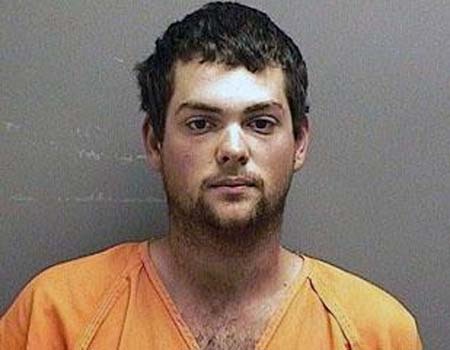

    Charles Waid’s booking photo. Photo sourced from Murderpedia.
    Bobbi Johnson’s booking photo. Photo sourced from Murderpedia.

    Legal Proceedings

    Because of the heinous nature of the crimes, Erin was tried in court as an adult. On January 2, 2009, she accepted a plea deal in exchange for two life sentences. She will be eligible for parole in 2038 at the age of 59.

    Charlie Wilkinson and Charles Waid also accepted plea deals to avoid the death penalty. Both were sentenced to life imprisonment without the possibility of parole. Charlie has since expressed remorse for the crimes.

    Bobbi Johnson was identified as an accomplice and sentenced to 40 years imprisonment. She will be eligible for parole in 2028.
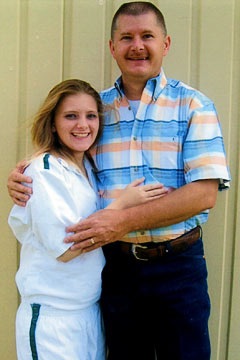
    Erin Caffey and her father, Terry Caffey. Photo sourced from Murderpedia.

    Where Is Terry Caffey Now?

    Not long after the murders, Terry announced his public forgiveness of his daughter and the other perpetrators. Nonetheless, he struggled with thoughts of suicide. The first time he returned to the remains of his home, he looked upward and pleaded, “God, why didn’t you take me? Why did you take my family? I need an answer now! Not next week, not next month—now!” At that moment, he saw a piece of paper stuck to a tree that read, “You’re sovereign; You’re in control.” He believed it to be a sign from God, which motivated him to refute the death penalty for the perpetrators, stating their deaths wouldn’t bring back his family, and that Jesus would have “spared them.”

    To help his healing, Terry purchased a used RV and parked it where his house once stood. He remained there for about four months, sleeping with a loaded gun on his chest. He also drove to Greenville, Texas, where Erin was detained as a minor, to visit her twice a week. After her sentencing, he’d drive three hours once a month to visit Erin at the Hilltop Unit in Gatesville, Texas.

    Crediting his faith for helping him rebuild his life, Terry went on to become an ordained minister. He has since shared his story at more than 800 churches and 600 public schools. Seven months after the murders, Terry married Sonja Webb, a home health care aid he met at work. Unfortunately, his second marriage ended in divorce, with Terry citing that he moved on too quickly. He ultimately married again a few years later, and had a child with his current wife, Karen.


    Sources

  • The Case of Emmanuel Haro and His Sorry Excuse for “Parents”

    The Case of Emmanuel Haro and His Sorry Excuse for “Parents”

    At 7 months old, Emmanuel Haro of Cabazon, California, was described as a happy baby. Born to Rebecca Renee Haro, 41, and Jake Mitchell Haro, 32, on December 21, 2024, Emmanuel lived with his parents and at least one other sibling, 2-year-old Makenzie.

    Emmanuel was reported missing on Friday, August 14, 2025 when his mother was allegedly attacked by an unknown man outside of a Big 5 Sporting Goods store on Yucaipa Boulevard. But much to Rebecca and Jake’s surprise, the investigation quickly turned in the direction of the baby’s parents.

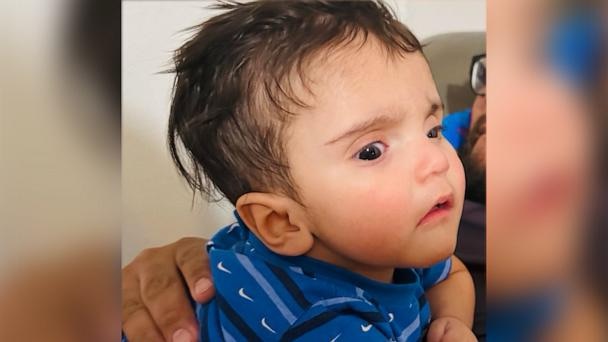
    Emmanuel has not been found, but the search for him remains ongoing. At the time of his alleged disappearance, Emmanuel was approximately 2’ tall and weighed 21 lbs., with brown hair and brown eyes. He is cross-eyed. He was last seen wearing a black Nike onesie. Both Jake and Rebecca are currently detained without bail on charges of murder and filing a false police report, and are awaiting trial for the murder of their son.

    Here’s more on the developing story.


    The Timeline

    The timeline of this case has moved rapidly and continues to do so. As updates present, more information will be added below.

    Emmanuel Haro.
    Photo from Facebook.

    Fri., August 14, 7:41 pm

    Rebecca calls 9-1-1 to report her son Emmanuel missing. She tells the operator that she was attacked from behind while standing outside of her vehicle, changing the baby’s diaper.

    She is in the parking lot of a Big 5 Sporting Goods store on Yucaipa Boulevard. She only recalls the perpetrator saying, “Hola.” Rebecca claims the attack renders her unconscious and Emmanuel is gone when she regains consciousness. When she awakes, Rebecca runs into the store to ask if anyone saw her baby or someone with a baby, after which she calls 9-1-1.

    Big 5 Sporting Goods store on Yucaipa Boulevard.
    Photo from Facebook.

    Rebecca later states that her and Emmanuel were in the the area for an older step-child’s youth sports competition, which began at 6 pm. Her and Emmanuel drive to the store to purchase a mouthguard for her stepson to use. (It is later reported that Rebecca and Emmanuel were never seen at the sports game.)

    7:47 pm

    Police from San Bernardino and Riverside counties report to the scene. K9 dogs and helicopters are dispatched but Emmanuel is not located.

    8:00 pm

    Jake Haro, Rebecca’s husband and the father of Emmanuel, arrives at the scene.

    Sat., Aug. 15

    Local authorities release a statement about the ongoing search for Emmanuel. No Amber Alert is issued due to the lack of description about a suspect or vehicle.

    Rebecca and Jake speak to Los Angeles ABC station KABC about their son’s disappearance. Rebecca describes Emmanuel as a “happy boy” and both parents plead for his safe return. Rebecca interchangeably refers to her son in the past and present tenses. Both parents cry during the interviews, but no tears are visible.

    Rebecca has two black eyes that do not appear fresh, but are in the stages of healing. Her eyes aren’t swollen but have bruising underneath. (It is later reported that Rebecca had black eyes days prior to the alleged attack.)

    Sun., Aug. 16

    The Sheriff’s Office releases a statement that multiple individuals have been interviewed about Emmanuel’s disappearance. Inconsistencies are noted in Rebecca’s statements. When Rebecca is alerted to the inconsistencies, she declines to continue her police interview. The parents are not ruled out as suspects.

    The Uvalde Foundation for Kids, a nonprofit founded in Texas to stop school violence, but which occasionally gets involved in outside issues, initially offered to aid in the search for Emmanuel and provide a $5,000 reward for his safe return. However, as new information became available about the parents as suspects, the organization withdrew their offer.

    Mon., Aug. 17

    Riverside County Child Protective Services takes Makenzie, 2, Emmanuel’s older sibling, into protective custody.

    A search warrant is issued for the family’s home on Ramona Street in Cabazon. K-9 units search the property.

    Around 7:30 pm, community members gather in the parking lot of the Big 5 Sporting Goods store in Yucaipa, holding candles and praying for Emmanuel’s safe return.

    Tues., Aug. 18

    The Sherriff’s office releases a press release stating that extensive searches were conducted in Yucaipa and Cabazon. Officials are also reviewing surveillance video from areas of interest and served several search warrants at the Haro residence.

    Thurs., Aug. 19

    Officials investigate a reported signing of Emmanuel in Kern County. No additional information is provided.

    Vincent Hughes, attorney for Jake Haro, tells ABC News that both parents “seek answers about their missing child” and that Jake is “fully cooperating with law enforcement and investigators.”

    Jake’s vehicle is seized by authorities.

    Jake’s first ex-wife, Isabel Gonzalez, files a domestic violence restraining order against him in efforts to protect their son, Eli Mitchell Haro.

    Fri., Aug. 20

    Rebecca and Jake Haro are seen leaving the Riverside Superior Juvenile Courts, allegedly regarding a separate issue involving 2-year-old Makenzie, who was taken into protective custody.


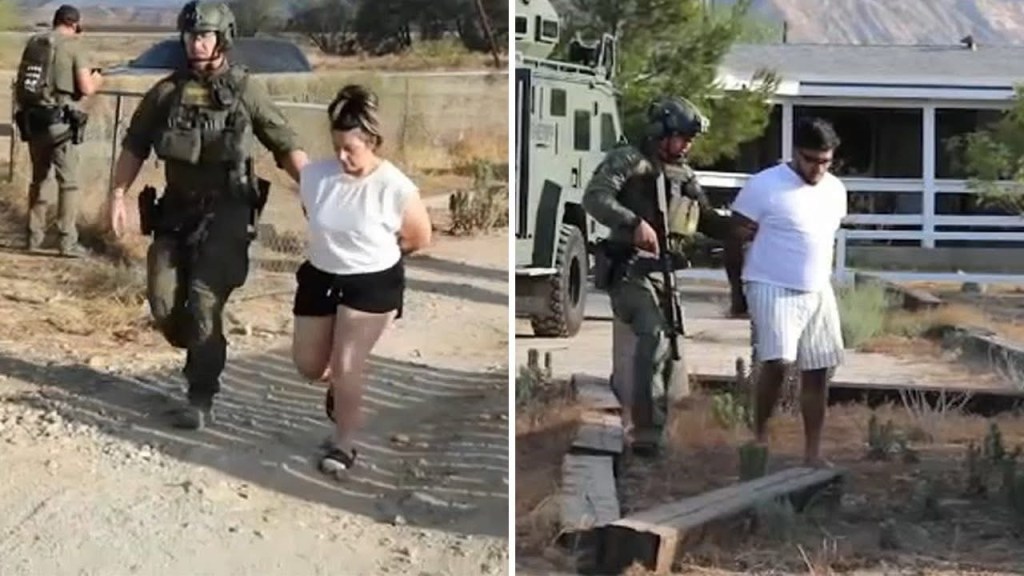
    Rebecca and Jake Haro are arrested ar their home in Cabazon, California, on Aug. 22, 2025.
    Credit: Bernardino County Sheriff’s Office

    Sat., Aug. 22

    Eight days after their son went missing, Rebecca and Jake Haro are arrested at 7:28 am at their home for the murder of Emmanuel. There are no other suspects at this time. The search for Emmanuel continues.

    Rebecca is taken into custody at the Robert Presley Detention Center in Riverside, California and Jake is placed in custody at the Larry D. Smith Correctional Facility in Banninf, California.

    Mon., Aug. 24

    Rebecca and Jake Haro are arrested ar their home in Cabazon, California, on Aug. 22, 2025.
    Photo from Facebook.

    Another search is conducted for Emmanuel along the westbound shoulder of the 60 Freeway, near Gilman Springs Road in Moreno Valley with cadaver dogs. Jake is also present and is seen wearing an orange jumpsuit. Emmanuel is not found.

    Wed., Aug. 26

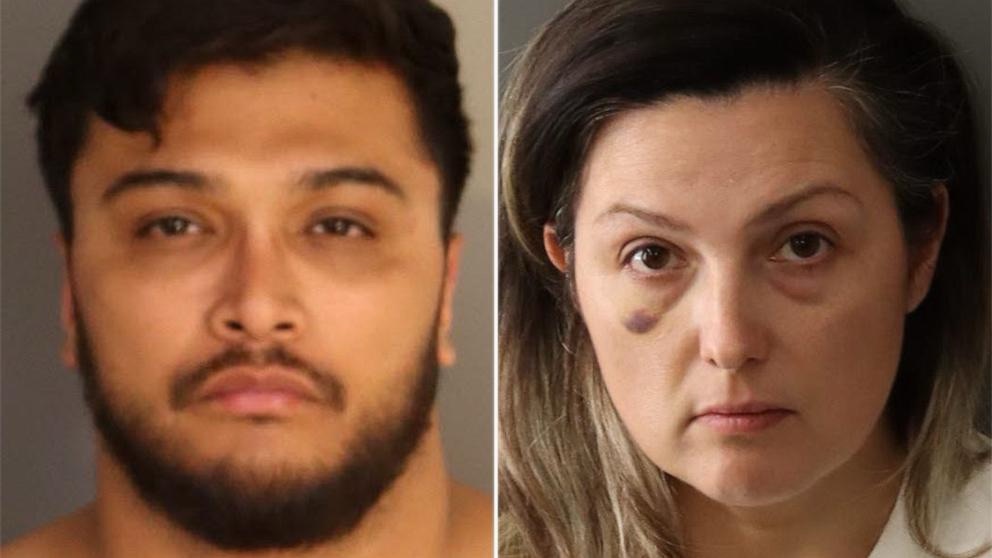
    Jake Haro, 32, and Rebecca Haro, 41.
    Credit: Bernardino County Sheriff’s Office

    Rebecca and Jake appear in a California court and are formally charged with murder and filing a false police report. Both individuals are in court for less than five minutes and a $1 million bail is set for each of them.

    The Haro’s are scheduled to appear in court again on September 4, 2025.

    Thurs., Aug. 27

    Riverside County District Attorney Michael Hestrin leads a press conference. Officials announce that they have a “pretty strong indication” about Emmanuel’s location and remains, and the alleged murder “was preventable in numerous ways.”

    Hestrin shares the belief that Emmanuel was “severely abused over a period of time” and that both parents “would have been aware of the abuse.” It is presumed that Emmanuel likely succumbed to his injuries.

    Hestrin describes Jake Haro as an “experienced child abuser,” stating that he “should have gone to prison” due to previously abusing a daughter he shares with an ex-wife in 2018. His daughter is bedridden as a result. The judge in that case granted Jake probation in what Hestrin describes as an “outrageous error in judgement.” Jake was on probation at the time of Emmanuel’s disappearance for a separate matter.

    Fri., Sept. 4

    Rebecca and Jake appear in court and plead not guilty to the murder of Emmanuel. The preliminary hearing is scheduled for September 17, 2025.

    Investigators believe Emmanuel was likely killed between August 5 to 14 as a result of severe long-term abuse. August 5 was the last confirmed sighting of Emmanuel.

    Wed., Sept. 10

    Investigators confirm the discovery of a shallow hole near the Haro residence that contains clothing believed to be Emmanuel’s. The clothing appears to have faint blood marks.

    Jake is being represented by Deputy Public Defenders Allison Lowe and Paulette Garthwaite, assigned to him from the Riverside County Public Defender. Rebecca is being represented by attorney Jeff Moore of Blunenthal & Moore.


    Digging in to Rebecca and Jake Haro

    Rebecca Renee Chavez was born on February 3, 1984. She was adopted by Mary Beushausen, who has been identified as both her adoptive mother and grandmother. Rebecca and her first husband, Edgar Gomez Chavez, were married for 11 years. Rebecca has two daughters with her first husband, who are both adults.

    Jake Mitchell Haro was born on February 11, 1993. The names of his parents are not publically available at this time. Like his own children, Jake was removed from the custody of his parents due to drug issues and abuse allegations. His grandfather was mentally ill and his mother, who suffered from substance abuse, frequently left Jake home alone in the care of his grandfather. Domestic violence also occurred between Jake’s parents, of which he observed on many occasions. At 13, Jake and his siblings, a brother and sister, were removed from his parents’ care and placed into an adoptive family.

    On March 3, 2014, Jake married his first wife, Isabel Gonzalez. The couple welcomed a son on March 9, 2014, Eli Mitchell Haro. Isabel filed for divorce on May 11, 2016 and the divorce was finalized on July 8, 2016.

    Sometime in 2017, Jake began a relationship with Vanessa Avina. The couple married and had two children, a boy and girl. On April 26, 2018, Jake filed a $100,000 personal injury claim due to a car accident in Beaumont, California. On August 10, 2018, Jake and Vanessa filed for bankruptcy in Riverside County.

    Information is not available as to when Jake Haro and Rebecca Haro married. However, it is known that the couple have at least two children together: 2-year-old, Makenzie, and 7-month-old Emmanuel. At the time of their arrest, Jake and Rebecca lived in the home of Jake’s mother, who lived next door to them

    After Rebecca became involved with Jake, it is alleged that she distanced herself from her own family. The distance created tension because it appeared that Rebecca chose Jake over them.


    Jake Haro’s Record of Abuse

    In 2021, Jake was convicted of cruelty to a child in Hemet, California in 2018; that child was his then-10-week-old daughter, identified in some sources as “Carla,” with his second wife Vanessa Avina. On October 12, 2018, Carla was admitted to Hemet Valley Hospital with multiple broken bones and a brain hermorage. The extent of Carla’s injuries were as follows:

    • fracture to the fifth rib on her left side
    • partial skull fracture
    • brain hemorrhage
    • significant neck swelling

    On October 13, 2018, Carla was transferred to Loma Linda University Medical Center, where she was intubated in critical condition. Healing fractures were identified in eight ribs, and there was a healing tibia fracture on her right left, indicating ongoing abuse.

    When questioned, Jake told authorities that he accidentally dropped Carla while bathing her in the sink. In December 13, 2018, Carla’s injuries were determined to be intentional and the result of shaken-baby syndrome, squeezing of the chest, and twisting of the tibia. Jake, who also allegedly abused his ex-wife, blamed her for Carla’s injuries.

    Carla, now 7, was diagnosed with cerebral palsy as a result of her injuries. She is unable to walk or talk, and is blind, and allegedly only has use of 3% of her brain. A cousin of Jake’s ex-wife has custody of both Carla and her brother.

    Jake pled guilty to a single count of willful child neglect as part of a deal stricken with law enforcement. Instead of being sentenced to prison time, Judge Dwight W. Moore sentenced him to 48 months (four years) of probation, a 180-day work-release program and counseling in 2023. This horrific oversight was an example of Gov. Gavin Newsom’s efforts to shut down penitentiaries and prioritize rehabilitation over jail time—including for violent criminals.

    Vanessa Avina was also charged with felony child cruelty for placing a child in circumstances that could have resulted in serious injury or death.

    In 2024, Jake was arrested and charged with being a felon in possession of a handgun and ammunition, and thus violating his probation. Despite his previous charges and current violation, he was released on a $10,000 bail in August 2024. He was scheduled to appear in court on September 2, 2025, but it is currently unknown as to how or whether his previous charges will affect his current charges.


    Shaken Baby Syndrome

    There is a lot of speculation in this case as to whether Emmanuel Haro suffered from shaken baby syndrome. Currently, there is no information that confirms or refutes whether the child is a victim of such; however, some of the photos that surfaced online have drawn questions.

    Shaken baby syndrome is a severe brain injury that occurs when a baby or toddler is forcibly shaken. It typically occurs when a parent or caregiver shakes a child out of frustration and/or anger, which can resul in permanent brain damage due to the brain rattling against the skull.

    Symptoms of shaken baby syndrome include:

    • a bulging soft spot on the top of the head
    • a large head or forehead
    • coma
    • difficulty breathing
    • dilated pupils
    • extreme irritability
    • inability to focus on or follow movement with their eyes
    • inability to lift the head
    • lethargy
    • not smiling, babbling or talking
    • pale or discolored skin
    • paralysis
    • poor eating
    • seizures
    • tremors
    • vomiting

    Tragically, the extent of Carla’s injuries—Emmanuel’s older half-sister—reflect that of shaken baby syndrome and were presumed to have occurred at least partly as a result of such. In this case, it is certainly speculated that Emmanuel may have suffered from shaken baby syndrome as well. In photos, he is not seen smiling, actively engaging or playing. He is cross-eyed, despite allegedly not always having been so. Being cross-eyed, or failing to follow movement with his eyes, may be a sign of shaken baby syndrome. It is also unknown as to whether he was scooting or engaging appropriately for his age.


    Unusual Connections

    Rebecca Haro’s brother, James Beushausen is the convicted “Palm Springs killer.” In 2017, the then-34-year-old was arrested for murdering his girlfriend, Jaylynn Amanda Keith, 27. Keith was discovered in the bathtub with a gunshot wound to her head. Beushausen reported her death as a suicide but was ultimately found guilty and sentenced to 50 years to life imprisonment.


    My 2 Cents

    This case is both heartbreaking and also somewhat difficult to follow. There is a lot of misinformation.

    From the information I’ve gathered, Jake Haro has at least five young children, including the two children he shares with his third wife, Rebecca Haro, who has two children of her own. I also must note that Jake is on his third marriage in 10 years at just 32 years old.

    From the research publically available, I believe Jake has an anger problem and is unable to control himself—so much so that he has taken his anger out on numerous romantic partners, likely including Rebecca, and small children, which (I believe) likely includes Emmanuel and factually includes his then-10-week-old daughter, Carla. Imagine being an adult and having so little control that you intentionally and repeatedly abuse a 10-week-old child; someone that is so small and fragile, yet also dependent on you to keep them safe. The fact that he wasn’t already in jail for this is DESPICABLE.

    Judge Dwight W. Moore essentially ruled that Carla’s life was only worth a measly 180-day work-release program and some probation and counseling. This makes no sense and directly led to the incident in question involving Emmanuel. If Jake was incarcerated for his past child abuse, then this current case would have never happened.

    The judge’s intentions were rehabilitation but it’s been at least seven years since Carla was abused and Jake is still abusing his young children and partners. Rehabilitation is not possible for him and shouldn’t be considered otherwise.

    I believe—and again, this is purely speculation—that Emmanuel is deceased and his death resulted from long-term abuse. I believe he succumbed to his injuries and Jake, with the help of Rebecca, concocted a story and hid his body, because they knew Jake would face a harsh sentence due to his past crimes coupled with the current case.

    I also believe Rebecca knows what happened to Emmanuel. However, I wonder if she was so beaten down mentally and physically as a result of ongoing abuse from Jake, that she agreed to (or was manipulated to) help conceal Emmanuel’s body. I would not be surprised if Rebecca turns against her husband as the trial begins, using allegations of abuse to justify her involvement, and if she is offered a plea deal for revealing what happened.

    Rest in peace, Emmanuel.


    Anyone with information about Emmanuel’s disappearance and alleged murder should contact the San Bernardino County Sheriff’s Specialized Investigation Division at (909) 890-4904.

    Anonymous tips can be made by contacting WeTip at (800) 78-CRIME (27463) or at wetip.com.


    Sources

  • Kiss and Kill: The Murder of Betty Williams

    Kiss and Kill: The Murder of Betty Williams

    Teenage relations, whether purely sexual or borne of genuine feelings, have a reputation for being intense. Couple surging hormones with peer pressure, inflamed reactions, impulsivity, unrealized childhood trauma, and potentially undiagnosed mental illness, and you have a guaranteed recipe for chaos. Go figure.

    When 17-year-old Elizabeth Jean “Betty” Williams of Odessa, Texas, was dumped by her casual boyfriend of a few months, 17-year-old John “Mack” Herring in the summer of 1961, she described her emotions as tragically unbearable. Betty, who had a reputation for being an outcast and promiscuous, with strong, progressive beliefs—something that wasn’t warmly welcomed in the 1960s, especially for a young woman, and especially in West Texas—began expressing openly to her peers that she wanted to die. Mental health wasn’t paid much attention back then, so Betty was written off as being dramatic and attention-seeking, as was judged of her personality.

    What most people didn’t realize until long after her death, was that Betty had reached a breaking point, which started with the breakup but wasn’t purely caused by it. Family problems, academic letdown, a grim future outlook, and plummeting self-esteem followed in close succession of the breakup, which left Betty feeling broken. She often wrote in her diary about feeling alone and misunderstood.

    Unfortunately, Betty was also frequently bullied by her peers for her differences, and disliked by many of her female classmates because she was sex-positive and open to sexual encounters. In her bedroom, Betty had access to a door that led outside and into an alleyway, and she often snuck out after her parents fell asleep. Betty frequently escaped to the drive-in movie theater, Tommy’s Drive-In, where she had sexual encounters with her male classmates, many of whom had girlfriends. These girlfriends were known as “cashmere girls”; they were from wealthier neighborhoods, members of unofficial “sororities” and stood together at football games wearing their boyfriends’ letterman jackets. They hardly looked Betty’s way, unless it was to snicker as she walked by.

    Elizabeth Jean “Betty” Williams.
    Photo sourced from FindAGrave.com.

    Throughout the winter and spring of 1961, Betty’s despair reached the point of suicidal ideation and attempts. She also started asking her peers if they’d kill her—and she was serious. Again, Betty’s peers wrote her off as being dramatic, and no one took her requests seriously.

    No one, except for Mack.

    Betty expressed to Mack that she dreamt of death, fantasized about heaven, and adamantly no longer wanted to live. Surprisingly, Mack agreed to “help” her. And so, on the evening of Wednesday, March 22, 1961, Betty left her home under the guise of attending theater practice for an upcoming school play, hitching a ride with a friend, Ike Nail. Ike brought Betty home afterwards around 10 pm. Betty pretended to enter through the front door, but secretly waited in the alleyway for Mack to pick her up. The next morning, Betty’s mother awoke to find her daughter’s bedroom door locked. Betty never locked her bedroom door, so when her mother gained entry and found Betty wasn’t there, she placed a frantic call to police.

    That day, Betty’s body was discovered submerged in a body of water nearly 30 miles outside of town. She was nearly decapitated her head, having suffered a single gunshot wound from a shotgun, fired at close range.

    Mack led police to her body.

    Mack stood trial twice for Betty’s murder the first of which became sensational in the area. Everyone in Odessa knew about the murder—and arguably, nearly everyone was also on Mack’s side. Shockingly, Mack walked free, never serving any prison time for Betty’s murder.

    How did a self-confessed killer walk free?

    Did Betty really ask Mack to kill her, or was that a cover-up?

    Below, we’ll dive in to the murder of Betty Williams, known as the “Kiss and Kill Murder.”


    Betty Williams, a Young Woman Ahead of Her Time

    Elizabeth Jean “Betty” Williams was born on August 11, 1943 in Marion, Illinois, to parents John Washington Williams and Mary Belle Williams. She was the eldest of four children, which included Patricia Lynn, Kathryn, and Joseph Wayne, who died at the age of one. In 1955, when Betty was 12 years old, her family relocated nearly 1,000 miles west from Goreville, Illinois to Odessa, Texas, a city in West Texas.

    Odessa was known for its booming oil and gas industry, and recently saw its population grow to some 80,000 people. The Williams family settled in a modest home near the oil fields, and they struggled to make ends meet. Betty’s father, a devout Baptist, worked odd jobs, typically doing carpentry work, but rarely found stable employment. Her mother worked as a clerk at J.C. Penney. As a teen, Betty worked part-time at Woolworth’s, a discount store.

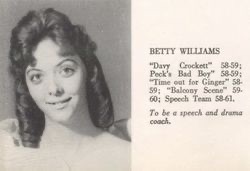
    Betty Williams.
    Photo sourced from FindAGrave.com.

    Because of Betty’s nonconformist ways, she was treated as the “black sheep” of the family. Her father often blamed Betty for misfortunes affecting the family, attributing these happenings to Betty’s immorality. His treatment of Betty only worsened with time, as he caught wind of her promiscuity and encounters with young men.

    While Betty was ostracized at home, she was also ostracized by her peers. She was known as an outcast at Odessa High School. Though she didn’t wish to fit in, per say, she longed to belong and be accepted for who she was. Betty’s peers simply didn’t understand her. She loved reading, listening to progressive stand-up and was a fan of Jack Kerouac, Allan Ginsberg and other Beat Generation writers. She adamantly believed that schools shouldn’t be segregated and often vocalized such, despite being from a segregated area. She was also sex positive. Betty probably would have fared much better, and found happiness, had she been in her late teens during the peak of the Free Love Movement.

    Bold and opinionated, Betty liked to get a rise out of people and she relished in the attention. She was known to wear all black outfits with white lipstick, just to see others’ reactions. Or, she dressed in shorts and a t-shirt, forgoing her bra. In fact, she was known to not wear bras.

    Betty aspired to become a Broadway actress. Her bedroom walls gleaned with posters of popular movies and playbills. In high school, she found solace in theater, starring as Juliet in the play, Romeo and Juliet, during her junior year, and performing in three other plays that same year. She relished in the opportunity to get into character and transform on stage. It was the only place she felt free to be herself. Though Betty knew that her parents couldn’t afford to send her to college, she planned to attend Odessa College upon graduation, and start on her path to hopeful stardom.


    When Betty Falls For Mack

    Betty and Mack were friends for a few years before they began having relations. Both teens were very different, but perhaps that’s what drew them to each other, albeit temporarily. Mack, born on September 23, 1943, was a varsity football player who was well-liked by his peers and a skilled hunter. He was also involved in theater production, like Betty. Mack was raised in an upper-middle class home, where he lived with his parents and younger brother, Jack. His father, Herald Omar Herring was a World War II veteran and owned his own electrician business and his mother, Margaret Elizabeth Herring, was a homemaker.

    Mack was drawn to Betty’s unique personality. He found her interesting. Betty liked that Mack’s mind ran deeper than the simpleton conversations that bored her. He could keep up with her, mentally, better than other young men. He was also sensitive and romantic, more so than other boys her age. She liked that, and fell hard for him. Almost immediately after they started dating in the summer of 1960, Betty claimed to be “in love” with Mack.

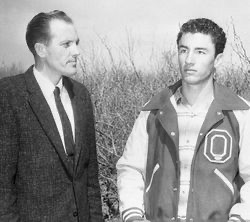
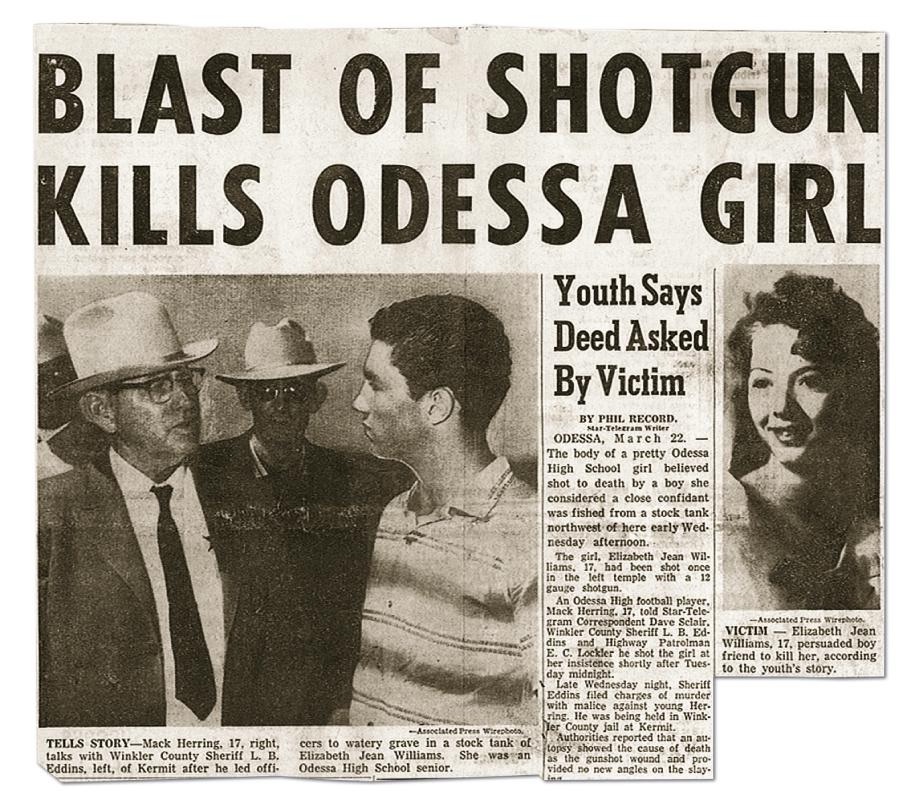
    John “Mack” Herring, right, with an investigator. P
    hoto sourced from FindAGrave.com.

    Betty’s feelings deepened, but Mack’s actions didn’t align with the intensity of hers. He never introduced her to his friends or family, brought her to house parties, or gave her his letterman jacket to wear. He wanted to keep his relationship with Betty secret, perhaps because of her promiscuous reputation. As Mack pulled back, Betty tried making him jealous in attempts to lure him closer. In a move she’d deeply regret, Betty allegedly had sexual relations with another football player and one of Mack’s friends, Billie Rose. When Mack found out, he broke up with Betty immediately.

    Betty was devastated at their relationship ending. She fell hard for Mack, and really wanted to be with him. Nonetheless, Mack went on to date someone else by the fall; someone he felt comfortable introducing to his friends and family. Betty was heartbroken. She wrote him the following letter:

    Mack,

    Well, I guess you accomplished what you set out to do. You hurt me, more than you’ll ever know. When you handed me that note this morning, you virtually changed the course of my life. I don’t [know] what I expected the note to say, but not that. I’ll not waste time saying that I didn’t deserve it because I guess I did. I’ve never been so hurt in my life and I guess your note was the jolt I needed to get me back on the straight and narrow. I’ve done a lot of things, I know, that were bad and cheap, but I swear before God that I didn’t mean them to be like that. I was just showing off. I know it’s much too late with you, Mack, but I swear that another boy won’t get the chance to say what you said to me. You’ve made me realize that instead of being smart and sophisticated like I thought, I was only being cheap and ugly and whorish.

    Forgive me for writing this last note and thank you for reading it.

    I’ll not trouble you again, and Mack, I haven’t forgotten the good times we had. I really have enjoyed knowing you and I’m awfully sorry that it had to end this way …

    Best of luck with your steady girlfriend. I hope she’s the best.

    Betty

    P.S. When you think of me try to think of the good times we had and not of this.

    To make matters worse for Betty, her classmates soon learned about her sexual involvement with Billie Rose and other young men at the drive-in. She was bullied relentlessly and nothing was done to stop it. Like mental health, bullying also wasn’t taken seriously back then.

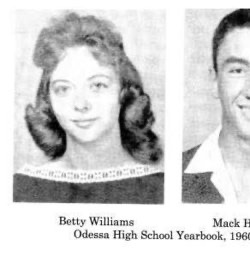
    Betty Williams and a cutoff image of Mack Herring yearbook photos.
    Photo sourced from FindAGrave.com.

    Soon after, a new teacher was hired to oversee the theater department, and Betty was demoted from lead actress to theater manager. The teacher also told Betty that she lacked talent, which stung especially hard because she longed to become an actress. Also around this time, Betty’s father discovered and read her diary after looking for evidence of Betty’s wrongdoing in her room. Her diary outlined her sexual escapades and naturally, her religious father was furious.

    Having endured being bullied by her peers, demoted in theater, dumped by her boyfriend, and unaccepted by her father, Betty began struggling emotionally. By the winter of 1961, she started openly expressing her desire to die.


    The Murder

    One day in the spring of 1961, Mack offered to drive Betty and another classmate, Howard Sellers, home from theater practice. On the way, Betty proposed her question to Mack: Would he be willing to kill her? The teens laughed together about Betty’s absurd request, with Mack immediately assuming it was a dark joke. However, the following day at theater practice, Betty urged Mack that she was desperate; she truly wanted to die. She promised to write a letter absolving Mack of all responsibility, if he would only take on the task of killing her. On Wednesday, March 22, 1961, her grim fantasy became reality.

    That night, after theater practice, while Betty was sitting in the car with Ike, Mack pulled up to the alleyway behind her parents’ home. Betty hopped into his car, wearing her pajamas. Then, the pair drove 26 miles to a property where Mack’s father maintained a hunting lease, and walked down a steep hill to a stock tank, which is used to wash livestock. Mack asked Betty for a kiss, to remember her by; a moment responsible for the crime’s namesake as the “Kiss and Kill Murders.” Betty told him, “Thank you, Mack. I will always remember you for that.” Then, she knelt down, directed the 12-gauge shotgun to her temple, and said, “now.”

    And shoot, he did.

    Once deceased, Mack tied weights to Betty’s body to keep her underneath the water.

    Police quickly assumed Mack as a suspect. After Betty’s mother called police to report their daughter missing, police went to Betty’s school to conduct interviews with students. In these interviews, they learned about Betty’s character, reputation, and ultimately about her last being seen with Mack. Mack was brought to the police station for questioning. Initially, Mack denied any involvement in Betty’s death, but 45 minutes later, he confessed to killing Betty. Later that day, he led police to her body. Oddly, when police arrived at the crime scene, they instructed Mack to remove his clothes, with the exception of his underwear, and bring Betty’s body to the surface.

    Mack obliged and was subsequently arrested.


    The Trial Begins: The State of Texas v. John Mack Herring

    News of Mack’s arrest spread quickly through Odessa. People were in disbelief that someone “like Mack” could commit such an act; “like Mack” essentially meaning a Caucasian all-American football player from a good family. Opinions formed that suggested if Mack had been involved in Betty’s death, he must have had good reason to be—or, perhaps he was convinced to do so. Whatever the case, he remained accepted by his community and included in happenings with his friends. He was still invited to houseparties and movies at the drive-in, and young women still asked him to spend time with them. In fact, the crime made Mack ever-more popular and sought after by females his age.

    Because public opinion labeled Mack as “a nice guy,” whispers around town centered on bashing Betty. People referred to Betty as a “slut” and “manipulative,” essentially blaming her for coercing Mack to commit such a crime. The tendency to fault Betty entirely for what happened only grew more pronounced during the trial.

    On February 20, 1962, The State of Texas v. John Mack Herring officially began. Warren Burnett, a 34-year-old attorney and former Marine from Odessa, defended Mack. Luck was on Mack’s side, because Warren was one of the top attorneys in the area; at 25, he became the youngest practicing attorney in the Odessa area. Not a single one of Warren’s clients had been sent to prison.

    The trial was led by District Court Judge G. C. Olsen and Dan Sullivan, 32, defended the state. Unlike Warren, Dan’s experience spanned about a year and focused mostly on DWIs and theft cases.

    A newspaper clipping of Betty Williams’s murder. Image sourced from findagrave.com.

    By today’s standards, Mack would undoubtedly be found guilty and serve prison time:

    • He gave police a full confession
    • He showed little to no emotion for the victim
    • He led police to Betty’s body
    • He stated the murder was premeditated
    • He brought along items to help him commit the murder: a shotgun with ammo, rope, lead weights to weigh down Betty’s body, and a miner’s helmet to provide light as he ensured her body was fully submerged

    However, Mack’s attorney concocted a story that he was confident would win over the jury. His plan was to argue the insanity plea, pledging that Mack was insane at the time of the crime. He requested for Judge Olsen to focus the trial on whether or not Mack was deemed insane, and not on whether he actually committed the murder. In a shocking move, Judge Olsen agreed with Warren, and determined that Mack wouldn’t stand trial for murder—his role in the murder itself was clear—but instead, the jury would deliberate whether Mack was insane or not at the time of the killing. Mack was not to be evaluated by a psychiatrist during the trial because his current mental state was not of concern—only his mental state at the time of the crime.

    The trial became a local sensation, and one that was filled with teenagers, most of them female. Many young women became infatuated with Mack and flocked to his trial to steal glimpses of him. The media nicknamed these young women “Mack’s girls.”

    Everyone in the courtroom was there with the belief that Mack should walk free. The only people present to support Betty were her parents—not even a single friend stepped forward for her.

    Many people took the stand to speak on Mack’s behalf, including several classmates and his own father. Mack himself even testified. The most compelling testimony, however, was given by Marvin Grice, a psychiatrist in Odessa, who evaluated Mack three days after the murder. The psychiatrist stated that Mack experienced such a high level of stress as a result of Betty’s request, that he believed he was doing her a favor by killing her; essentially, it was a mercy killing, in Mack’s mind. The psychiatrist’s statements aligned with Mack’s own testimony, during which he expressed that in hindsight, he knew killing Betty was wrong, but that night, he believed he was helping her gain entry to heaven, which was a topic she talked about a lot.

    Betty hers or didn’t want Mack to be held responsible for her death, and she thought of such before the act was committed. In attempts to absolve him of his role in her murder, she left behind the following letter dated March 20, 1961, which was shared with the court:

    I want everyone to know that what I’m about to do in no way implicates anyone else. I say this to make sure that no blame falls on anyone other than myself.
    I have depressing problems that concern, for the most part, myself. I’m waging a war within myself, a war to find the true me and I fear that I am losing the battle. So rather than admit defeat I’m going to beat a quick retreat into the no man’s land of death. As I have only the will and not the fortitude necessary, a friend of mine, seeing how great is my torment, has graciously consented to look after the details.
    His name is Mack Herring and I pray that he will not have to suffer for what he is doing for my sake. I take upon myself all blame, for there it lies, on me alone!

    Betty Williams

    After only deliberating for 11 hours, the jury determined Mack was insane at the time of the murder. Despite the obvious, no one considered that Mack had the capacity to decline Betty’s request, but only that Betty was at fault for involving him.

    A Second Trial is Held

    Attorney Dan Sullivan, representing the state, motioned for an appeal, stating that Judge Olsen did not have the power to pre-determine the trial should only focus on Mack’s sanity at the time of the murder, and nothing else. On June 27, 1962, a new trial began, only this time it was held in Beaumont, nearly 600 miles away, in attempts to escape the influence of local publicity.

    Attorney Warren Burnett took control of the courtroom once again. He brought back the psychiatrist, along with a slew of students, some teachers and Mack’s football coach to defend his character. Warren argued that nearly two years later, no motive was ever established. What would Mack have to gain by killing Betty? he asked the courtroom. And once again, the jury agreed. On December 13, 1962, Mack was found not guilty by reason of insanity for a second time.


    Mack’s Life Post-Trial

    Everyone in the area knew Mack Herring because of the crime and subsequent trial. Despite the crime attracting such publicity, he remained local, and the community embraced him.

    He went on to pursue a degree at Texas Tech University in Lubbock, and subsequently returned to Odessa, where he never had another run in with the law again. For most of his adult life, more than 25 years, he followed in his father’s footsteps and worked as an electrician. He also worked as a carpenter, welder and as a dock foreman, and married and divorced twice.

    Over time, the sensationalism surrounding Mack faded. He lived a quiet, private and conservative life until his passing on January 5, 2019, at the age of 75.


    Remembering Betty Williams

    Betty Williams.
    Photo sourced from FindAGrave.com.

    Even though so many years have passed, Betty is often remembered at Odessa High School, where her murder is recalled as something of an urban legend. Strange occurrences at the school, like slamming doors, flickering lights and sounds of footsteps, particularly in the theater room, are commonly attributed to Betty. After Betty’s passing, her cousin, Shelton Williams, went on to publish a book in 2006 about Betty and the aftermath of her murder titled, Washed in the Blood.

    Betty was a woman ahead of her time. Her views were bold and progressive. She embraced her individuality and was unapologetically herself, though she wished that someone would embrace and understand her. Initially, she thought it was Mack, but perhaps she over-romanticized the relationship.

    With troubles at home and bullying at school, Betty likely felt a perpetual sense of unacceptance. Perhaps she earned the reputation of being promiscuous because having relations with men, was the closest she was able to feel with anyone; her attempt at intimacy without having to reveal too much of her inner self. Perhaps, it was also something of an escape. While female friends avoided her, men welcomed her, even if the reasoning was mostly sexual. That all being said, I’m not a psychologist by any means, but I do believe Betty had some form of mental illness and/or personality disorder. Her symptoms and behaviors, in my uneducated opinion, appear reminiscent of borderline personality disorder, but I’m in no position to suggest a true diagnosis.

    If Betty were to have lived past the too-young age of 17, I imagine she’d made a difference. I see her as someone who would’ve left Odessa and gone elsewhere, perhaps a big city like New York or Los Angeles. I believe she would have embraced the underdogs she came along—the forgotten and down on their luck. She’d feel compassion for them and they’d relate to and look up to her. I think she would have enjoyed the Free Love Movement and perhaps attended the Summer of Love in San Francisco. I think she would have been involved in protests and riots, and continued to loudly proclaim and defend what she believed in. Unfortunately, her potential was lost in a second, and her life was disrespected when the law found a way to favor social norms, expectations, and reputation, instead of concrete facts. May Betty’s memory be remembered for the individual she was, and may she rest in peace.

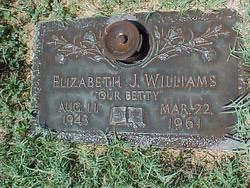
    Betty is buried at Sunset Memorial Gardens in Odessa, Texas.

    Betty Williams’ grave.
    Photo from FindAGrave.com.

    R.I.P Betty Williams


    Sources

    • FindAGrave.com – Elizabeth Jean “Betty” Williams

    Texas MonthlyA Kiss Before Dying

    • Women & Crime – Episode 125: Betty Williams